
How to Identify Undervalued NFTs (Beginner Strategy Guide)
How to Identify Undervalued NFTs (Beginner Strategy Guide)
Most beginners focus on avoiding bad buys.
Few focus on spotting strong buys early.
Learning how to identify undervalued NFTs is what separates reactive buyers from disciplined participants.
Undervalued does not mean “cheap.”
It means price is lagging behind demand, fundamentals, or liquidity strength.
Before buying any NFT, ensure your wallet is secured properly. If you haven’t set one up yet, start with one of the best NFT wallets for beginners (affiliate link) to avoid preventable security risks.
This guide explains how to identify undervalued NFTs using volume divergence, buyer expansion, listing depth, and structural demand signals — not hype or short-term speculation.
What Does “Undervalued” Mean in NFTs?
An NFT may be undervalued when demand and liquidity strengthen before price adjusts.
- Demand is increasing but floor hasn’t reacted yet
- Unique buyers are expanding quietly
- Volume is rising before price breakout
- Listings are being absorbed steadily
- Fundamentals are improving ahead of narrative
If you’re new to NFT mechanics, review what is an NFT and NFTs for beginners before diving into valuation strategy.
1. Volume Expands Before Floor Moves
One of the strongest early signals of undervaluation is:
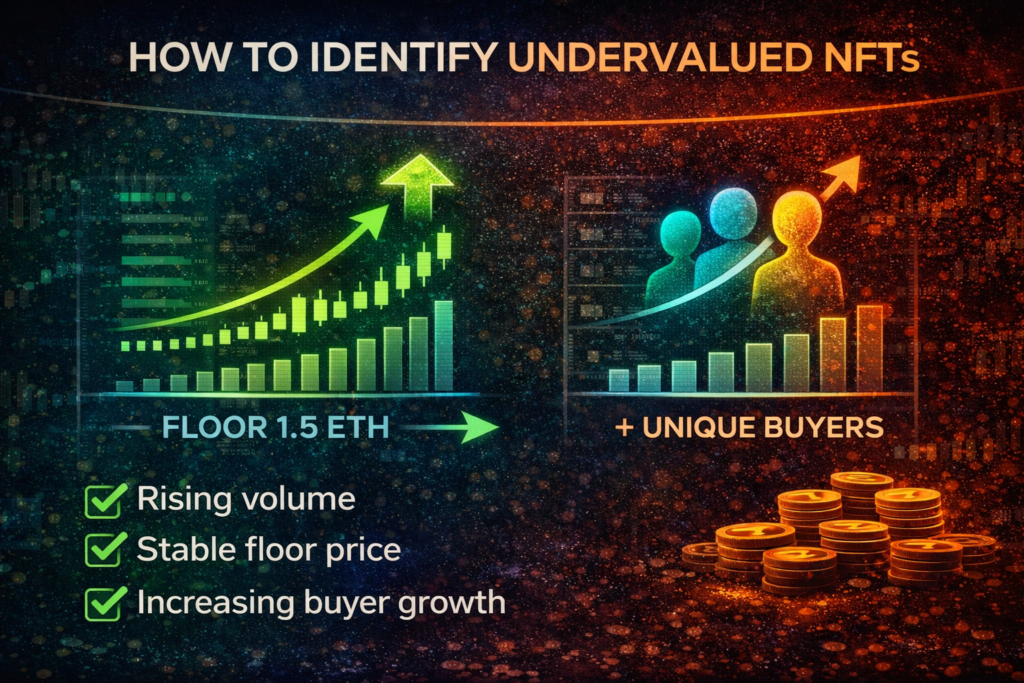
Rising volume while floor stays stable.
This suggests accumulation and strengthening demand beneath price resistance.
Healthy early undervaluation signals:
- 7-day volume trending upward
- Consistent daily sales
- Increasing transaction frequency
- Stable or tightening floor
Understand the mechanics:
When volume leads price, breakouts often follow.
2. Unique Buyers Increase Quietly
Strong collections expand participation before narrative hype begins.
- Weekly unique buyer growth
- Distribution of sales across wallets
- Reduced concentration among whales
If new participants enter before social attention spikes, price may still be lagging demand.
See:
3. Listing Depth Is Tight
Undervalued NFTs often show supply compression:
- Thin floors
- Few listings near current price
- Tight price clustering
- Rapid absorption of undercuts
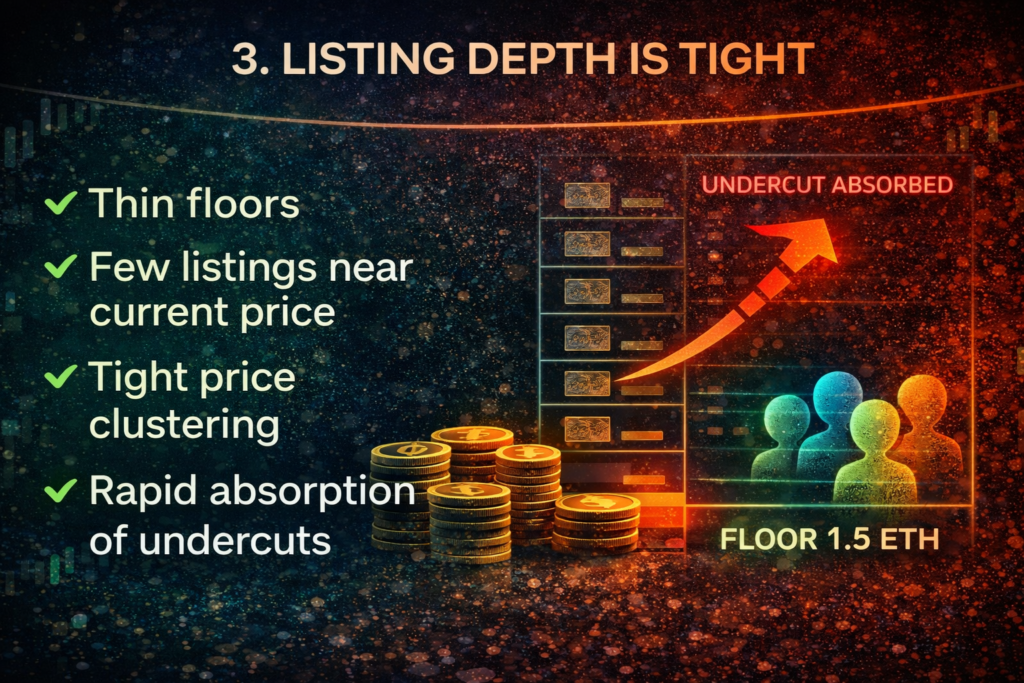
If sellers are absorbed quickly and listings don’t stack aggressively, supply pressure is limited.
Related:
4. Fundamentals Improve Before Narrative Shifts
Some projects execute quietly before the market notices.
- Roadmap milestones delivered
- Development activity increasing
- Community engagement improving
- Transparent founder communication
If execution improves but price remains flat, valuation may lag fundamentals.
Use:
5. Broader Market Conditions Stabilise
- After market corrections
- During consolidation phases
- Before capital rotates into new narratives
If liquidity improves across crypto and strong projects show rising demand, price lag may not last long.
Common Mistake: Confusing “Low Price” With “Undervalued”
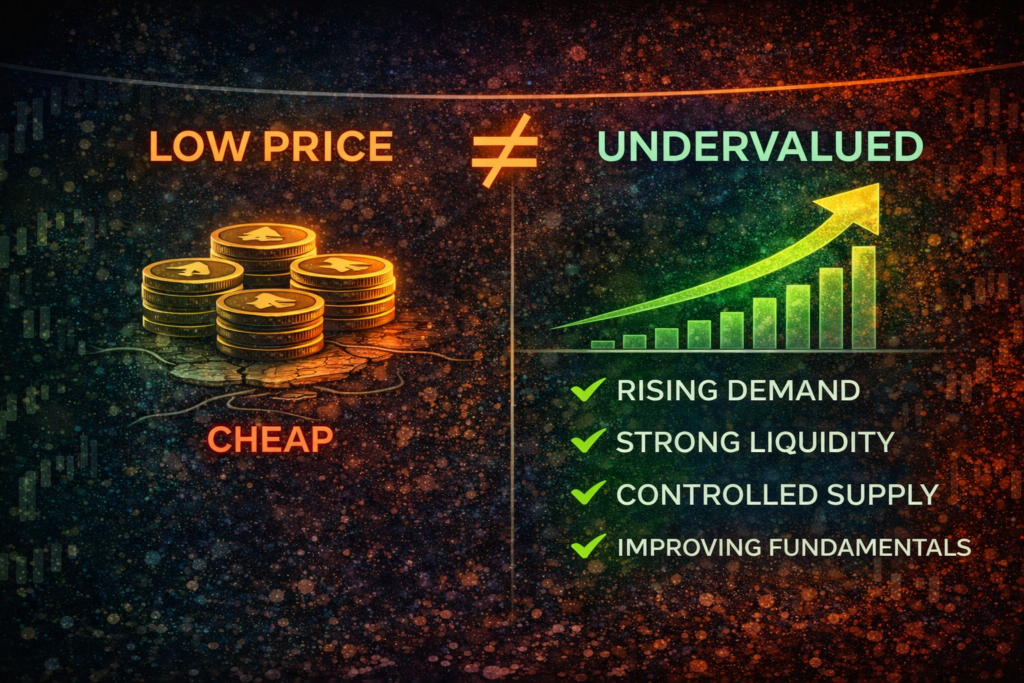
A low floor does not equal value.
True undervaluation requires:
- Rising demand
- Strong liquidity
- Controlled supply
- Improving fundamentals
Cheap without demand is simply illiquid.
A Simple Undervalued NFT Checklist
- Is 7-day volume increasing?
- Are unique buyers growing?
- Is floor stable while volume rises?
- Are listings thin or tightening?
- Are fundamentals progressing?
- Is the broader market stabilising?
If multiple signals align, undervaluation may exist.
If not, patience is often safer.
Risk Warning
Many NFTs appear undervalued because:
- Volume spikes temporarily
- A few wallets accumulate briefly
- Narrative resurfaces without structural demand
If you’re unsure, compare against:
Opportunity without liquidity is risk.
Final Thoughts
Learning how to identify undervalued NFTs is about recognising early demand — not chasing breakouts.
The goal is not to buy cheap.
The goal is to buy before price reflects demand.
Watch volume. Watch buyers. Watch supply.
Let structure guide you — not emotion.