
How to Manage NFTs After You Buy Them: Storage, Tracking & Long-Term Control
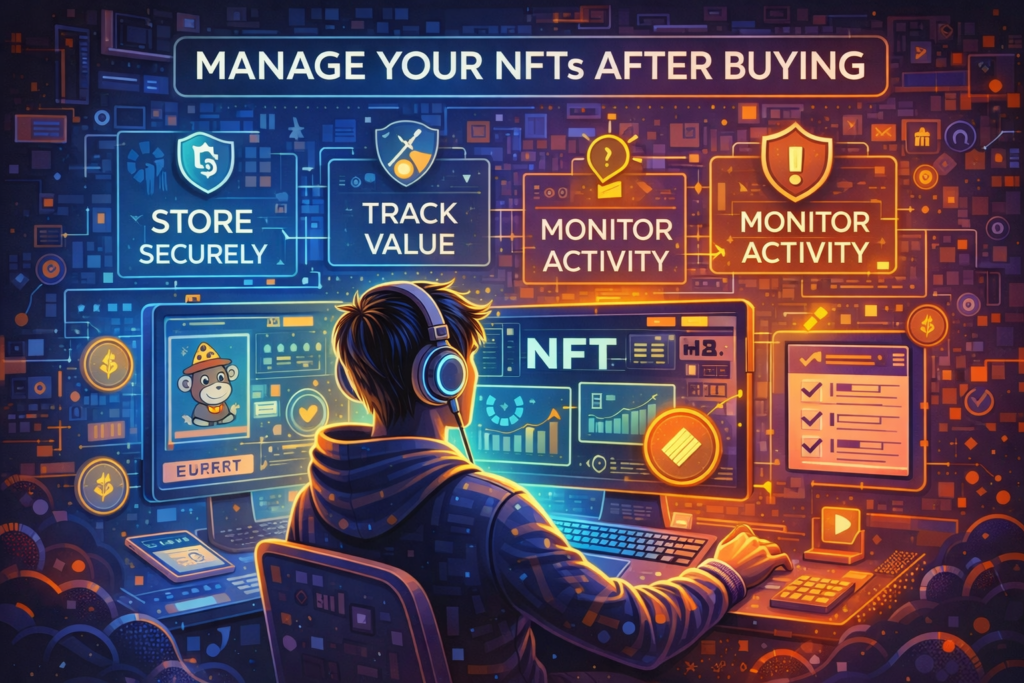
How to Manage NFTs After You Buy Them
Buying an NFT is only the beginning.
What happens after the purchase is where most beginners either protect their assets — or slowly lose them through poor organisation, weak security, or lack of monitoring.
Learning how to manage NFTs after buying helps you:
- Protect long-term value
- Stay aware of wallet activity
- Track performance over time
- Exit safely when the time is right
If you’re new to NFTs, make sure you understand the basics first by reading NFTs for Beginners: A Step-by-Step Guide to Getting Started Safely.
Why NFT Management Matters After Purchase
Most NFT losses don’t happen at the mint.
They happen later — when users:
- Forget what wallets they used
- Approve risky contracts without noticing
- Lose track of floor price changes
- Miss warning signs before value drops
Strong NFT management isn’t about being active every day — it’s about having clear systems in place.
1. Store NFTs in the Right Wallet Setup
The first step in managing NFTs properly is where and how you store them.
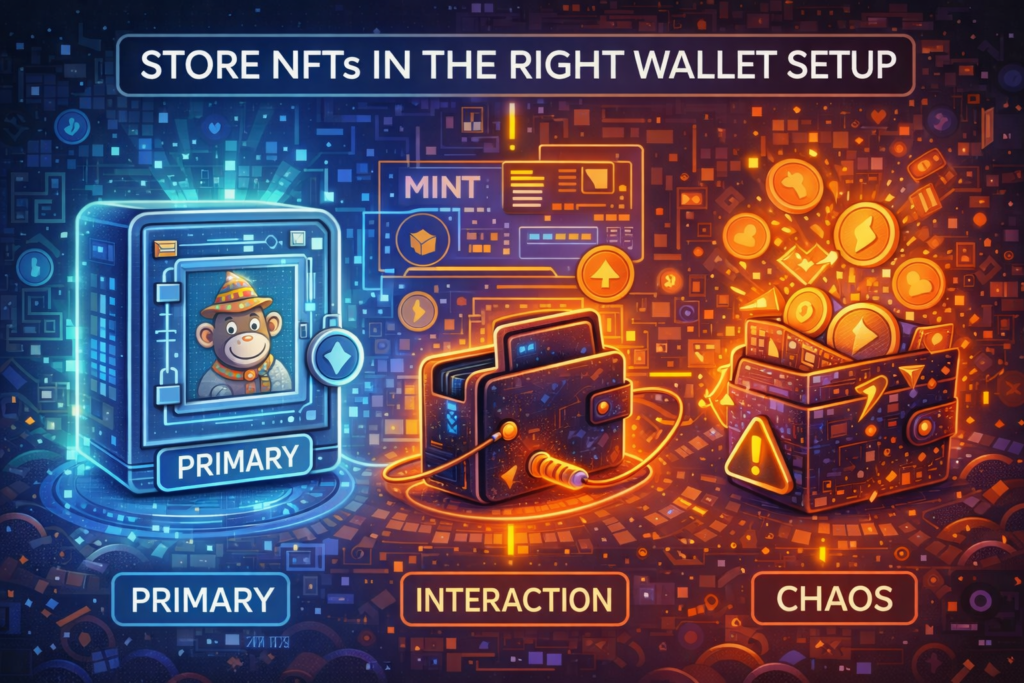
Best practices include:
- Using a primary wallet for holding valuable NFTs
- Keeping a separate “interaction wallet” for minting and new sites
- Avoiding storing everything in one wallet
If you haven’t chosen a secure setup yet, start with Best NFT Wallets for Beginners: Safe & Easy Options to Get Started.
For deeper protection strategies, review NFT Wallet Safety & Management: How to Secure, Track & Protect Your NFTs Long-Term.
2. Organise Your NFTs Across Wallets & Marketplaces
NFTs often end up scattered across:
- Multiple wallets
- Different marketplaces
- Multiple blockchains
To manage NFTs effectively:
- Keep a simple record of which wallet holds what
- Bookmark collection pages on marketplaces
- Avoid unnecessary transfers between wallets
Organisation reduces mistakes — especially when selling or transferring later.
3. Track NFT Value, Floor Prices & Activity
NFT management isn’t just storage — it’s awareness.
You should regularly monitor:
- Floor price changes
- Trading volume
- Ownership history
- Wallet transaction logs
This helps you spot:
- Sudden drops in demand
- Artificial hype spikes
- Unusual wallet movements
Many beginners use tools to simplify this, which are covered in Best NFT Tools for Beginners: Track, Analyse & Research NFTs.
Tracking performance over time makes selling decisions clearer — not emotional.
4. Review Permissions & Wallet Activity Regularly
Every interaction with an NFT marketplace or tool creates permissions.
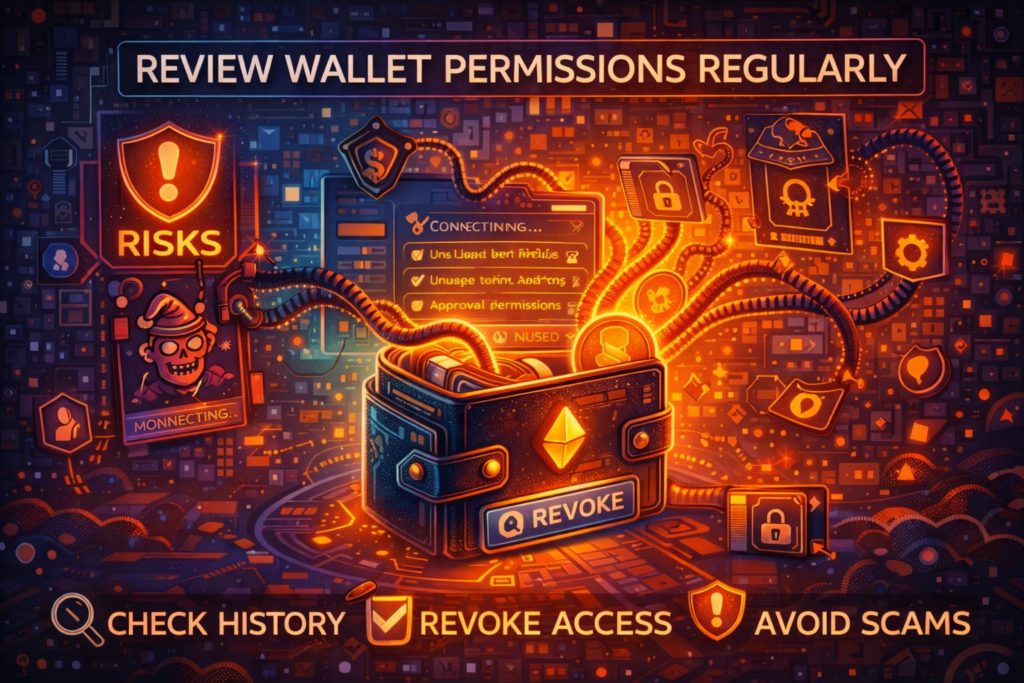
Over time, unused approvals can become a risk.
Good habits include:
- Reviewing wallet transaction history
- Checking token approvals periodically
- Revoking access from sites you no longer use
Ignoring wallet activity is one of the most common mistakes beginners make.
If something feels off, pause and reassess — especially if it resembles patterns covered in NFT Scams to Avoid: A Beginner’s Safety Guide.
5. Decide When to Hold, Move, or Sell
Managing NFTs also means knowing when to act — and when not to.
Before selling, consider:
- Current floor price vs historical trends
- Market conditions
- Liquidity and buyer demand
- Whether the NFT still aligns with your strategy
If you’re planning to exit, make sure you understand the process by reading How to Sell NFTs: A Beginner’s Guide to Listing, Pricing & Exiting Safely.
Well-managed NFTs are easier to sell — and harder to lose.
Common NFT Management Mistakes to Avoid
Avoid these beginner traps:
- Storing everything in one hot wallet
- Ignoring wallet permissions
- Never checking floor prices
- Forgetting where NFTs are stored
- Rushing sales without preparation
Strong NFT management is quiet, boring — and effective.
Final Thoughts: NFT Ownership Is Ongoing
NFT ownership doesn’t end after buying.
Learning how to manage NFTs after buying helps you:
- Stay in control
- Reduce risk
- Protect long-term value
- Make smarter selling decisions
There’s no need to rush.
The strongest NFT holders move slowly, track carefully, and act with intention.