
How to Revoke Wallet Permissions Safely (Beginner Guide)
Many NFT wallet compromises don’t happen because wallets are hacked — they happen because permissions were accidentally granted and never revoked.
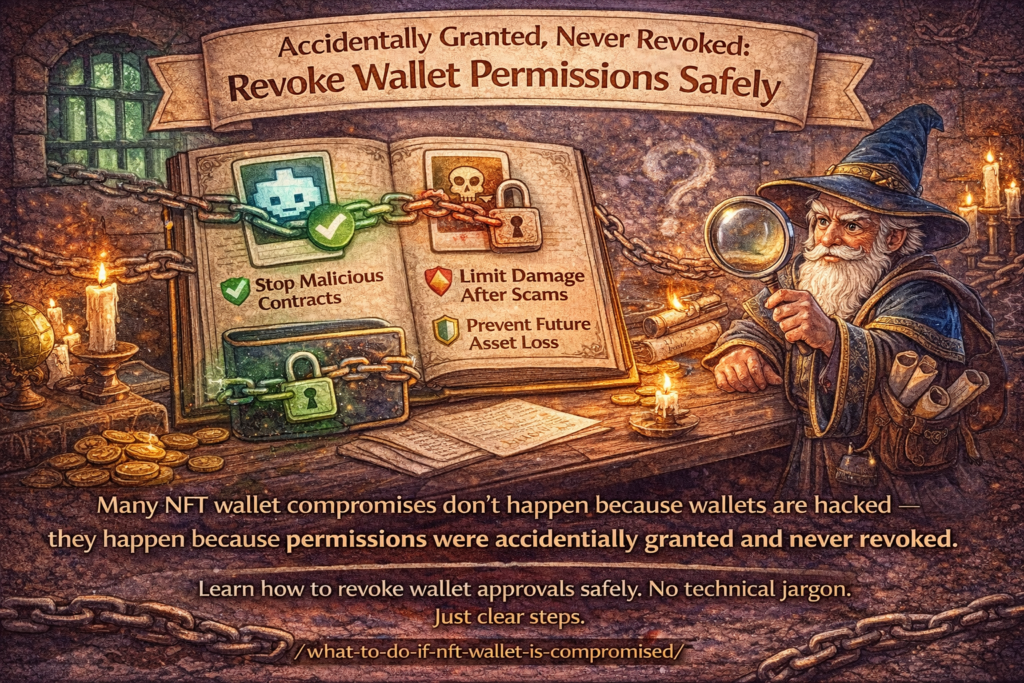
Learning how to revoke wallet permissions safely is one of the most important skills beginners can develop. It allows you to stop malicious contracts, limit damage after scams, and prevent future asset loss.
In this guide, we’ll explain what wallet permissions are, why they’re dangerous when forgotten, and how beginners can revoke them safely.
No technical jargon. Just clear steps.
What Are Wallet Permissions?
Wallet permissions (also called approvals) allow smart contracts to:
- Transfer NFTs
- Move tokens
- Interact with your wallet
They are required for:
- NFT marketplaces
- Swaps
- DeFi tools
- Some minting processes
The problem is that permissions often remain active after you’re done.
Why Wallet Permissions Are Dangerous if Left Active
Old permissions can be exploited if:
- A website was malicious
- A project later becomes compromised
- A smart contract contains hidden risks
Once permissions are granted:
- Assets can be transferred
- No further confirmation may be required
- Losses can happen silently
This is why understanding how to revoke wallet permissions safely matters.
When Should You Revoke Wallet Permissions?
You should revoke permissions if:
- You interacted with a fake NFT giveaway
- You connected to an unfamiliar site
- You approved something you don’t recognise
- You no longer use a marketplace or dApp
- Your wallet may be compromised
👉 Context: What to Do If Your NFT Wallet Is Compromised
How to Revoke Wallet Permissions Safely (Step by Step)
Here is a beginner-safe process.
Step 1: Stop Interacting With Suspicious Sites
Do not connect or sign anything else until permissions are reviewed.
Step 2: Use a Trusted Permission Checker
Use reputable tools designed to view and revoke approvals.
(Always verify URLs manually — fake revocation tools exist.)
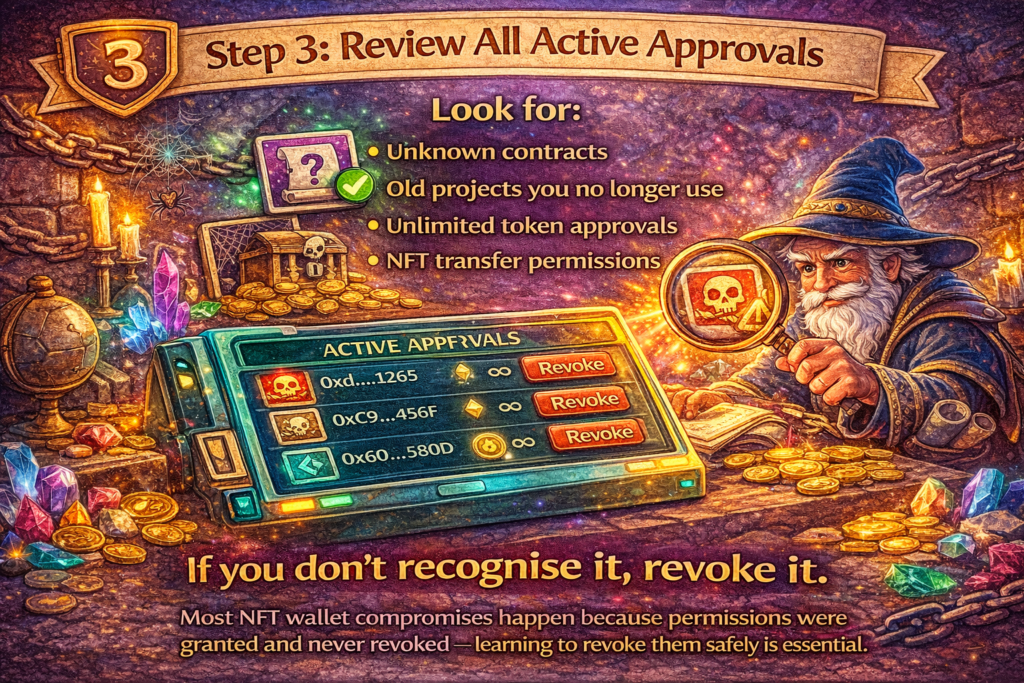
Step 3: Review All Active Approvals
Look for:
- Unknown contracts
- Old projects you no longer use
- Unlimited token approvals
- NFT transfer permissions
If you don’t recognise it, revoke it.
Step 4: Revoke Suspicious or Unused Permissions
Revoking:
- Stops future transfers
- Does not recover stolen assets
- Requires a small gas fee
Think of it as closing unlocked doors.
Step 5: Recheck Your Wallet Activity
After revoking:
- Monitor transactions
- Confirm no new approvals appear
- Avoid reconnecting to old sites
What Revoking Permissions Does (and Doesn’t Do)
Revoking permissions:
- ✅ Stops malicious contracts
- ✅ Limits further damage
- ❌ Does not undo past transfers
- ❌ Does not “secure” a compromised wallet entirely
If a wallet is badly compromised, moving assets to a fresh wallet is still required.
👉 Related reading: What to Do If Your NFT Wallet Is Compromised
Common Beginner Mistakes When Revoking Permissions
Avoid these mistakes:
- Revoking only “some” approvals
- Ignoring unlimited token approvals
- Trusting random links claiming to “fix” wallets
- Assuming revocation replaces good wallet hygiene
Revoking is a tool — not a cure-all.
How Often Should You Revoke Wallet Permissions?
Good practice for beginners:
- After interacting with new sites
- Monthly permission checks
- Immediately after suspicious activity
- Before long-term holding
Regular checks dramatically reduce risk.
How Wallet Choice Affects Permission Safety
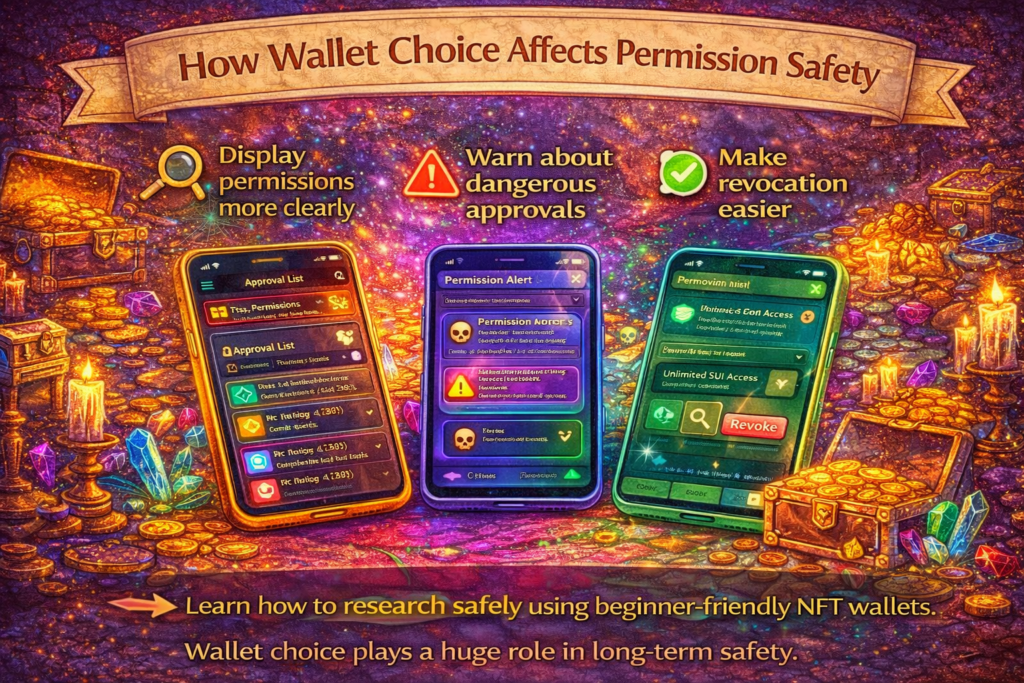
Some wallets:
- Display permissions more clearly
- Warn about dangerous approvals
- Make revocation easier
👉 Learn how to research safely using beginner-friendly NFT wallets
Wallet choice plays a huge role in long-term safety.
Why Revoking Permissions Is a Core Safety Skill
Most NFT scams rely on forgotten approvals, not hacks.
Once you understand:
- What permissions are
- When to revoke them
- How to spot risky approvals
You regain control over your wallet.
This is why learning how to revoke wallet permissions safely is essential for every NFT beginner.
How This Fits Into NFT Safety
This article completes the response → prevention loop in Layer 3.
It connects directly with:
- Fake giveaways
- Wallet drainers
- Compromised wallets
- Ongoing prevention
👉 Back to overview: Most Common NFT Scams
So… How Do You Revoke Wallet Permissions Safely?
To summarise:
- Permissions allow asset transfers
- Forgotten approvals create risk
- Revoking stops future damage
- Regular checks prevent losses
Knowing how to revoke wallet permissions safely gives beginners lasting protection.
What Beginners Should Read Next
The final Layer 3 article brings everything together: