Is It Better to Mint or Buy NFTs on the Secondary Market?
One of the biggest beginner questions in NFTs is: is it better to mint NFTs or buy them on the secondary market?
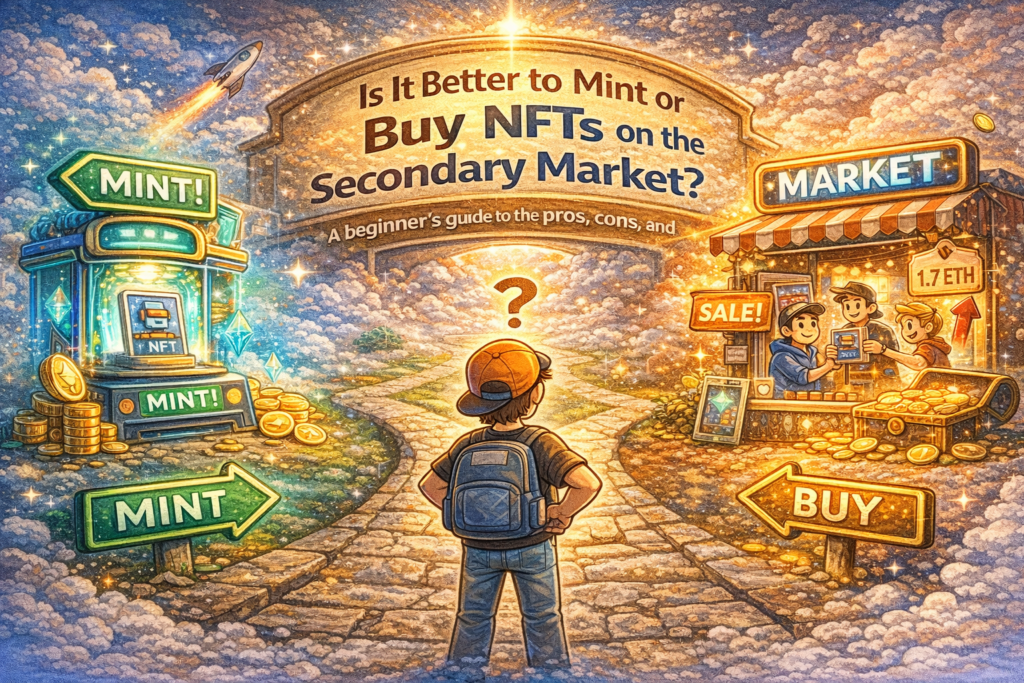
At first glance, minting can feel exciting and cheaper, while buying on the secondary market can feel safer but more expensive. The reality is that neither option is automatically better — it depends on risk, fees, demand, and experience level.
In this guide, we’ll explain whether it’s better to mint or buy NFTs on the secondary market, how each option works, and how beginners should think about the trade-offs.
What Does It Mean to Mint an NFT?
Minting an NFT means buying an NFT directly from the creator at launch, when it’s first added to the blockchain.
When you mint:
- You pay the mint price
- You pay gas fees (in most cases)
- You receive a random NFT from the collection
Minting happens before there is a market price, so outcomes are uncertain.
What Is the Secondary Market for NFTs?
The secondary market is where NFTs are bought and sold after minting.
Examples include:
- Marketplaces where holders list NFTs for sale
- Peer-to-peer transactions
When buying on the secondary market:
- You can see the floor price
- You know current demand
- You can choose a specific NFT
This added visibility reduces uncertainty but often comes at a higher upfront cost.
👉 Related reading: What Happens After You Buy an NFT?
Minting vs Secondary Market: Key Differences
Understanding whether it’s better to mint or buy NFTs on the secondary market starts with the core differences.
Minting
- Lower upfront price (sometimes)
- Higher uncertainty
- Higher failure rate
- Gas fees can be unpredictable
- No price history
Secondary Market
- Higher upfront cost
- Clear market pricing
- Lower uncertainty
- Easier to assess liquidity
- More control over selection
Neither option guarantees success.
Risk: Which Option Is Riskier?
For beginners, minting is usually riskier.
Why?
- Many mints fail to gain demand
- NFTs can become illiquid immediately
- Gas fees still apply even if value drops
- You may not recover costs
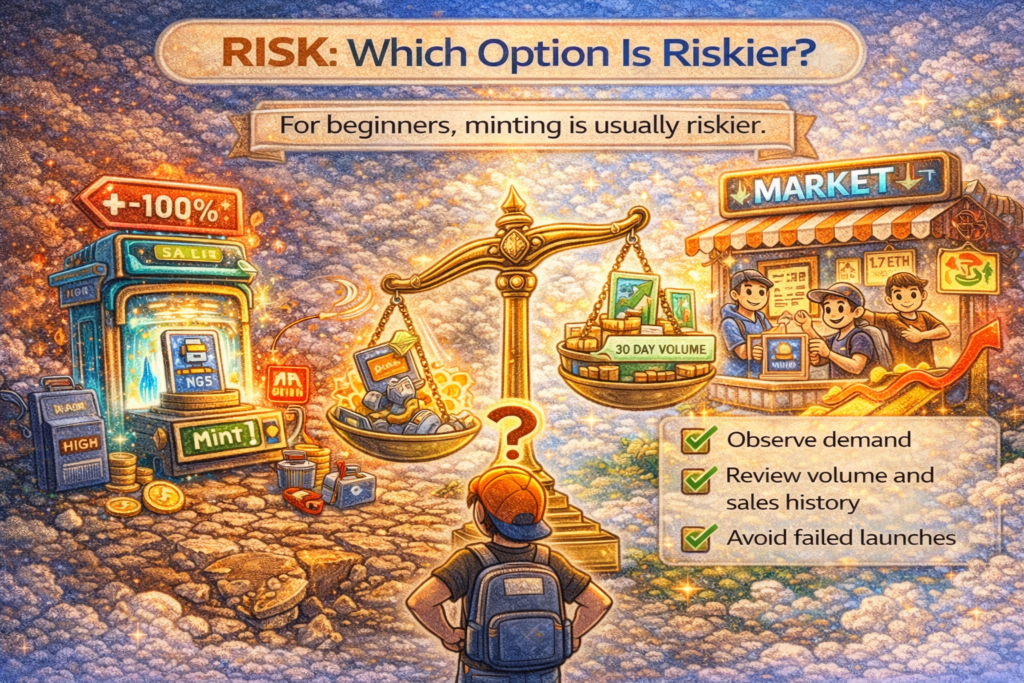
Buying on the secondary market allows beginners to:
- Observe demand
- Review volume and sales history
- Avoid failed launches
👉 Related reading: Can You Lose Money With NFTs?
How Fees Affect the Decision
Fees matter in both cases.
Minting Fees
- Mint price
- Gas fees (sometimes very high)
Secondary Market Fees
- Purchase price
- Gas fees
- Royalties on resale
Understanding fees is critical before deciding whether to mint or buy on the secondary market.
👉 Related reading:
What Are Gas Fees in NFTs and How to Reduce Them
How NFT Royalties Work
Floor Price Visibility (Why This Matters)
When minting:
- There is no floor price yet
- Value is unknown
- Demand is speculative
When buying on the secondary market:
- The floor price shows current sentiment
- You can assess downside risk
- You can compare entry prices
👉 Related reading: What Is a Floor Price and Why It Matters
This visibility alone makes the secondary market more beginner-friendly.
Liquidity: Can You Exit Easily?
Liquidity answers one question:
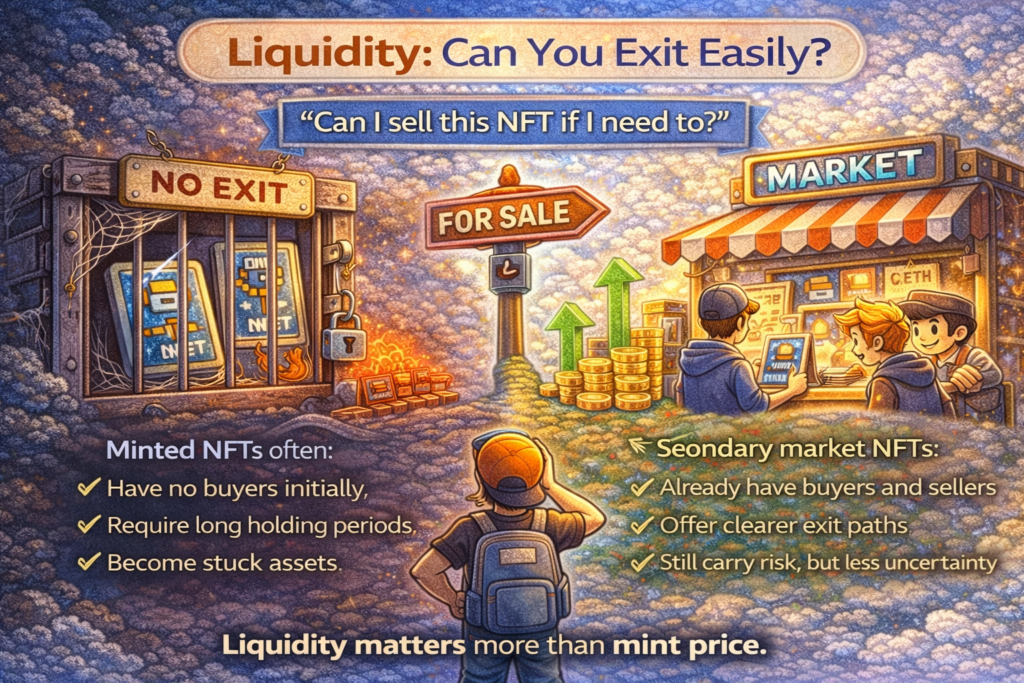
“Can I sell this NFT if I need to?”
Minted NFTs often:
- Have no buyers initially
- Require long holding periods
- Become stuck assets
Secondary market NFTs:
- Already have buyers and sellers
- Offer clearer exit paths
- Still carry risk, but less uncertainty
Liquidity matters more than mint price.
Common Beginner Mistakes When Minting
Beginners often mint because:
- The mint price feels “cheap”
- There’s hype or social pressure
- They fear missing out
Common outcomes:
- NFTs drop below mint price
- Gas fees exceed NFT value
- No buyers appear
This doesn’t mean minting is bad — it means it’s higher risk.
When Minting Might Make Sense
Minting may make sense if:
- You understand the project deeply
- You accept the risk
- Gas fees are reasonable
- You’re comfortable holding long-term
Minting should be intentional, not emotional.
When Buying on the Secondary Market Makes Sense
Buying on the secondary market often suits beginners because:
- You can analyse demand
- You can assess fees and royalties
- You can make condition-based decisions
This aligns well with a cautious learning approach.
👉 Related reading: How Long Should You Hold an NFT?
Wallet Setup Matters Either Way
Whether you mint or buy on the secondary market, secure wallet setup is essential.
You should always:
- Use a beginner-friendly NFT wallet
- Interact only with trusted marketplaces
- Avoid unnecessary approvals
👉 Learn how to research safely using beginner-friendly NFT wallets
Wallet mistakes can outweigh any decision about minting vs secondary market.
So… Is It Better to Mint or Buy NFTs on the Secondary Market?
To summarise:
- Minting = higher risk, higher uncertainty
- Secondary market = clearer pricing, lower uncertainty
- Neither option is guaranteed
- Beginners benefit from visibility and flexibility
There is no universal answer to whether it’s better to mint or buy NFTs on the secondary market — the better choice depends on risk tolerance, fees, and experience.
What Beginners Should Focus On Next
Now that Layer 2 is complete, the next step is moving from mechanics to comparison and strategy, such as:
- Wallet comparisons
- Marketplace comparisons
- Tool stacks for beginners
- Risk-reduction workflows
This is where authority and monetisation scale.