
NFT Exit Strategy for Beginners
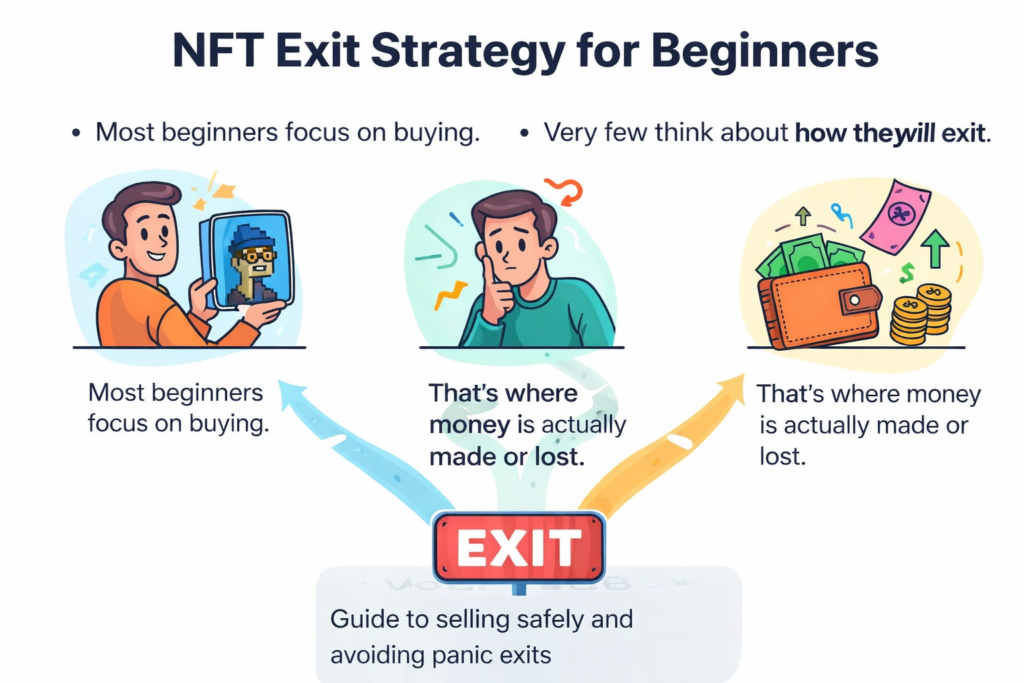
Most beginners focus on buying.
Very few think about how they will exit.
That’s where money is actually made or lost.
This guide explains a complete NFT exit strategy for beginners — including when to sell an NFT, how to take profits safely, and how to avoid panic selling during volatility.
Before selling any NFT, make sure you understand the full selling process here: how to sell NFTs.
And if you haven’t yet secured your wallet properly, start here: best NFT wallets for beginners.
What Is an NFT Exit Strategy?
An NFT exit strategy is a pre-planned framework that defines:
- When you will sell
- Why you will sell
- How much profit you aim to take
- What conditions trigger an exit
- How you will manage risk
Without an NFT selling strategy, decisions become emotional — and emotional exits usually happen too late.
If you’re unsure about holding periods, read: how long should you hold an NFT?
Why Most Beginners Fail at Exiting NFTs
- They wait for “just a little more” profit
- They ignore declining volume
- They focus only on floor price
- They sell from fear during dips
- They never define a profit-taking plan
Understanding how to analyse NFT trading activity and how to spot strong NFT demand helps you exit based on data — not emotion.
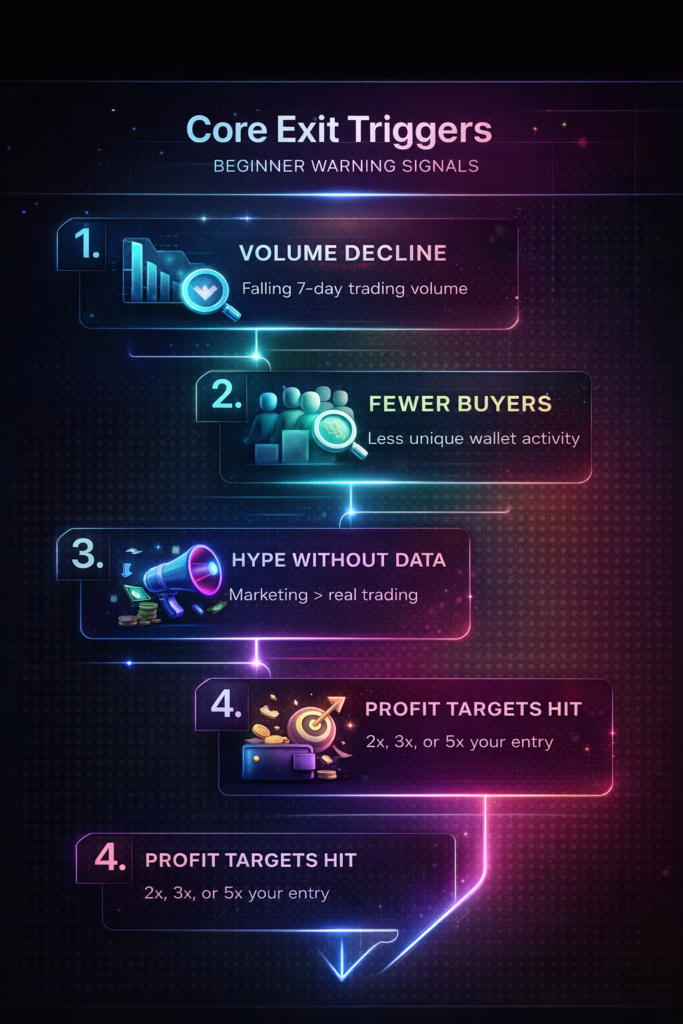
Core Exit Triggers Every Beginner Should Watch
1. Volume Decline
If 7-day volume drops consistently while floor price remains high, demand may be weakening.
Learn to monitor this here: what is NFT volume?
2. Buyer Participation Shrinks
Fewer unique buyers often signals liquidity drying up.
3. Hype Without Data
Strong marketing but weak sales count is a red flag.
4. Pre-Defined Profit Targets Hit
For example: 2x, 3x, or 5x your entry.
Simple NFT Exit Strategy Framework for Beginners
- Set a profit target before buying
- Track 7-day volume weekly
- Monitor unique buyers
- Watch wallet distribution
- Never exit purely from panic
For structured evaluation before selling, use: NFT due diligence checklist.
Should You Take Profits or Hold Long-Term?
There are two core exit models:
- Full exit — sell entire position
- Partial exit — recover initial capital and hold remainder
If unsure, partial exits reduce risk while keeping upside exposure.
Related: when should you sell an NFT?
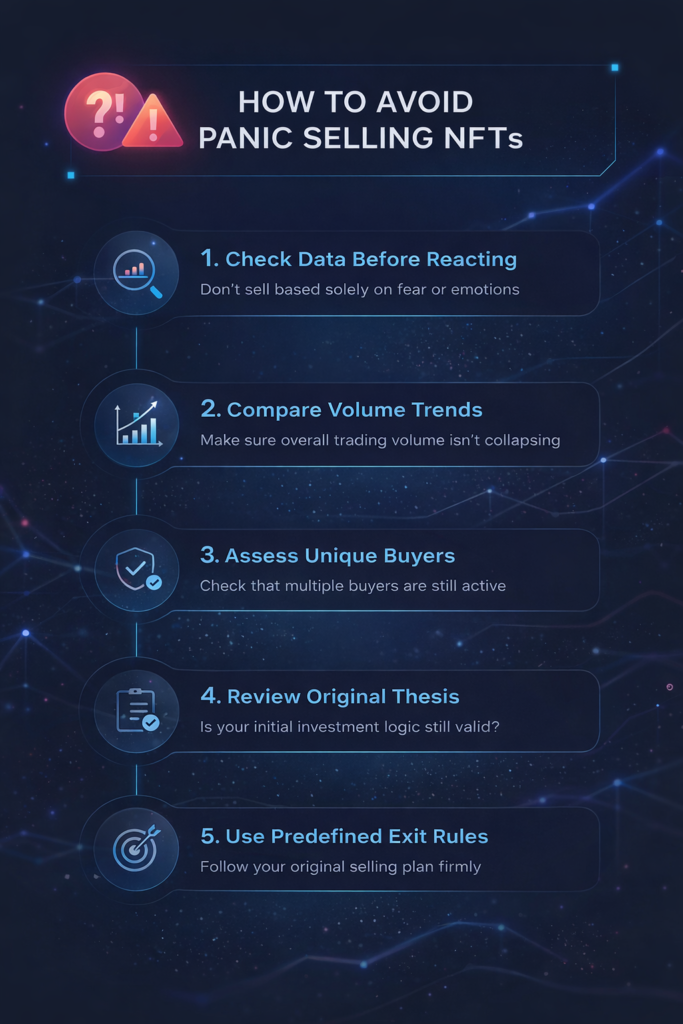
How to Avoid Panic Selling NFTs
- Check data before reacting
- Compare volume trends
- Assess unique buyers
- Review your original thesis
- Use predefined exit rules
Never approve suspicious contracts while rushing to exit. If unsure, read: what is a malicious smart contract?
Reinvesting After an Exit
A strong NFT exit strategy also defines what happens after selling:
- Reinvest into stronger collections
- Move profits to stable assets
- Reduce overall exposure
- Improve diversification
Track performance long-term here: how to track NFT performance over time
Final Thoughts
An effective NFT exit strategy for beginners removes emotion and replaces it with structure.
Plan your exit before you buy.
Use data, not hype.
And remember: taking profits is not failure — it is risk management.
Next step: read Signs It Might Be Time to Exit an NFT (ARTICLE COMING SOON).