NFTs for Beginners: A Step-by-Step Guide to Getting Started Safely
NFTs for beginners can feel confusing and overwhelming when you’re first getting started. With new platforms, wallets, and constant hype, it’s hard to know what’s safe, what’s real, and where to begin.
This step-by-step guide is designed to help NFTs for beginners understand how NFTs work, how to buy them safely, and what tools you actually need without unnecessary risk. Whether you’re exploring digital art, collectibles, or blockchain-based projects for the first time, this guide will walk you through the process clearly and responsibly.
This article is written specifically for NFTs for beginners who want to learn the basics without unnecessary jargon or pressure.
Why NFTs for Beginners Can Feel Confusing at First
What Is an NFT?
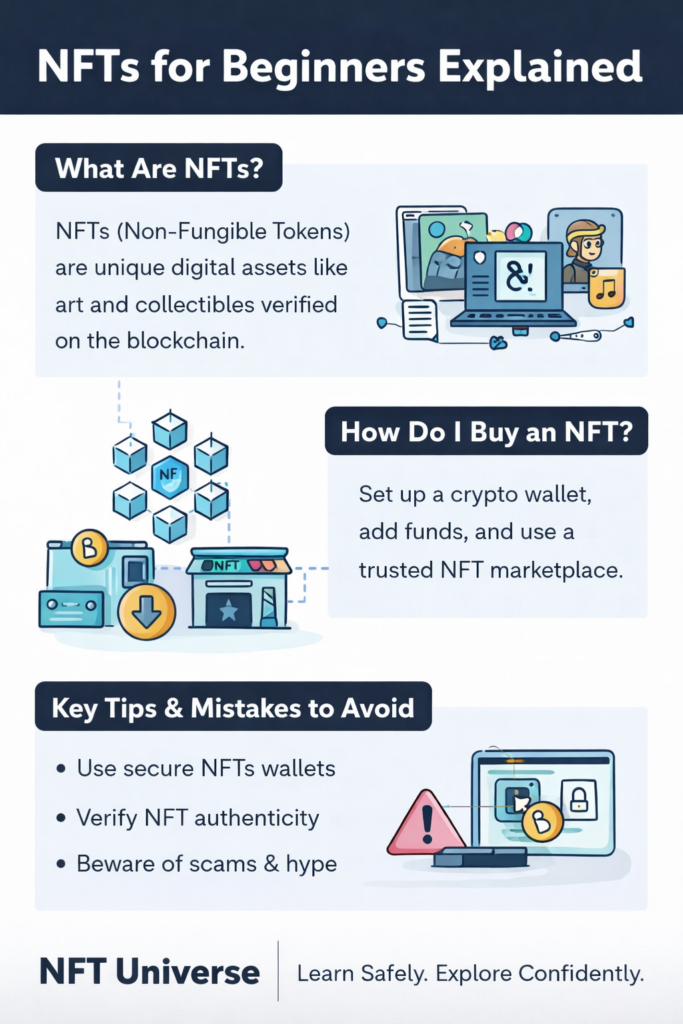
An NFT, or non-fungible token, is a unique digital item stored on a blockchain. Unlike cryptocurrencies such as Bitcoin or Ethereum, which are interchangeable, NFTs are one-of-a-kind and cannot be replaced with something identical.
In simple terms, an NFT acts as a digital certificate of ownership. It proves who owns a specific digital asset, such as artwork, music, videos, in-game items, or collectibles. While the image or file itself can often be viewed by anyone online, the NFT records who officially owns the original version.
NFTs exist on blockchains like Ethereum, which keep a public, tamper-proof record of transactions. This means ownership can be verified at any time without relying on a central authority. When you buy an NFT, the blockchain records your wallet address as the owner, and that ownership can be transferred if you sell or trade it later.
People use NFTs for different reasons. Some collect digital art, others trade NFTs as investments, and many projects use them to unlock access to communities, games, or exclusive content. While the technology is powerful, it’s important to understand how NFTs work before spending money, especially as a beginner.
How NFTs Actually Work (Without the Jargon)
NFTs may sound technical, but the basic idea is straightforward once you break it down. At the core, NFTs rely on blockchain technology, which is essentially a public digital ledger that records transactions in a secure and transparent way.
When an NFT is created, it is “minted” on a blockchain. This process links the digital item (such as artwork or a collectible) to a unique token. That token contains information about the asset, including who created it and who currently owns it. Once recorded on the blockchain, this information cannot be altered or erased.
To interact with NFTs, you use a digital wallet. A wallet doesn’t store the NFT file itself, but rather the private keys that prove you own it. Think of the wallet as your personal access key to the blockchain. Without it, you cannot buy, sell, or transfer NFTs.
For beginners, choosing the right wallet is an important first step — our guide to the best NFT wallets for beginners explains which options are safest and easiest to use.
NFTs are bought and sold on marketplaces, which are platforms that connect buyers and sellers. These marketplaces handle listings, pricing, and transactions while the blockchain handles ownership verification. When you purchase an NFT, the marketplace triggers a blockchain transaction that transfers ownership to your wallet.
Understanding this basic flow — blockchain, wallet, and marketplace — is essential before making your first purchase. Once these pieces make sense, the NFT process becomes far less intimidating.
Once you understand how NFTs work, using the right tools can help you research collections, track prices, and avoid common mistakes. Our guide to the best NFT tools for beginners covers the most useful platforms to get started.
You can also explore related explanations and updates in our NFT news section as the technology continues to evolve.
NFTs are built on blockchain networks such as Ethereum, which publicly record ownership and transactions.
Step-by-Step: How to Buy Your First NFT
Buying your first NFT doesn’t need to be complicated, but it does require a few basic steps. Taking the process slowly helps you avoid common mistakes and reduces the risk of scams or accidental losses.
For NFTs for beginners, following a clear step-by-step process helps reduce mistakes and makes the first purchase far less intimidating.
Before purchasing anything, it’s important to understand that NFTs are tied to your digital wallet. This means you are responsible for security, not a bank or platform. For beginners, choosing reputable tools and platforms is far more important than chasing hype or fast profits.
Below is a simple, beginner-friendly breakdown of the process.
Step 1: Choose a Secure NFT Wallet
To buy and store NFTs, you’ll need a digital wallet. This wallet is where your NFTs will live and where your ownership is recorded on the blockchain. It also allows you to connect to NFT marketplaces and approve transactions.
For beginners, it’s best to use a well-known wallet that is easy to set up and widely supported by marketplaces. Security features, clear interfaces, and strong community adoption are key factors to look for. Never share your recovery phrase with anyone, and always store it offline in a safe place.
(We’ll cover specific wallet recommendations and setup guides later in this article.)
To see specific wallet options and step-by-step setup instructions, our guide to the best NFT wallets for beginners walks through the safest choices.
Step 2: Pick a Trusted NFT Marketplace
Once your wallet is ready, you’ll need a marketplace to browse and purchase NFTs. Marketplaces act as storefronts where creators list NFTs and buyers can explore collections.
Not all marketplaces are the same. Some focus on digital art, others on gaming assets or collectibles. As a beginner, it’s best to stick with established platforms that have strong reputations, transparent fees, and active moderation.
Always double-check collection details, creator profiles, and transaction history before making a purchase. This helps reduce the risk of buying fake or low-quality NFTs.
Step 3: Connect Your Wallet and Make a Purchase
After choosing a marketplace, you’ll connect your wallet to it. This allows the platform to interact with your wallet for browsing, bidding, or buying NFTs.
When you decide to buy an NFT, you’ll be asked to approve the transaction in your wallet. This confirmation step shows the price, fees, and destination of the NFT. Once approved, the transaction is recorded on the blockchain and ownership is transferred to your wallet.
After the transaction completes, the NFT will appear in your wallet or marketplace profile. At that point, you officially own it.
Common NFT Mistakes Beginners Should Avoid
Many beginners lose money or get discouraged not because NFTs are inherently bad, but because they rush in without understanding the risks. Being aware of common mistakes early can save you time, stress, and unnecessary losses.
One of the most common mistakes is buying NFTs purely based on hype. Social media trends, influencers, and sudden price spikes can create pressure to act fast. In reality, many hyped projects lose value quickly once attention fades. Taking time to research a project, its creator, and its purpose is far safer than chasing short-term excitement.
Another frequent issue is falling for scams or fake collections. Scammers often copy popular NFT projects and create nearly identical listings on marketplaces. Beginners may accidentally buy from these fake collections if they don’t verify creator profiles, collection links, or official websites. Always double-check that a project is legitimate before purchasing.
Poor wallet security is also a major problem. Some beginners store recovery phrases digitally, reuse passwords, or connect their wallet to unknown websites. If someone gains access to your wallet, your NFTs can be transferred instantly and permanently. Treat your wallet like a vault — keep recovery phrases offline and never share them.
Finally, many new users underestimate transaction fees and costs. Gas fees and marketplace charges can significantly affect the total cost of buying or selling NFTs. Not understanding these fees can lead to surprise expenses or buying something that isn’t worth the total cost.
Avoiding these mistakes doesn’t require expert knowledge — just patience, caution, and a willingness to learn before acting.
Are NFTs Safe? What Beginners Should Know
NFTs themselves are not inherently unsafe, but the way they are used — and the platforms surrounding them — can introduce risks. For beginners, understanding where those risks come from is more important than trying to predict prices or trends.
The blockchain technology behind NFTs is highly secure. Transactions are recorded publicly and cannot be altered, which makes ownership transparent and verifiable. However, this also means that mistakes are often permanent. If an NFT is sent to the wrong wallet or a scammer gains access to your wallet, there is usually no way to reverse the transaction.
Most safety issues come from human error, not the technology itself. Clicking unknown links, approving suspicious wallet requests, or trusting unofficial marketplaces can expose users to scams. Beginners should be especially cautious about connecting their wallet to websites they don’t fully trust.
Another important consideration is volatility. NFT values can change quickly, sometimes without clear reasons. While some people make profits, others experience losses. NFTs should be approached as a learning experience or a hobby first, rather than a guaranteed investment.
The safest way to get started is to:
- Use reputable wallets and marketplaces
- Start with small amounts
- Take time to understand how transactions work
- Avoid pressure to act quickly
With the right tools, cautious habits, and realistic expectations, beginners can explore NFTs in a much safer and more confident way.
Recommended Tools for NFT Beginners
Getting started with NFTs is much easier when you use tools that are reliable, beginner-friendly, and widely supported. While there are many options available, beginners should focus on simplicity, security, and strong community adoption rather than advanced features.
Below are the essential tools most beginners need, along with guidance on what to look for before choosing one.
NFT Wallets for Beginners
A digital wallet is the most important tool you’ll use when interacting with NFTs. It allows you to store NFTs, connect to marketplaces, and approve transactions.
When choosing a wallet as a beginner, look for:
- Clear setup instructions
- Strong security features
- Wide compatibility with marketplaces
- Active development and support
Some wallets are designed to be especially beginner-friendly and are commonly used across the NFT ecosystem. Using a well-known wallet reduces the risk of compatibility issues and makes it easier to follow tutorials and guides.
👉 Not sure which wallet to choose? See our guide to the best NFT wallets for beginners.
NFT Marketplaces to Explore
NFT marketplaces are where NFTs are bought, sold, and traded. Different platforms cater to different types of NFTs, such as digital art, collectibles, or gaming assets.
For beginners, it’s best to use established marketplaces that:
- Have clear verification systems
- Display transparent fees
- Offer buyer protections and reporting tools
Sticking with reputable platforms helps reduce the risk of fake collections and makes the buying process smoother.
👉 We break down popular marketplaces and how they compare in our marketplace guides.
Final Thoughts: Starting Your NFT Journey
NFTs can feel complex at first, but with the right approach, they become much easier to understand. This guide is designed to give NFTs for beginners a clear, safe starting point without unnecessary risk or confusion. By taking the time to learn how NFTs work, using trusted tools, and avoiding common mistakes, beginners can explore the space with far more confidence and control.
The key is to move at your own pace. There’s no need to rush into purchases or follow hype-driven trends. Starting small, doing your research, and focusing on education will always put you in a stronger position than trying to chase quick results.
As you continue learning, we recommend exploring our in-depth guides, staying updated with the latest NFT news, and reviewing trusted wallets and tools as your experience grows. NFT Universe is here to help you navigate the ecosystem responsibly and make informed decisions every step of the way.