
When NOT to Sell an NFT
When NOT to Sell an NFT
Selling at the wrong time can be just as damaging as buying at the wrong time.
Understanding when not to sell an NFT helps you avoid emotional exits, premature profit-taking, and fear-driven decisions.
If you haven’t read it yet, start with your full NFT exit strategy for beginners before making timing decisions.
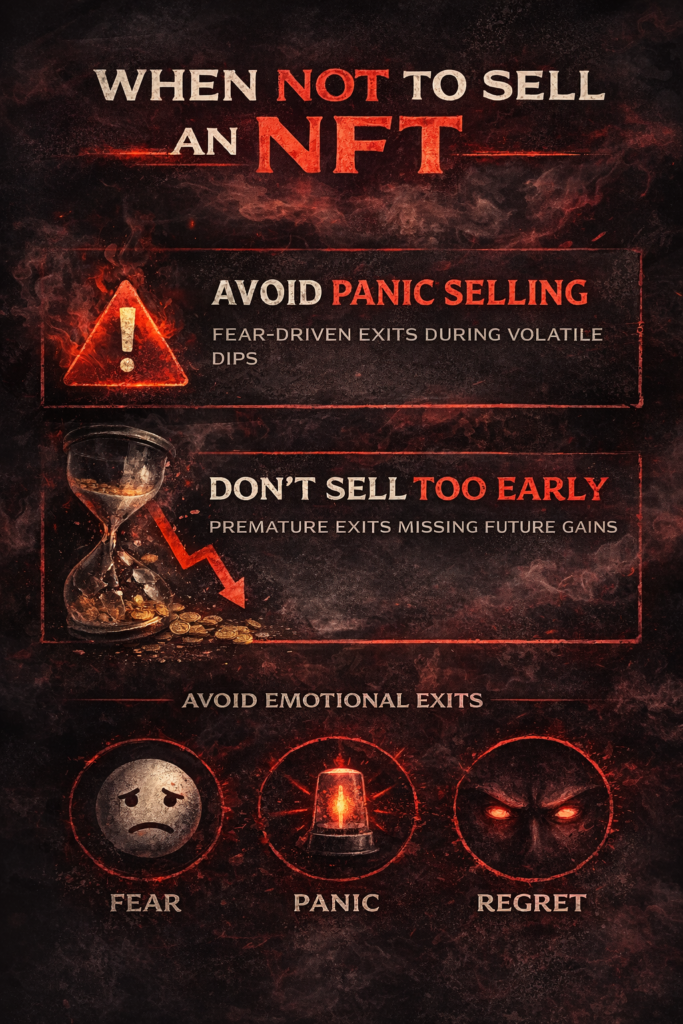
1. Do NOT Sell During Temporary Volatility
NFT markets are volatile.
A short-term dip does not automatically mean demand is gone.
Before selling, check:
- 7-day trading volume
- Unique buyer activity
- Overall sales count
Learn how to read this data here: How to analyse NFT trading activity.
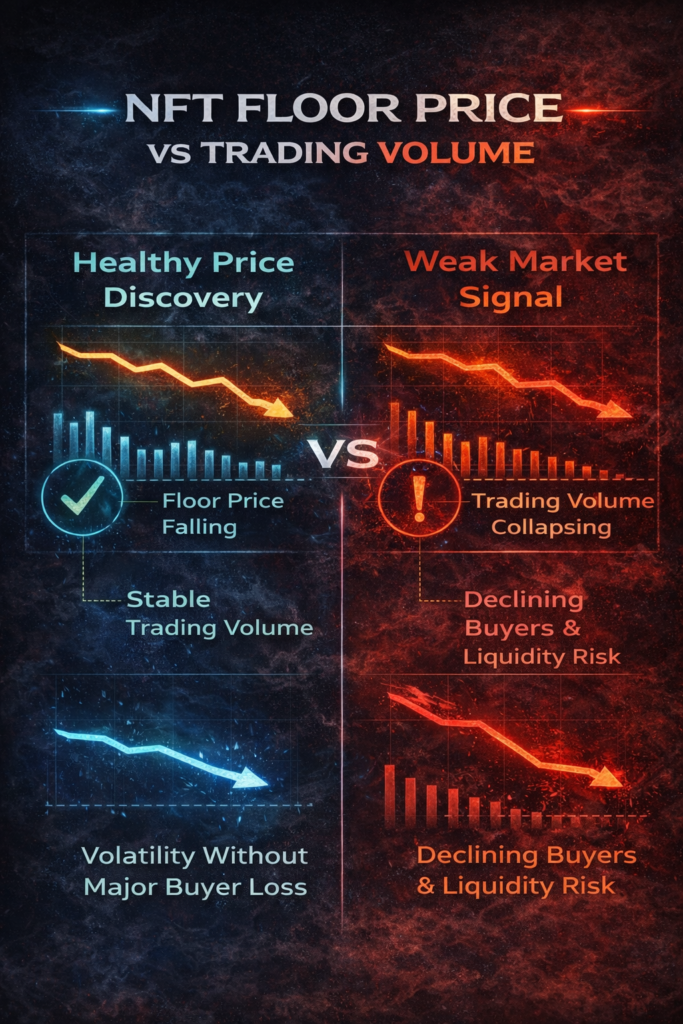
2. Do NOT Sell Solely Because Floor Price Drops
Floor price is only one metric.
A falling floor without collapsing volume may simply indicate price discovery.
Understand this relationship: NFT floor price vs volume.
And if needed, review the basics: What is a floor price in NFTs?
3. Do NOT Sell Out of Panic
Panic selling NFTs usually happens when:
- Social sentiment turns negative
- One large holder exits
- Price dips quickly
Before reacting, revisit your thesis and exit rules.
Also read: Signs it might be time to exit an NFT.
4. Do NOT Sell If Demand Is Still Strong
Strong demand typically shows:
- Consistent 7-day volume
- Multiple unique buyers
- Balanced buy/sell participation
If those signals remain intact, selling purely from fear may cost you long-term upside.
Review demand signals here: How to spot strong NFT demand.
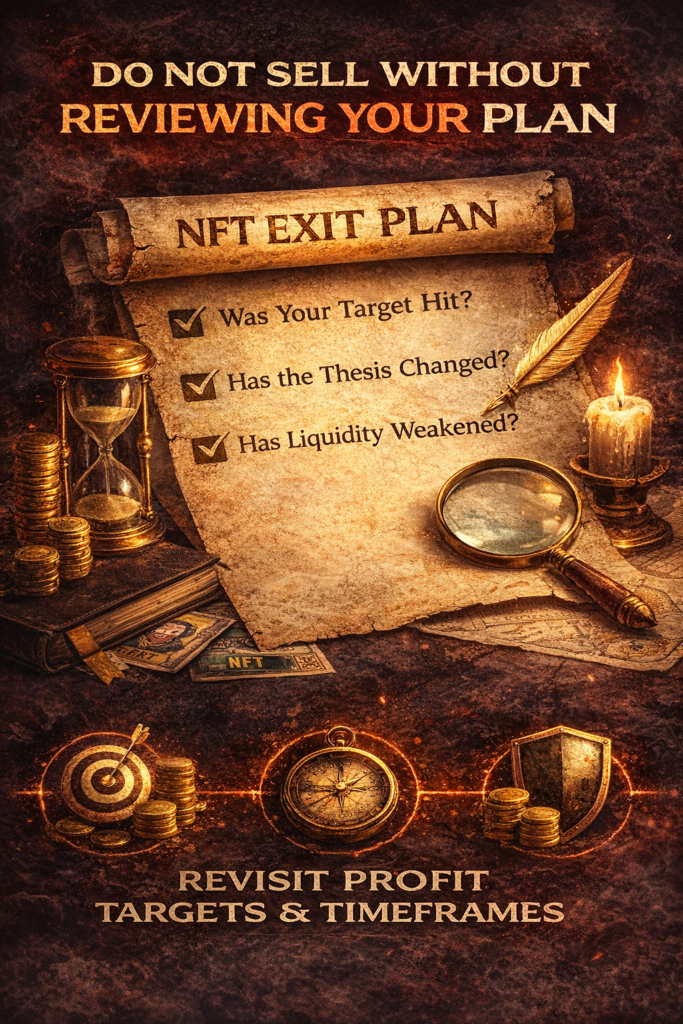
5. Do NOT Sell Without Reviewing Your Original Plan
If you set predefined profit targets or holding timeframes, breaking them impulsively undermines your strategy.
Revisit your plan first:
- Was your target hit?
- Has the thesis changed?
- Has liquidity truly weakened?
If not, patience may be justified.
Emotional Traps That Cause Early Exits
- Fear of losing unrealised profit
- Following social media panic
- Comparing your gains to others
- Overreacting to one large sale
Strong investors exit based on structure — not emotion.
Final Thoughts
Learning when not to sell an NFT protects you from costly mistakes.
Temporary dips, fear cycles, and social noise are not always valid exit signals.
Use volume, buyer participation, and predefined exit rules to decide.
Next: How to Exit NFTs Without Panic Selling (ARTICLE COMING SOON).