How to Evaluate NFT Projects (A Beginner Framework That Actually Works)
Buying an NFT without proper evaluation is one of the fastest ways beginners lose money in the NFT space.
If you’re new, learning how to evaluate NFT projects is far more important than chasing hype, mint dates, or trending collections. A simple evaluation framework can help you avoid scams, reduce mistakes, and make smarter long-term decisions.
This guide breaks down how to evaluate NFT projects step by step, using clear signals beginners can actually understand and apply.
Why Most NFT Buyers Lose Money
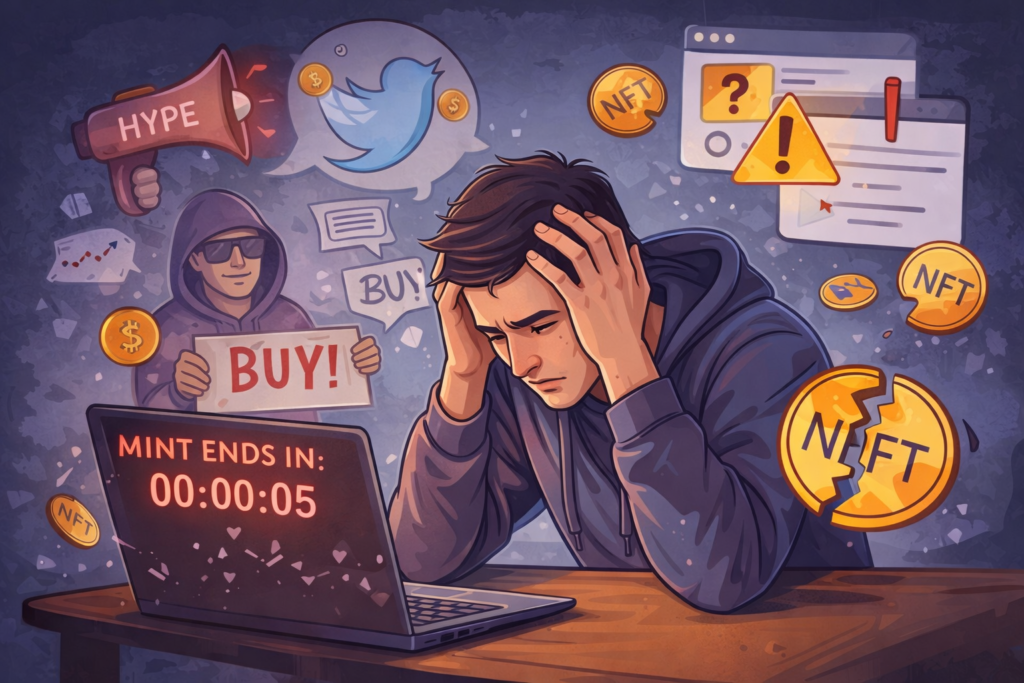
Most losses don’t come from bad luck — they come from bad evaluation.
Common beginner mistakes include:
- Buying based on hype or social media buzz
- Rushing into mints without research
- Trusting influencers instead of fundamentals
- Ignoring warning signs
Before evaluating individual projects, make sure you understand the basics by reading NFTs for Beginners: A Step-by-Step Guide to Getting Started Safely.
Learning how to evaluate NFT projects before buying helps you slow down, think clearly, and make decisions based on evidence rather than emotion.
The 5 Core Signals of a Legit NFT Project
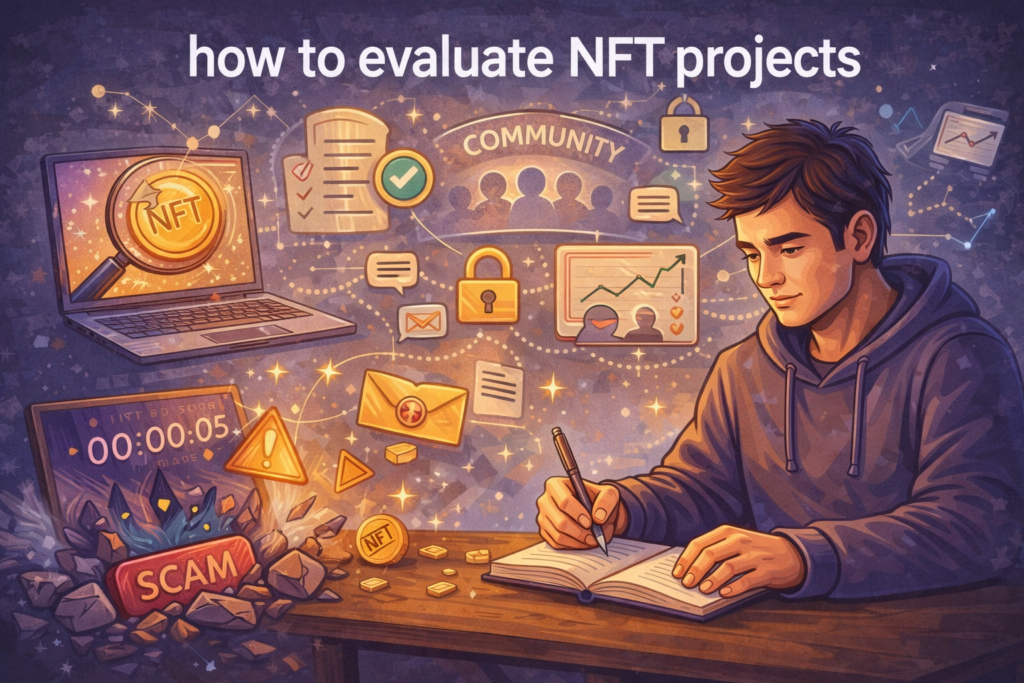
When learning how to evaluate NFT projects, these five areas matter more than anything else.
1. Team Credibility & Transparency
A strong NFT project starts with a real, accountable team.
Things to look for:
- Public founders or builders
- Verifiable past experience (Web3 or otherwise)
- Clear communication across platforms
Red flags:
- Completely anonymous team with no proof of work
- Stock photos or fake identities
- No history outside the current project
If you’re unsure how scammers hide behind fake teams, review NFT Scams to Avoid: A Beginner’s Safety Guide.
You don’t need a famous team — you need a real one.
2. Utility & Purpose
Every NFT project should answer one simple question:
What does this NFT actually do?
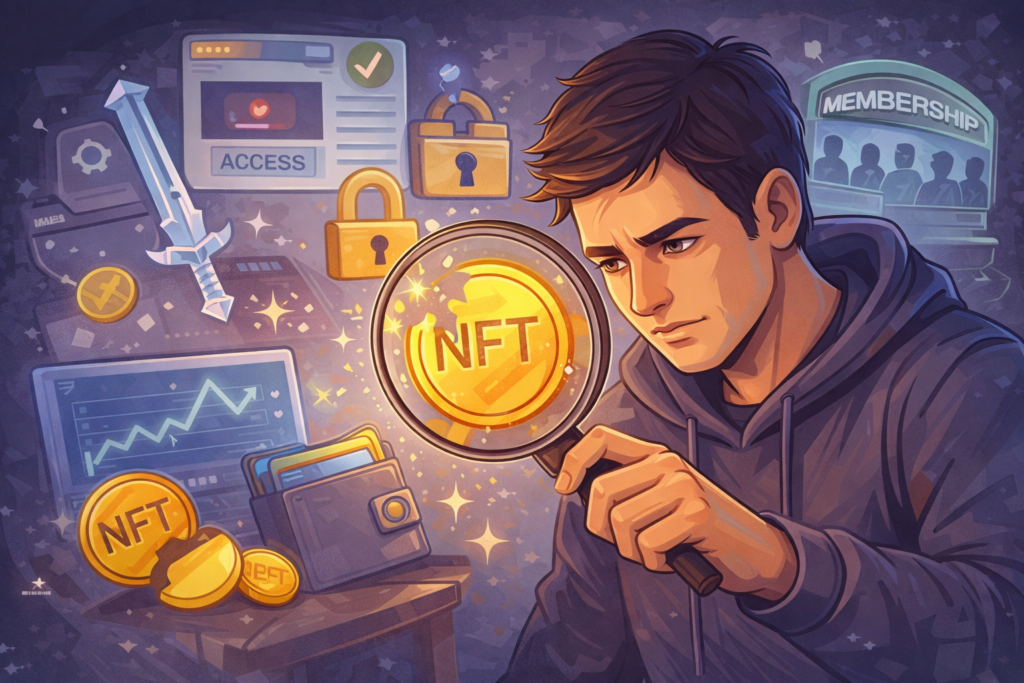
Utility doesn’t have to be complex, but it must exist. Examples include:
- Access to content or tools
- Membership or gated communities
- In-game use or digital ownership
- Ongoing benefits for holders
If a project requires wallet interaction, always ensure you’re using a secure setup from Best NFT Wallets for Beginners: Safe & Easy Options to Get Started.
If you can’t clearly explain the utility, that’s a warning sign when learning how to evaluate NFT projects.
3. Community Quality (Not Size)
A large community doesn’t automatically mean a healthy one.
When evaluating NFT projects, focus on:
- Genuine discussion (not just “wen mint”)
- Helpful moderators
- Respectful conversation
- Transparency during tough moments
Red flags:
- Bots everywhere
- Constant hype with no substance
- Questions being ignored or deleted
Before joining any Discord or clicking links, understand marketplace safety by reading Best NFT Marketplaces for Beginners: Safe Places to Buy Your First NFT.
A smaller but thoughtful community often beats a massive, noisy one.
4. Roadmap Realism
A roadmap should be believable, not impressive.
Good roadmaps:
- Clearly explain upcoming phases
- Avoid unrealistic promises
- Focus on achievable goals
Red flags:
- Guaranteed profits
- Vague phrases like “big partnerships coming”
- Overly ambitious timelines
If a roadmap feels confusing, go back to fundamentals using How to Research NFTs Before Buying: A Beginner’s Guide.
A realistic roadmap is a strong signal when learning how to evaluate NFT projects properly.
5. Transparency & Communication
Legit projects communicate consistently — even when things go wrong.
Look for:
- Regular updates
- Honest explanations of delays
- Clear responses to community concerns
Silence or deflection is often a sign something isn’t right.
Projects that communicate openly tend to survive longer than those driven purely by hype.
Common Red Flags That Signal a Bad NFT Project
Knowing how to evaluate NFT projects also means knowing when to walk away.
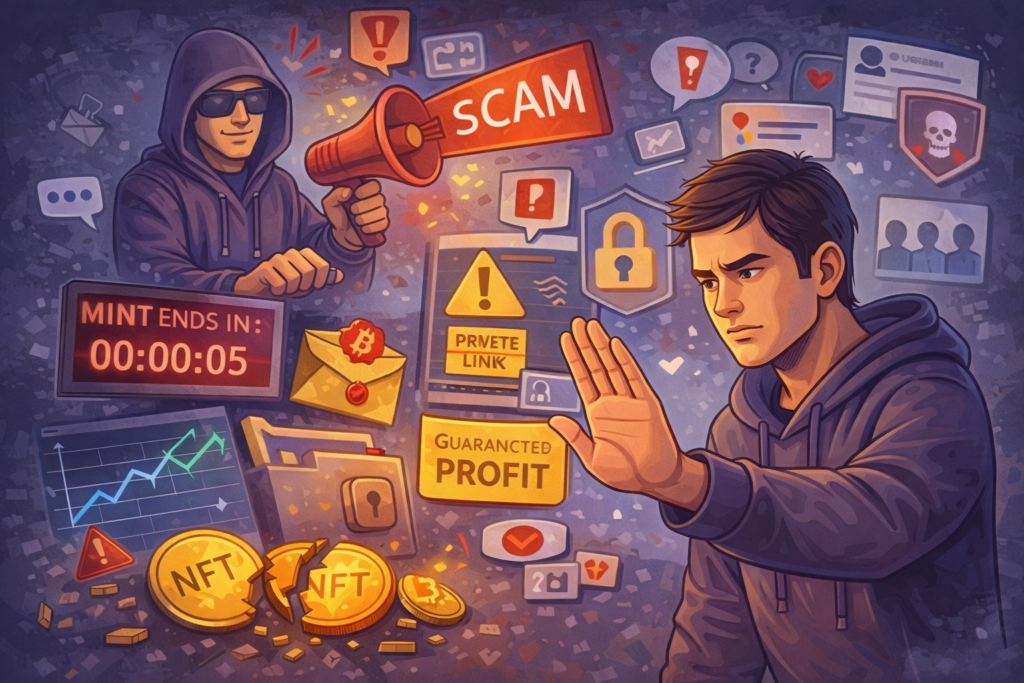
Major warning signs include:
- Artificial urgency (“mint ends in 10 minutes”)
- Guaranteed returns or profit claims
- Pressure to act fast without research
- Private links or surprise announcements
- Fake giveaways or impersonation accounts
If something feels rushed or confusing, pause and review NFT Scams to Avoid: A Beginner’s Safety Guide again.
Legit projects don’t pressure you.
Tools That Help Evaluate NFT Projects
While tools shouldn’t replace thinking, they can support better decisions.
Beginner-friendly NFT tools can help you:
- Check collection history
- Review holder distribution
- Spot suspicious activity
- Compare similar projects
To understand which tools actually help beginners, explore Best NFT Tools for Beginners: Track, Analyse & Research NFTs.
Use tools to confirm your evaluation — not to replace it.
A Simple Beginner Checklist for Evaluating NFT Projects
Before buying any NFT, ask yourself:
- Do I understand what this project does?
- Is the team real and accountable?
- Does the roadmap make sense?
- Is the community healthy?
- Am I buying calmly — not emotionally?
If you can’t confidently answer yes, wait.
Learning how to evaluate NFT projects is a skill that improves with time — and patience is a huge advantage in NFTs.
Final Thoughts
No evaluation method guarantees success — but a strong framework dramatically reduces mistakes.
If you want to succeed long-term in NFTs:
- Slow down
- Stay curious
- Prioritise learning over hype
Mastering how to evaluate NFT projects will protect your capital, your confidence, and your experience in the NFT space.
There’s no rush. The market will still be here.