Best NFT Marketplaces for Beginners: Safe Places to Buy Your First NFT
Disclosure: some links in this article are affiliate or referral links. If you sign up through one we may earn a commission, at no extra cost to you. It doesn’t affect what we recommend — here’s how we make money.
Buying your first NFT can feel overwhelming, especially with so many marketplaces claiming to be the best. Fees, fake collections, and unfamiliar platforms make it hard to know where it’s actually safe to start.
This guide breaks down the best NFT marketplaces for beginners, explaining which platforms are easiest to use, what types of NFTs they support, and how to avoid common mistakes when buying your first digital asset.
If you haven’t set up a wallet yet, start with our NFTs for beginners step-by-step guide before choosing a marketplace.
Last reviewed: September 2026
What Is an NFT Marketplace?#
An NFT marketplace is a platform where users can buy, sell, and trade non-fungible tokens. These marketplaces connect creators and collectors, allowing NFTs to be listed, purchased, and transferred using crypto wallets.
Most NFT marketplaces require you to connect a compatible wallet before making a purchase. This is why choosing the right wallet and marketplace combination is important for beginners.
If you’re still deciding on a wallet, see our guide to the best NFT wallets for beginners.
Best NFT Marketplaces for Beginners (Compared)#
| Marketplace | Best for | Chains covered here | Worth knowing |
|---|---|---|---|
| OpenSea | Buying a first NFT and browsing lots of collections | Ethereum, Polygon | Largest marketplace — still check verification badges |
| Blur | Deeper market data once you are past the basics | Ethereum | Trading-focused interface feels more complex at first |
| Magic Eden | Experimenting without high gas fees | Solana and other supported networks | Surfaces trending and verified collections |
| Coinbase NFT | A familiar brand and a low-friction start | Ethereum | Lower volume than the largest marketplaces |
| OKX Marketplace | Keeping exchange, wallet and marketplace together | Multiple blockchains | More advanced; suits people already trading on OKX |
The marketplaces below are popular with beginners because they are well-established, widely supported, and offer clear interfaces with strong security practices.
OpenSea (Most Beginner-Friendly NFT Marketplace)#
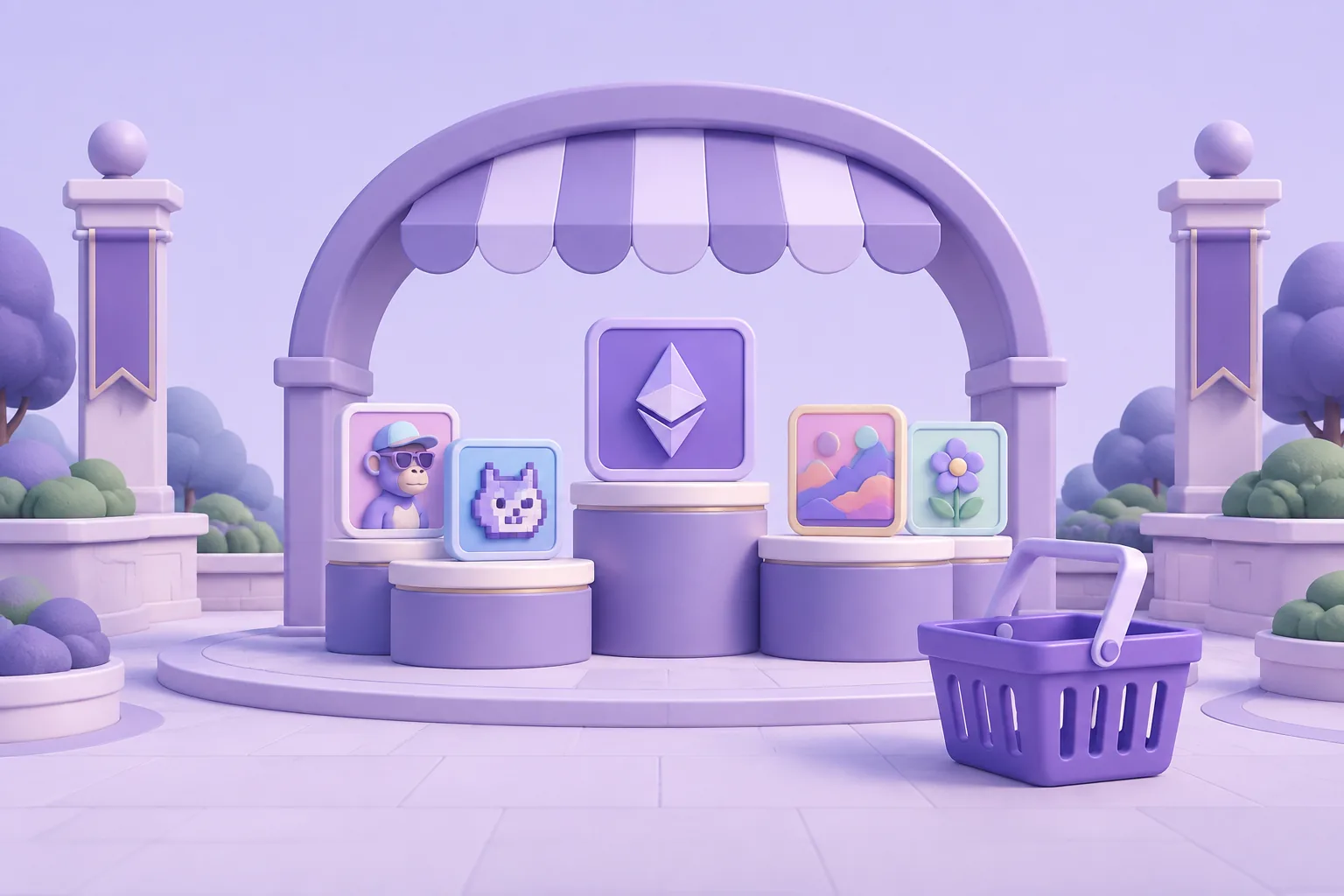
OpenSea is one of the largest and most established NFT marketplaces and the most common starting point for beginners — our step-by-step OpenSea buying guide walks through the actual purchase flow; our step-by-step OpenSea selling guide covers the other side. It supports a wide range of blockchains — including Ethereum, Polygon and Solana — and allows users to browse NFTs without connecting a wallet.
OpenSea is often recommended to beginners because of its large selection, familiar layout, and strong community presence. While users still need to be cautious of fake collections, OpenSea provides clear verification indicators that help reduce risk.
Best for:
Beginners buying their first NFT and exploring multiple collections in one place.
You can explore OpenSea via the official website.
Want the raw evidence rather than a ranking? Our sister site NFTMarketplace.com.au maintains a verified OpenSea profile with its current status, fee schedule and supported chains.
Blur (NFT Marketplace for Active Traders)#
Blur is an NFT marketplace designed for users who want more control over pricing, analytics, and trading activity. While it was originally built with advanced users in mind, many beginners encounter Blur soon after they start exploring NFTs more seriously.
Blur supports Ethereum-based NFTs and integrates with common wallets like MetaMask and Coinbase Wallet (now the Base app). One of its standout features is real-time market data, allowing users to see floor prices, recent sales, and collection trends more clearly than on many traditional marketplaces.
Because of its trading-focused interface, Blur may feel slightly more complex than OpenSea at first. However, users who plan to buy, sell, or monitor NFTs regularly often appreciate the added visibility and speed once they become comfortable.
Best for:
NFT users who want deeper market insights, faster trading tools, and more control over NFT pricing after learning the basics.
You can explore Blur via the official website.
For the raw evidence rather than a summary — status, fee schedule and supported chains — our sister site NFTMarketplace.com.au maintains a verified Blur profile.
OKX Marketplace (Exchange-Integrated NFT Marketplace)#
OKX operates an NFT marketplace that is closely integrated with its broader exchange and Web3 ecosystem. This makes OKX Marketplace a practical option for users who already trade crypto on OKX or want a smoother experience moving funds between an exchange and NFT platforms.
OKX Marketplace supports NFTs across multiple blockchains and allows users to explore collections, manage assets, and interact with decentralised applications through a single interface. For NFT users who prefer keeping trading, storage, and marketplace activity within one ecosystem, this integration can significantly reduce friction.
Because OKX combines exchange features with Web3 tools, it may feel slightly more advanced than standalone marketplaces. However, users who are comfortable trading crypto or participating in NFT drops often appreciate the convenience and speed this setup provides.
Best for:
NFT users who want an exchange-connected marketplace with streamlined asset management and access to multiple blockchain networks.
You can explore OKX Marketplace via the official OKX platform.
How to Buy Your First NFT (Step-by-Step)#
Buying your first NFT doesn’t need to be complicated. By following a simple process, beginners can avoid common mistakes and reduce the risk of sending funds to the wrong place.
Most established NFT marketplaces follow a similar buying process, which makes it easier to learn once and apply it across different platforms.
Step 1: Set Up a Compatible Wallet#
Before using an NFT marketplace, you’ll need a crypto wallet that supports NFTs. This wallet will store your NFTs and allow you to connect securely to marketplaces.
If you’re unsure which wallet to choose, start with our guide to the best NFT wallets for beginners.
Step 2: Fund Your Wallet With Crypto#
Most NFT marketplaces require cryptocurrency such as ETH or SOL to make purchases. This usually involves buying crypto on an exchange and transferring it to your wallet.
Make sure you send funds on the correct blockchain network to avoid permanent loss.
Step 3: Connect Your Wallet to a Marketplace#
Once your wallet is funded, visit an NFT marketplace and connect your wallet using the site’s official connection button. Always double-check the website URL before approving any wallet connection.
Step 4: Choose a Verified NFT Collection#
When browsing NFTs, look for verified collections and review details such as floor price, creator history, and recent sales. Avoid collections with little information or suspicious activity.
Step 5: Buy and Confirm the Transaction#
After selecting an NFT, confirm the purchase through your wallet. Transactions may take a few moments to process depending on network activity. Once complete, the NFT will appear in your wallet.
Common NFT Marketplace Mistakes Beginners Should Avoid#
Even experienced crypto users can make mistakes when buying NFTs for the first time. Being aware of these common pitfalls can help beginners protect their funds and avoid unnecessary stress.
Connecting Your Wallet to Fake Websites#
Scam NFT marketplaces often look nearly identical to real platforms. Always double-check the website URL before connecting your wallet, and avoid clicking marketplace links from unsolicited messages or social media comments.
Buying From Unverified or Fake Collections#
Some NFTs are designed to imitate popular collections. Beginners should look for verified collections and review creator profiles, transaction history, and community presence before making a purchase.
Ignoring Transaction Fees#
Gas fees and marketplace fees can significantly increase the cost of an NFT. Before confirming a transaction, make sure you understand the total cost and whether it fits your budget.
Sending Crypto on the Wrong Network#
Sending funds on the wrong blockchain network can result in permanent loss. Always confirm that the wallet, exchange, and marketplace are using the same network before transferring crypto.
Rushing Into Hype-Driven Purchases#
NFT hype can create pressure to buy quickly. Take time to research collections, understand what you’re buying, and avoid making decisions based purely on fear of missing out.
How to choose: a quick decision checklist#
The right marketplace is the one that fits your situation, not the biggest name. Five questions decide it:
- Which blockchain is the NFT on? The collection you want determines this — check the chain before choosing a platform or wallet.
- How will you fund it? Most marketplaces need crypto in a compatible wallet — buying crypto with AUD and moving it to your wallet cover that path; a few platforms accept card payments instead — buying an NFT without crypto.
- Which wallet does it support? Your wallet must be able to connect to the platform and the network.
- What are the fees? Marketplace fees, network gas and creator earnings vary per platform — the total-cost guide adds them up.
- Is it beginner-usable and legitimate? Clear verification indicators, an official URL you have checked, and no pressure tactics — the fake-marketplace checks.
For most first-time buyers, an established multi-chain marketplace with verification badges and a familiar layout — OpenSea is the usual starting point — is the simplest answer.
Final Recommendation for Beginners#
For beginners, the best NFT marketplace is the one that feels safe, easy to use, and compatible with the wallet you’re most comfortable with. Large, established platforms like OpenSea are often the easiest places to start, as they offer familiar layouts and widely supported collections.
As you gain experience, exploring marketplaces like Magic Eden, Blur, or exchange-integrated platforms such as OKX Marketplace can open up more options and flexibility. There is no single “best” marketplace for everyone — the right choice depends on the blockchain you’re using, the type of NFTs you want to buy, and how actively you plan to trade. If your target collection lives on Solana, our Solana buying guide covers that path end to end.
For the full walkthrough from wallet to first purchase, see how to buy your first NFT.
If you haven’t chosen a wallet yet, start with our guide to the best NFT wallets for beginners to make sure you’re set up safely — or answer four quick questions in the NFT Wallet Picker and it’ll match you to a starting point.
Funding a marketplace purchase#
Marketplaces themselves are free to browse. What you need first is crypto on the right network, which means an exchange account — Coinbase pairs with Coinbase NFT, and OKX connects directly to the OKX marketplace covered above.
These are affiliate links. We may earn a commission at no extra cost to you — how we make money.
What to read next#
- How to Sell an NFT on OpenSea (Step-by-Step)
- NFT Wallet Picker
- Can You Buy an NFT Without Crypto (or a Crypto Wallet)?
- How to Buy Solana NFTs (Beginner Guide to Phantom, SOL and Marketplaces)
- How to Buy an NFT on OpenSea (Step-by-Step Beginner Guide)
- How to Buy Your First NFT (Step-by-Step Beginner Guide)
- Is This Venue Safe?