NFT Due Diligence Checklist: What to Check Before You Buy Any NFT
NFT Due Diligence Checklist: What to Check Before You Buy Any NFT
Buying an NFT without proper checks is one of the fastest ways to lose money in the NFT space.
That’s why every buyer — especially beginners — should follow a clear NFT due diligence checklist before minting or purchasing any project. This checklist helps you slow down, avoid emotional decisions, and focus on facts instead of hype.
If you’re new to NFTs, make sure you understand the basics first by reading NFTs for Beginners: A Step-by-Step Guide to Getting Started Safely.
Why NFT Due Diligence Matters
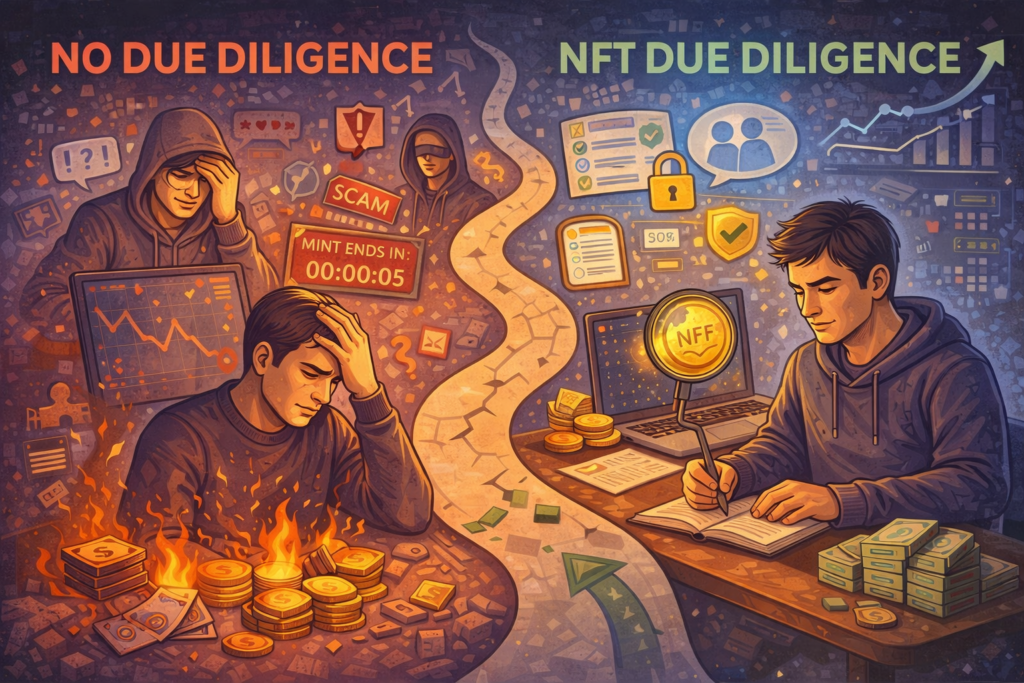
Most NFT losses don’t come from bad luck — they come from skipping due diligence.
Common mistakes include:
- Buying because of hype or influencers
- Rushing into mints without research
- Ignoring warning signs
- Trusting promises instead of proof
Using a structured NFT due diligence checklist protects you from scams, rug pulls, and low-quality projects that have no long-term value.
The NFT Due Diligence Checklist (Step-by-Step)
1. Project Purpose & Utility
Start by asking one simple question:
What does this NFT actually do?
Real utility doesn’t need to be complex, but it must exist. Legitimate projects usually offer:
- Access to tools, platforms, or content
- Membership or gated communities
- In-game or metaverse functionality
- Ongoing benefits or future roadmap value
If you can’t clearly explain the utility in one sentence, that’s a red flag.
Before interacting with any project, make sure you’re using a secure wallet setup from Best NFT Wallets for Beginners: Safe & Easy Options to Get Started.
2. Team Transparency & Credibility
Next, look at the people behind the project.
Check whether:
- Team members are public and verifiable
- Founders have a track record in crypto, tech, or creative industries
- Social profiles look real and consistent
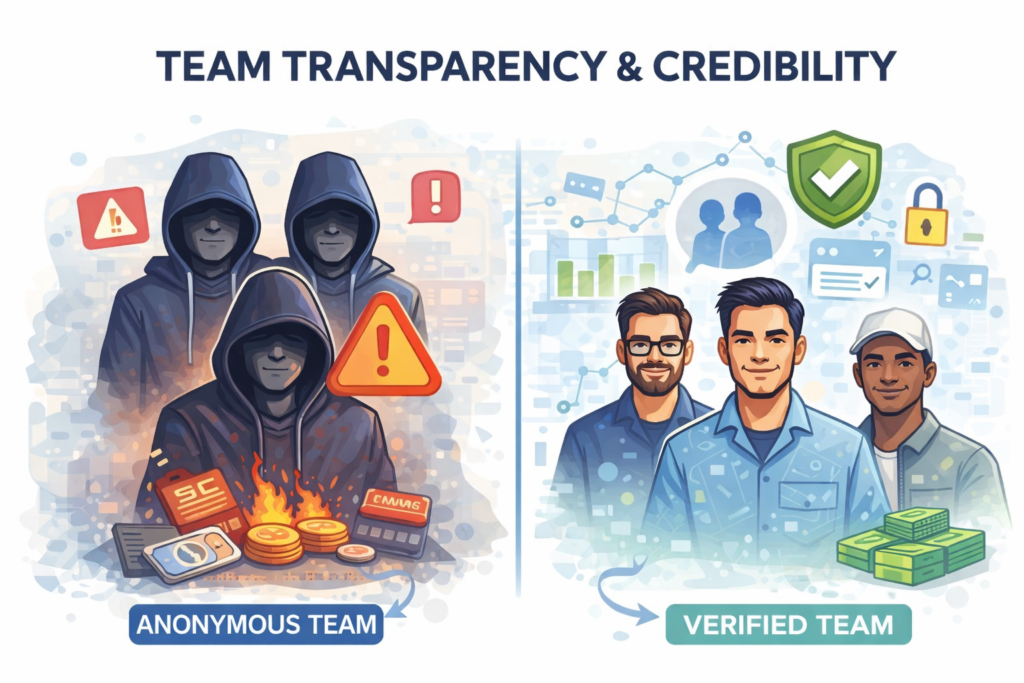
Anonymous teams aren’t always scams — but they do increase risk. Strong projects usually don’t hide behind fake names or empty profiles.
3. Community Quality (Not Just Size)
A large Discord or X following means nothing if engagement is fake.
Look for:
- Real conversations, not bot spam
- Clear answers from mods and founders
- Healthy discussion, not blind hype
If moderators delete questions or ban criticism, walk away.
This step pairs well with deeper research techniques explained in How to Research NFTs Before Buying: A Beginner’s Guide.
4. Roadmap Realism
Every NFT project promises a roadmap — but not all roadmaps are realistic.
A strong roadmap should:
- Be specific and time-bound
- Match the team’s actual capabilities
- Avoid vague promises like “metaverse soon”
Guaranteed profits, moon talk, or “mint ends in 10 minutes” language are major warning signs.
If something feels rushed or manipulative, review NFT Scams to Avoid: A Beginner’s Safety Guide before proceeding.
5. Smart Contract & Mint Safety
Before minting or buying:
- Confirm the official website URL
- Double-check contract addresses
- Avoid links sent via DMs or private messages
Fake marketplaces and wallet drainers often mimic real platforms with small URL changes.
Stick to platforms covered in Best NFT Marketplaces for Beginners: Safe Places to Buy Your First NFT.
6. Market Data & Pricing Logic
Ask yourself:
- Does the price make sense compared to similar projects?
- Is trading volume organic or artificially inflated?
- Are floor prices stable or manipulated?
Use analytics and tracking tools discussed in Best NFT Tools for Beginners: Track, Analyse & Research NFTs to validate demand.
When evaluating NFT projects, it helps to compare them against clearly legitimate examples. Officially licensed projects like UFC Strike demonstrate what proper branding, transparency, and platform verification look like. Always confirm you are on the official website and not a cloned or mirrored version before connecting your wallet.
Common Red Flags That Fail the NFT Due Diligence Checklist
Walk away immediately if you see:
- Artificial urgency (“mint closing in minutes”)
- Guaranteed returns or profit claims
- Surprise links or “exclusive” DMs
- Fake giveaways or impersonation accounts
- Pressure to act without time to research
Legitimate projects don’t pressure you.
Final Checklist Before You Buy
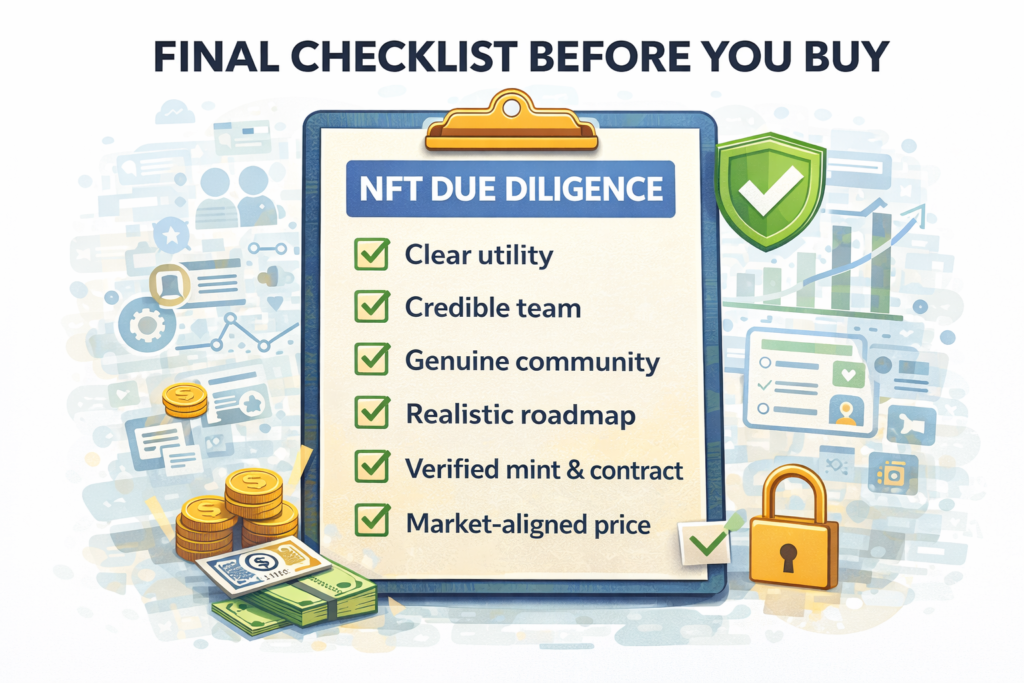
Before purchasing any NFT, confirm that:
- The project has clear utility
- The team is credible or transparent
- The community is genuine
- The roadmap is realistic
- The mint and contract are verified
- The price aligns with market reality
This NFT due diligence checklist won’t guarantee profits — but it will dramatically reduce mistakes.
Final Thoughts
There’s no rush in NFTs. The market will still be here tomorrow.
Buyers who succeed long-term are the ones who:
- Slow down
- Stay curious
- Prioritise learning over hype
Mastering NFT due diligence protects your capital, your confidence, and your experience in the NFT space.