When Should You Sell an NFT? Timing, Signals & Exit Strategies for Beginners
When Should You Sell an NFT?
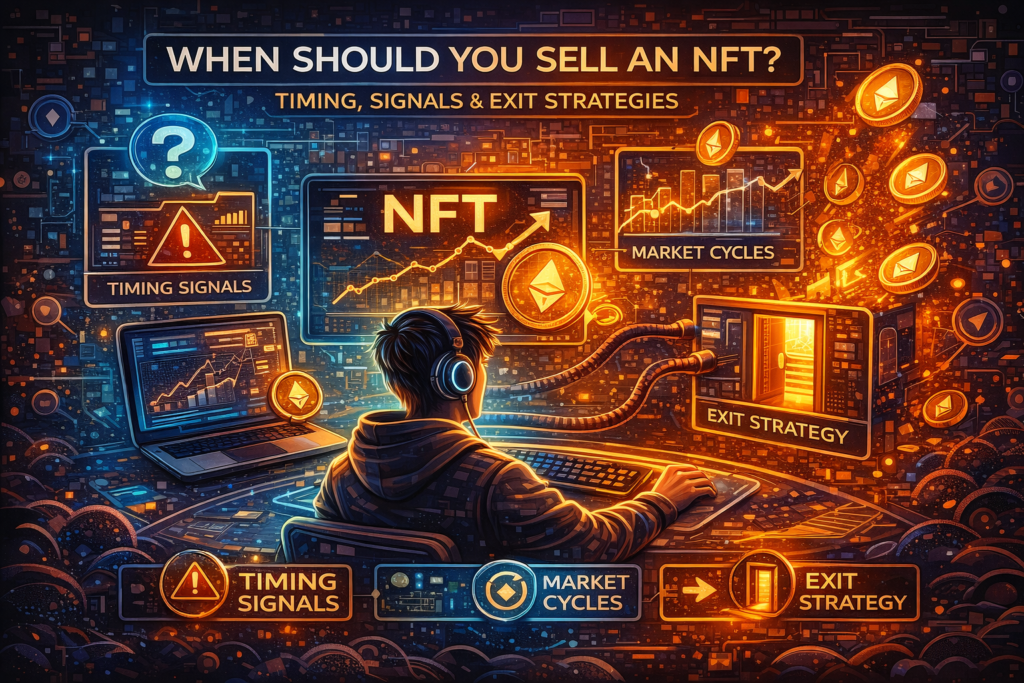
Timing, Signals & Exit Strategies for Beginners
Knowing when to sell an NFT is one of the hardest — and most important — skills in the NFT space.
Many beginners focus heavily on buying, but profits (and capital protection) are determined by exit decisions, not entries.
Selling too early can feel painful.
Selling too late can erase gains entirely.
This guide will help you understand how to decide when to sell an NFT, what signals to watch for, and how to exit safely without emotion or panic.
If you’re brand new to NFTs, start with NFTs for Beginners: A Step-by-Step Guide to Getting Started Safely before continuing.
Why Timing Matters More Than the NFT Itself
An NFT can be:
- A strong project
- Well researched
- Held securely
…and still become a bad hold if market conditions change.
NFT value is influenced by:
- Market cycles
- Liquidity
- Community attention
- Narrative momentum
Understanding timing helps you:
- Protect profits
- Avoid emotional decisions
- Exit before liquidity disappears
This builds directly on the principles in How to Manage NFTs After You Buy Them: Storage, Tracking & Long-Term Control.
1. Know Your Reason for Buying Before You Sell
Before you think about selling, revisit why you bought the NFT in the first place.
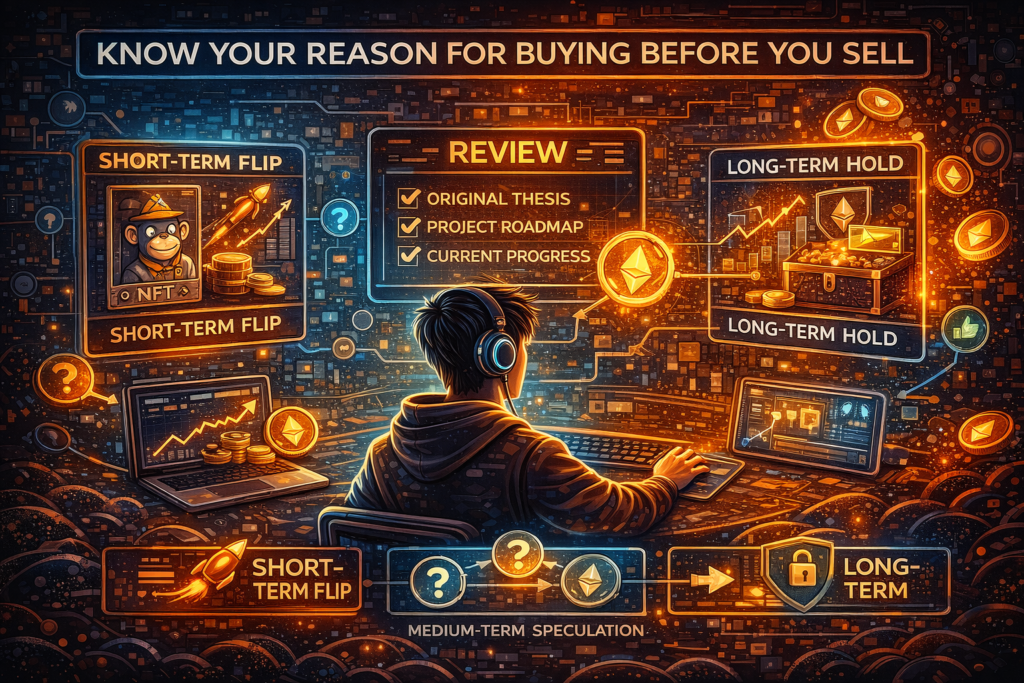
Ask yourself:
- Was this a short-term flip?
- A medium-term speculation?
- A long-term conviction hold?
If you didn’t define this clearly when buying, review:
- Your original thesis
- The project’s roadmap
- Current progress versus promises
This mindset is reinforced in How to Evaluate NFT Projects (A Beginner Framework That Actually Works).
2. Signals It May Be Time to Sell an NFT
There’s rarely one perfect moment — but there are warning signs.
Common sell signals include:
- Floor price stalls or declines while volume drops
- Community engagement fades across Discord and social platforms
- Roadmap delays without clear communication
- Team becomes less visible or stops delivering
- Narrative moves on to newer projects
If multiple signals appear at once, it may be time to reassess.
You can cross-check risk patterns using NFT Due Diligence Checklist: What to Check Before You Buy Any NFT — it applies just as well after purchase.
3. Market Cycles: Hype vs Reality
NFTs move in cycles:
- Hype phase
- Expansion
- Peak
- Distribution
- Decline
Beginners often buy late and sell during decline.
A common rule:
Sell into strength — not fear.
If prices are rising rapidly and social hype feels extreme, liquidity is usually highest.
This is often a safer time to exit than waiting for “just one more pump.”
To avoid hype traps, revisit NFT Scams to Avoid: A Beginner’s Safety Guide.
4. Profit Targets: Don’t Sell Based on Hope
One of the biggest mistakes beginners make is holding indefinitely without a plan.
Set profit targets:
- Partial exit at a specific multiple
- Full exit at a level that meets your goal
- Break-even exit if momentum fails
Even experienced traders rarely sell the top.
This strategy complements How to Sell NFTs: A Beginner’s Guide to Listing, Pricing & Exiting Safely.
5. Hold vs Sell: When Holding Still Makes Sense
Sometimes, holding is the right decision.
Holding may make sense if:
- The project is still delivering consistently
- Community engagement remains strong
- Utility is actively being used
- Liquidity is stable
However, holding should still be monitored, not passive.
That’s where NFT Wallet Safety & Management: How to Secure, Track & Protect Your NFTs Long-Term becomes essential.
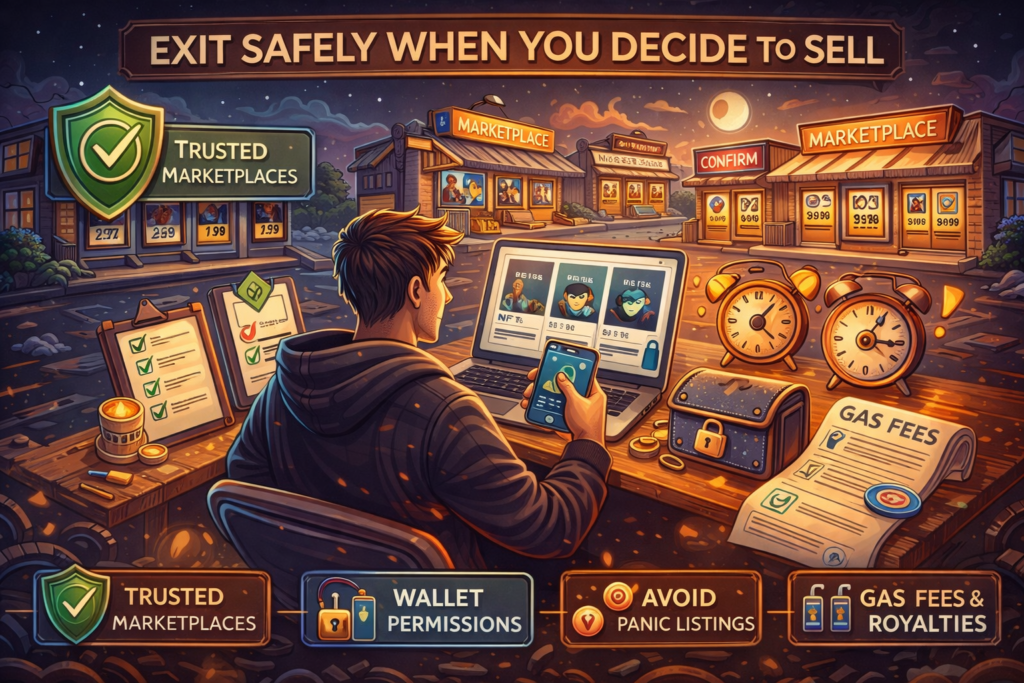
6. Exit Safely When You Decide to Sell
When it’s time to sell:
- Use trusted marketplaces
- Double-check wallet permissions
- Avoid rushed listings during panic
- Confirm gas fees and royalty impacts
Beginner-friendly platforms are covered in Best NFT Marketplaces for Beginners: Safe Places to Buy Your First NFT.
If you’re unsure about pricing, fixed-price listings are often safer than auctions for beginners.
Final Thoughts: Selling NFTs Is a Skill
Selling NFTs isn’t about timing perfection — it’s about discipline.
Strong NFT holders:
- Track performance
- Review assumptions
- Sell based on data, not emotion
- Accept that no exit is perfect
The NFT market will always fluctuate — but a clear exit strategy protects both your capital and your confidence.