Do You Actually Own an NFT? Ownership Explained for Beginners
If you’re new to NFTs, one of the most common questions people ask is: do you actually own an NFT when you buy one?
The answer is yes — but not always in the way beginners expect.
This confusion around ownership causes a lot of uncertainty, misinformation, and unnecessary fear. In this guide, we’ll break down NFT ownership in plain English, explain what you do own, what you don’t, and why NFT ownership still matters.
No legal jargon. No hype. Just clear answers.
What Does “Owning an NFT” Actually Mean?
When you buy an NFT, you are purchasing a unique digital token recorded on a blockchain. That token proves that your wallet address is the official owner of that specific NFT.
Think of it like a digital certificate of ownership that:
- Cannot be duplicated
- Is publicly verifiable
- Can be transferred or sold
So yes — you do actually own an NFT in the sense that:
- The blockchain recognises you as the owner
- No one can take it from your wallet without your permission
- Ownership can be verified by anyone
This ownership exists independently of marketplaces, websites, or platforms.
👉 Related reading: What Is an NFT? Plain English Guide
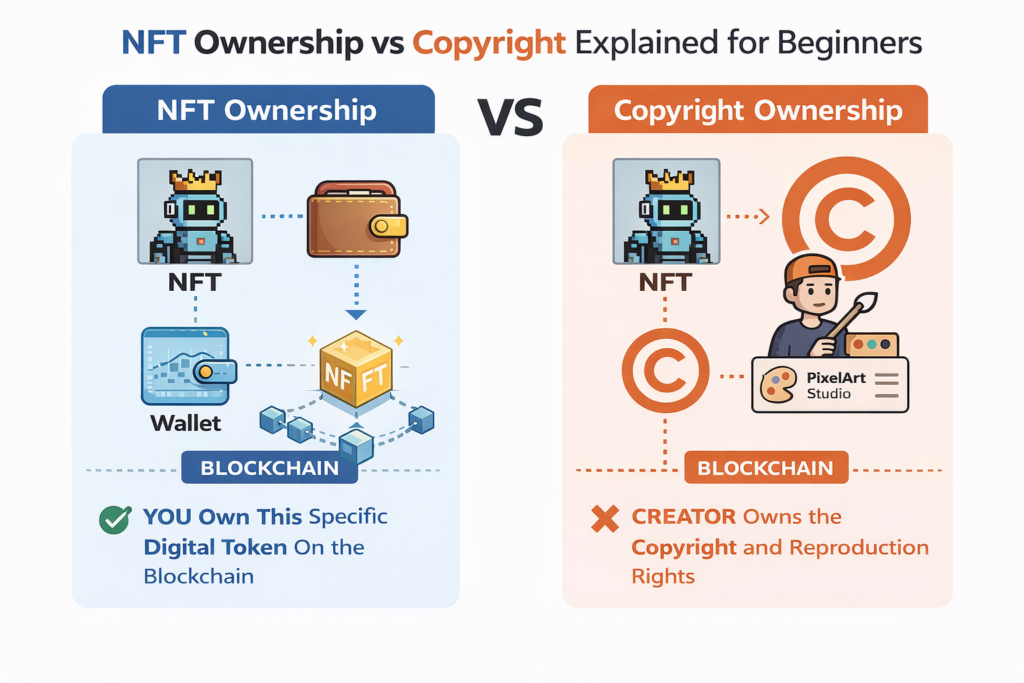
NFT Ownership vs Copyright (This Is Where Most Beginners Get Confused)
Here’s the key distinction beginners often miss:
Owning an NFT does NOT automatically mean you own the copyright or intellectual property.
In most cases:
- You own the NFT token
- The creator retains copyright and IP rights
This is not unique to NFTs.
For example:
- Buying a concert ticket doesn’t give you rights to the music
- Buying a physical painting doesn’t give you reproduction rights
- Buying a book doesn’t give you publishing rights
NFTs work in a similar way unless the project explicitly states otherwise.
What Do You Actually Own When You Buy an NFT?
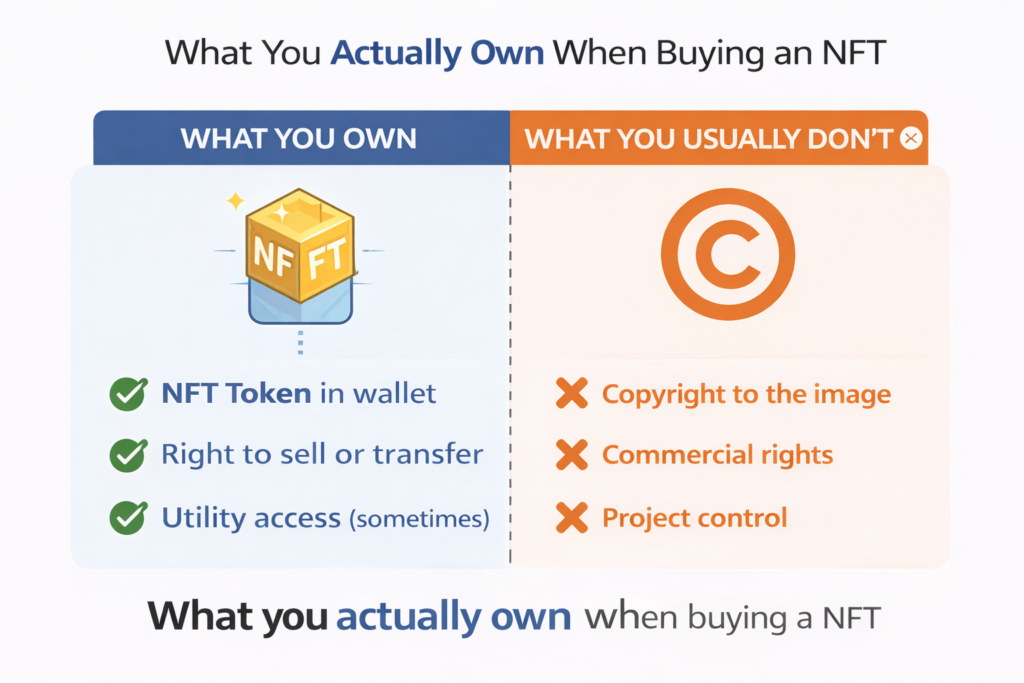
When asking do you actually own an NFT, here’s what ownership usually includes:
- ✅ Ownership of the NFT token on the blockchain
- ✅ The right to sell or transfer the NFT
- ✅ The ability to hold the NFT in your wallet
- ✅ Access to utility or perks (if the project provides them)
This ownership is enforced by blockchain technology, not by the project team or marketplace.
👉 Learn more: What Happens After You Buy an NFT?
What You Usually Don’t Own When You Buy an NFT
Unless clearly stated by the project, you typically do not own:
- ❌ Copyright to the artwork
- ❌ Commercial usage rights
- ❌ Control over how the artwork is used elsewhere
- ❌ Rights to modify or reproduce the work
Some projects do grant additional rights — but these are the exception, not the rule.
Always assume standard ownership unless explicitly stated otherwise.
How to Check What Rights an NFT Gives You
Before buying — or even after purchasing — you should check what rights are attached to your NFT.
Here’s how beginners can do that safely:
- Check the project’s official website
- Read the marketplace description carefully
- Look for licensing terms or “NFT license” pages
- Review metadata linked to the NFT
- Be cautious of vague claims like “full rights” without documentation
If rights are not clearly listed, assume standard NFT ownership only.
👉 Learn how to research properly: How to Evaluate NFT Projects
Why NFT Ownership Still Matters (Even Without Copyright)
Some beginners feel disappointed when they learn they don’t automatically own copyright. But NFT ownership is still meaningful for several reasons.
Proven Ownership
The blockchain permanently records ownership history. This provenance adds value and trust.
Transfer & Resale Rights
You can sell or transfer your NFT without permission from the creator.
👉 Related: How to Sell NFTs Safely
Royalties & Ecosystem Value
NFT ownership is what enables creator royalties and long-term project economics.
👉 Next topic: How NFT Royalties Work
Utility & Access
Many NFTs grant access to:
- Communities
- Events
- Games
- Tools
- Future drops
Ownership is what unlocks those benefits.
Common Beginner Misunderstandings About NFT Ownership
Let’s clear up a few common myths:
- ❌ “I own the image file”
→ You own the token, not the raw image itself - ❌ “The project can delete my NFT”
→ They can’t remove ownership from your wallet - ❌ “Marketplaces control my NFT”
→ Marketplaces only display NFTs; they don’t own them - ❌ “If the website disappears, my NFT is gone”
→ Ownership remains on the blockchain
Understanding these points reduces fear and helps beginners make better decisions.
So… Do You Actually Own an NFT?
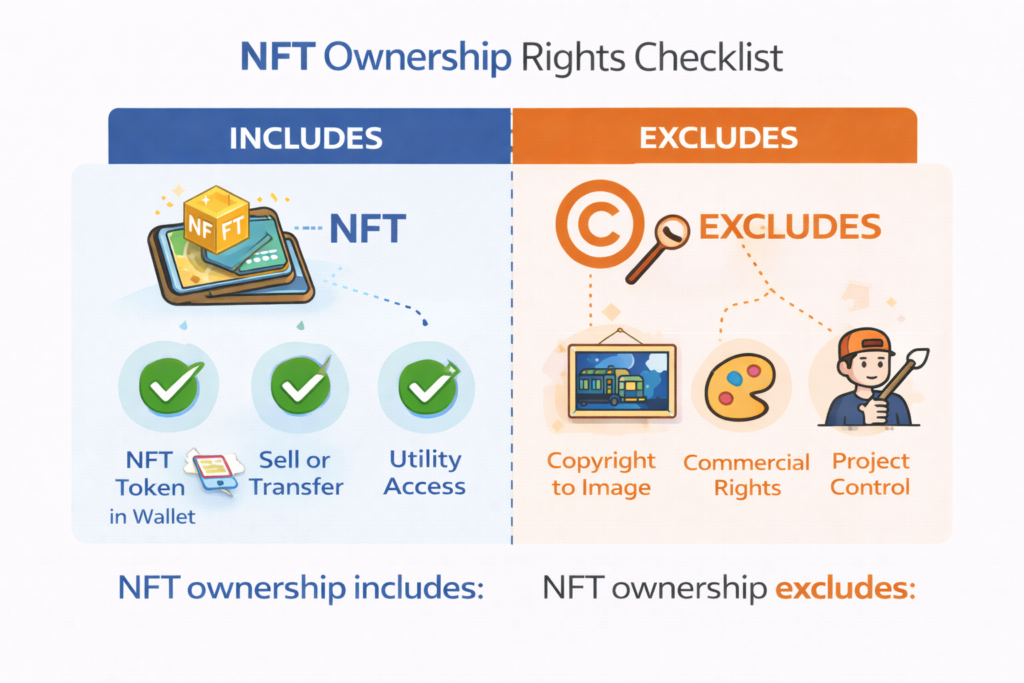
Yes — you do actually own an NFT in the sense that:
- Ownership is recorded on the blockchain
- The NFT belongs to your wallet
- You control when and how it’s transferred or sold
But ownership usually does not include copyright or commercial rights unless the project explicitly grants them.
Once you understand this distinction, NFTs become much easier to evaluate and far less confusing.
What Beginners Should Do Next
If you’ve already bought an NFT — or are planning to — your next steps should be:
- Understand royalty mechanics
- Learn how resale pricing works
- Know how floor prices affect value
- Protect your wallet long-term
👉 Continue here: How NFT Royalties Work (Buyers vs Creators)