
What Is a Floor Price in NFTs and Why It Matters
If you’ve spent any time browsing NFT collections, you’ve probably seen the term floor price everywhere. This leads many beginners to ask: what is a floor price in NFTs, and why does it matter so much?
The floor price is one of the most important — and misunderstood — concepts in NFTs. In this guide, we’ll explain what a floor price in NFTs is, how it’s set, why it changes, and how beginners should use it when buying or selling.
No hype. No trading advice. Just clear explanations.
What Is a Floor Price in NFTs?
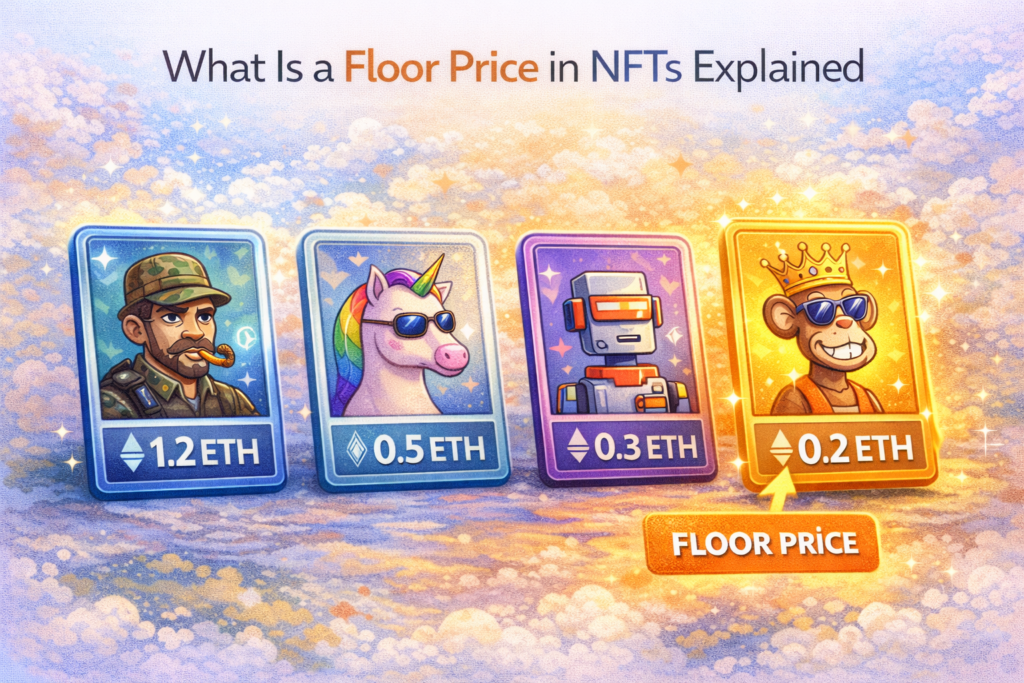
The floor price in NFTs is simply:
The lowest price at which any NFT in a collection is currently listed for sale.
If a collection has:
- 1 NFT listed for 0.2 ETH
- 5 NFTs listed for 0.3 ETH
- 10 NFTs listed for 0.5 ETH
Then the floor price is 0.2 ETH.
It does not represent:
- The average price
- The “true value”
- What every NFT will sell for
It is just the cheapest available entry point into that collection.
Why Floor Price Matters So Much in NFTs
Understanding what a floor price in NFTs is matters because the floor price:
- Sets market perception
- Influences buyer psychology
- Impacts liquidity
- Affects resale expectations
Many beginners mistakenly assume a rising floor price always means a “good project” — or that a low floor price means a bargain. That’s not always true.
How Is the Floor Price Set?
The floor price is not set by the creators or the marketplace.
It’s set by:
- NFT holders listing their NFTs
- The lowest asking price currently available
If someone lists an NFT cheaply, the floor price drops.
If cheap listings are bought, the floor price rises.
This means floor price is constantly changing.
Floor Price vs “Real Value”
This is where many beginners get confused.
The floor price:
- Reflects current market sentiment
- Does not guarantee demand
- Can change quickly
An NFT with a high floor price but no buyers can be hard to sell.
An NFT with a low floor price but strong demand can recover quickly.
This is why floor price should never be looked at in isolation.
Why Floor Prices Change So Quickly
NFT floor prices are volatile because they’re influenced by many factors, including:
- Market sentiment
- News and hype cycles
- Gas fees
- Royalties
- Overall crypto conditions
High gas fees, for example, can suppress buying activity and push floor prices down.
👉 Related reading: What Are Gas Fees in NFTs and How to Reduce Them
How Floor Price Connects to Royalties and Fees
When thinking about what a floor price in NFTs means, you must factor in costs.
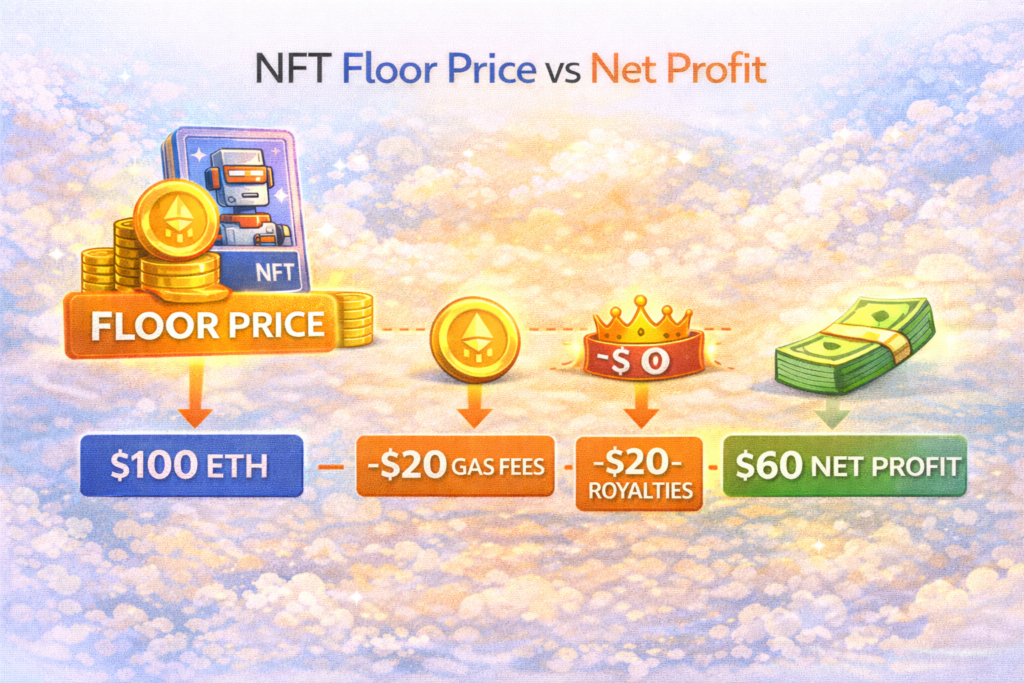
Even if you buy at the floor price:
- Gas fees increase your entry cost
- Royalties reduce resale profit
A “cheap” floor price can still lead to a loss once fees are included.
👉 Related reading: How NFT Royalties Work
Common Beginner Mistakes With Floor Price
Beginners often misunderstand what a floor price in NFTs represents and make these mistakes:
- Buying only because the floor price is low
- Assuming floor price = fair value
- Ignoring liquidity
- Ignoring gas and royalty costs
- Panic selling when the floor drops
Floor price is a signal, not a guarantee.
Floor Price and Liquidity (Why This Matters)
Liquidity means how easily you can sell an NFT at or near the floor price.
A collection can have:
- A visible floor price
- But no buyers willing to purchase
In that case, the floor price is misleading.
Always look at:
- Recent sales
- Volume
- Time between transactions
How Beginners Should Use Floor Price Correctly
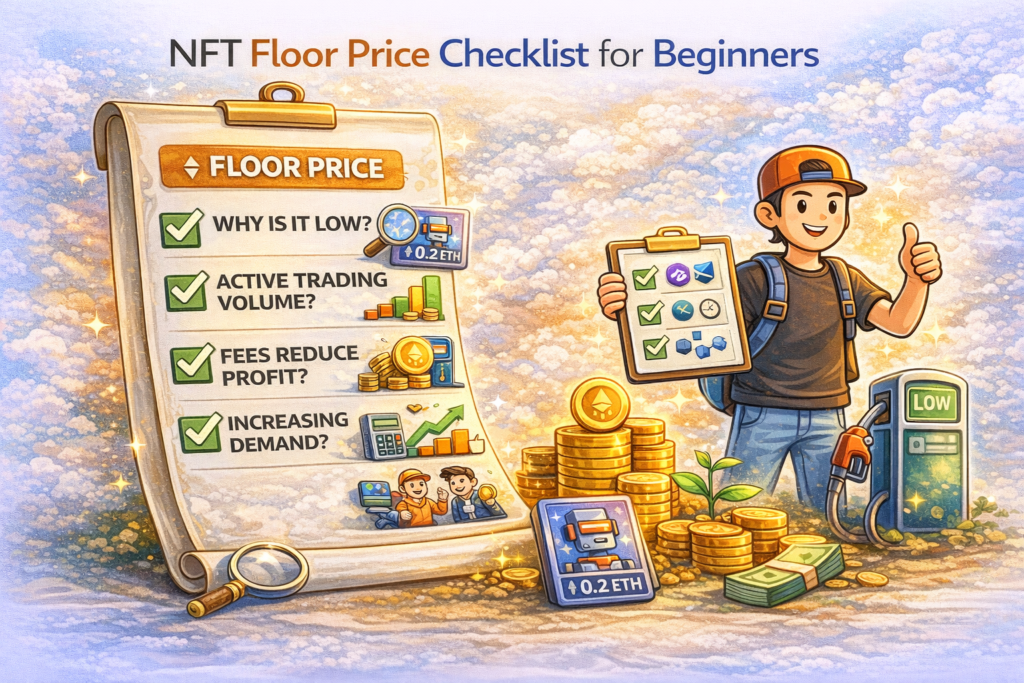
Instead of asking “Is this floor price low?”, beginners should ask:
- Why is it low?
- Is there active trading volume?
- How much will fees reduce profit?
- Is demand increasing or decreasing?
Floor price works best when combined with proper research.
👉 Learn how to research safely using beginner-friendly NFT wallets
(Using the right wallet setup is critical before interacting with any NFT marketplace.)
Does a Rising Floor Price Mean a Project Is “Good”?
Not always.
A rising floor price can be caused by:
- Short-term hype
- Low supply of listings
- Speculation
Long-term value depends on:
- Utility
- Community
- Transparency
- Sustainable demand
Floor price alone does not equal quality.
So… What Is a Floor Price in NFTs?
To summarise:
- The floor price is the lowest listed NFT in a collection
- It changes constantly based on listings and demand
- It does not represent guaranteed value
- It must be considered alongside:
- Gas fees
- Royalties
- Liquidity
- Market conditions
Understanding what a floor price in NFTs is helps beginners avoid emotional decisions and unrealistic expectations.
What Beginners Should Learn Next
Once you understand floor price, the next logical question is:
How long should you actually hold an NFT?
👉 Continue here: How Long Should You Hold an NFT