
How Wallet Drainers Steal NFTs (And How to Avoid Them)
Wallet drainers are one of the most dangerous threats in NFTs, especially for beginners. Many scams — including fake giveaways and phishing sites — ultimately rely on wallet drainers to steal assets.
Understanding how wallet drainers steal NFTs is critical if you want to protect your wallet, your NFTs, and your funds.
In this guide, we’ll explain what wallet drainers are, how they work, how they trick users, and how beginners can avoid them safely.
No fear. Just awareness.
What Is a Wallet Drainer?
A wallet drainer is malicious code designed to steal assets from your crypto wallet after you approve a transaction.
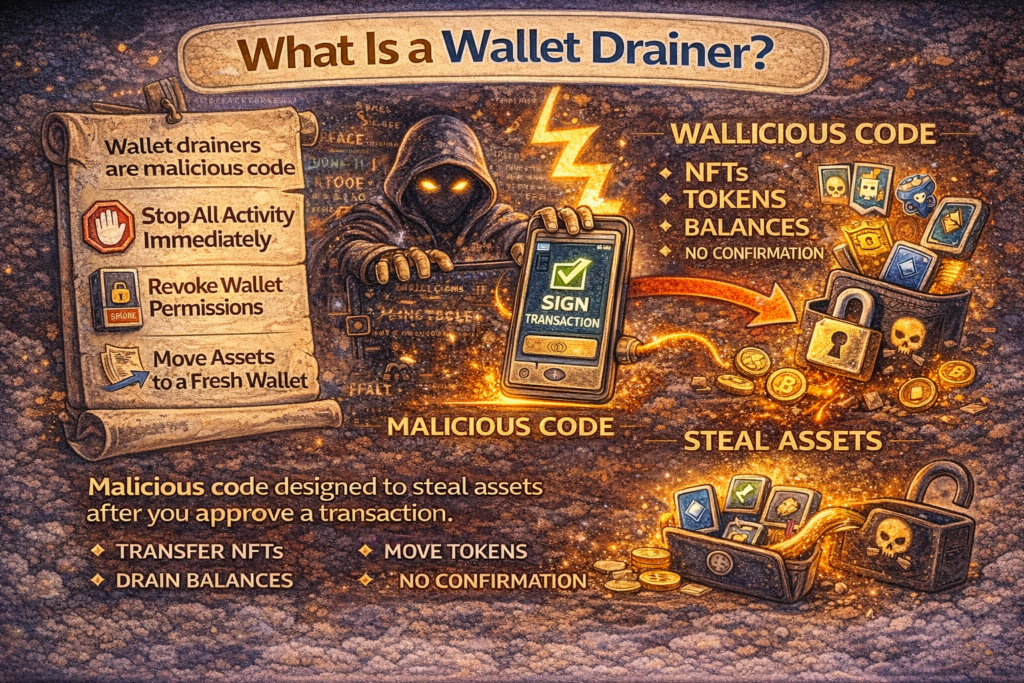
Wallet drainers do not hack wallets randomly.
They rely on user approval.
Once approved, they can:
- Transfer NFTs
- Move tokens
- Drain balances
- Act without further confirmation
This is why they are so effective.
How Wallet Drainers Steal NFTs (Step by Step)
Understanding how wallet drainers steal NFTs removes most of their power.
A typical wallet drainer attack works like this:
- You interact with a scam website or fake giveaway
- You’re asked to connect your wallet
- You’re prompted to sign or approve a transaction
- The transaction grants broad permissions
- The drainer transfers NFTs or tokens out
- Assets are gone — often instantly
The wallet was never “hacked”.
Permission was granted.
Where Wallet Drainers Usually Come From
Wallet drainers are often hidden inside:
- Fake NFT giveaways
- Phishing websites
- Fake marketplaces
- Impersonated project links
- Malicious ads
That’s why understanding scam entry points matters.
👉 Related reading: How Fake NFT Giveaways Work
👉 Overview: Most Common NFT Scams
Why Wallet Drainers Are So Dangerous
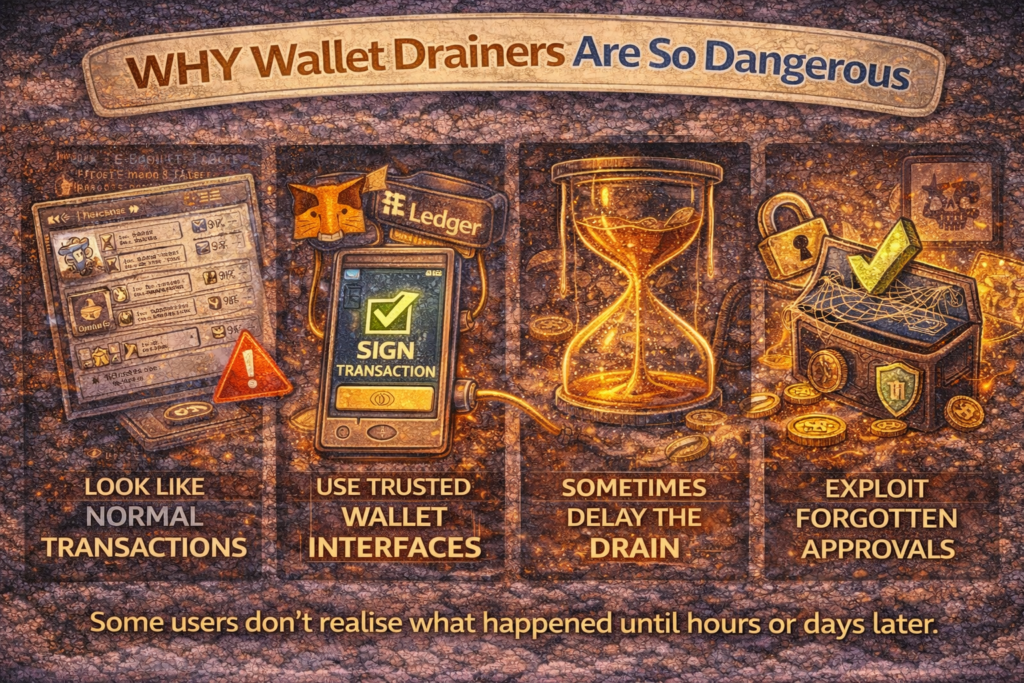
Wallet drainers are especially dangerous because they:
- Look like normal transactions
- Use trusted wallet interfaces
- Sometimes delay the drain
- Exploit forgotten approvals
Some users don’t realise what happened until hours or days later.
Can Wallet Drainers Steal NFTs You Already Own?
Yes — if you approve the wrong transaction.
NFTs are not stolen randomly.
They are transferred because:
- A malicious approval was signed
- Permissions were granted to a smart contract
This is why awareness matters more than paranoia.
👉 Explained further: Can NFTs Be Stolen After You Buy Them?
Common Signs of a Wallet Drainer Scam
Watch out for these red flags:
- Requests to “verify” your wallet
- Unexpected approval requests
- “Claim now” urgency
- Transactions you don’t understand
- Unclear contract permissions
If something feels rushed or confusing, stop.
What Happens After a Wallet Drainer Is Approved?
Depending on the drainer:
- NFTs may be transferred immediately
- Tokens may be drained later
- Assets may disappear gradually
- Only approved assets are taken
This is why quick action matters.
What to Do If You Think You Approved a Wallet Drainer
If you suspect a wallet drainer:
- Stop interacting immediately
- Revoke wallet permissions
- Move remaining assets to a fresh wallet
- Do not sign anything else
- Learn the pattern to avoid repeat mistakes
👉 Step-by-step help:
What to Do If Your NFT Wallet Is Compromised
How to Revoke Wallet Permissions Safely
Acting quickly can limit damage.
How Beginners Can Avoid Wallet Drainers
The safest beginners follow a few rules:
- Never sign transactions you don’t understand
- Avoid unsolicited links and DMs
- Verify websites independently
- Use secure, beginner-friendly wallets
- Disconnect wallets after use
👉 Learn how to research safely using beginner-friendly NFT wallets
Wallet setup is your first line of defence.
Why Wallet Education Beats Any Tool
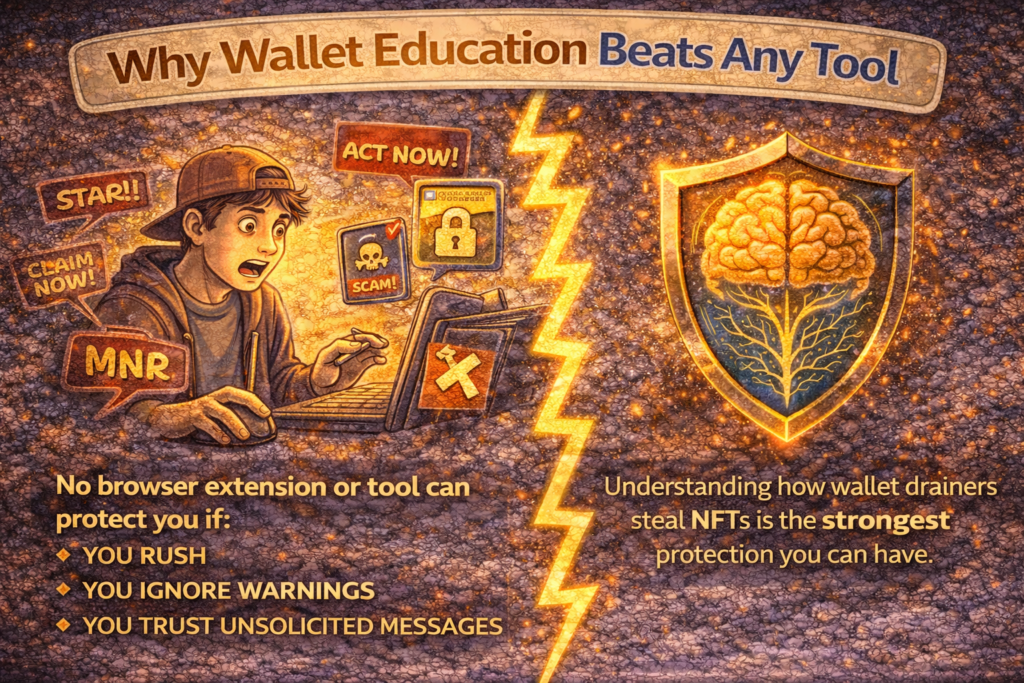
No browser extension or tool can protect you if:
- You rush
- You ignore warnings
- You trust unsolicited messages
Understanding how wallet drainers steal NFTs is the strongest protection you can have.
How This Fits Into NFT Safety Overall
Wallet drainers are the mechanism, not the entry point.
They often work alongside:
- Fake giveaways
- Fake marketplaces
- Impersonation scams
That’s why this article links back to the Layer 3 pillar.
👉 Back to safety overview: Most Common NFT Scams
So… How Do Wallet Drainers Steal NFTs?
To summarise:
- Wallet drainers rely on user approval
- They hide inside scam interactions
- NFTs are transferred after permissions are granted
- Awareness prevents almost all losses
Once you understand how wallet drainers steal NFTs, they lose their power.
What Beginners Should Read Next
The next critical step is learning how to respond if something goes wrong.