NFT Security Checklist for Beginners (Protect Your Wallet & NFTs)
NFTs can be exciting, but they also come with real risks — especially for beginners. The good news is that most NFT losses are preventable if you follow a clear, repeatable security process.
This NFT security checklist for beginners brings together everything you need to know to protect your wallet, avoid scams, and stay safe long-term. It’s designed to be simple, practical, and something you can return to whenever you’re unsure.
No panic. No hype. Just protection.
Why Every Beginner Needs an NFT Security Checklist
Most NFT mistakes happen because:
- Users rush decisions
- Warnings are ignored
- Permissions are forgotten
- Scams look convincing
A checklist removes emotion and replaces it with structure.
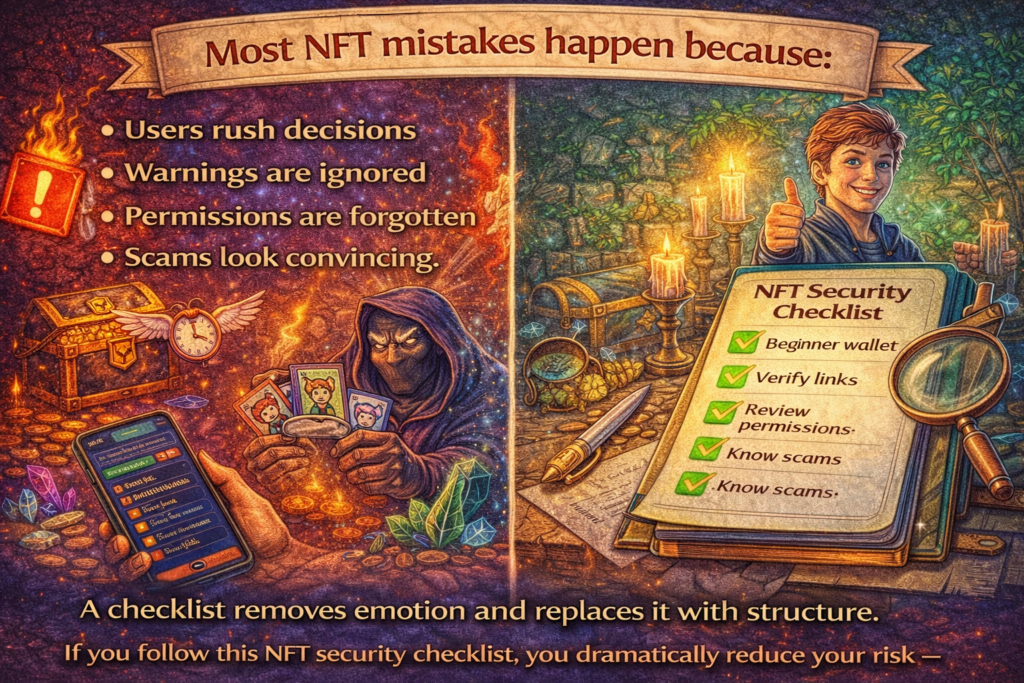
If you follow this NFT security checklist, you dramatically reduce your risk — even if you’re brand new.
Step 1: Use a Secure, Beginner-Friendly Wallet
Your wallet is your foundation.
Before doing anything else:
- Use a reputable NFT wallet
- Understand how approvals work
- Learn how to view transactions clearly
👉 Learn how to research safely using beginner-friendly NFT wallets
Wallet choice plays a huge role in long-term safety.
Step 2: Never Trust Unsolicited Messages
A core rule of NFT security:
If you didn’t ask for it, don’t trust it.
This includes:
- DMs offering free NFTs or ETH
- “Support” messages
- Giveaway links
- Urgent warnings
👉 Explained here: How Fake NFT Giveaways Work
Legitimate projects do not DM first.
Step 3: Always Verify Links Independently
Never click links from:
- Replies
- DMs
- Ads
- Random Discord messages
Instead:
- Visit official websites manually
- Cross-check links on multiple platforms
- Confirm marketplace listings
👉 Context: How to Avoid Fake NFT Marketplaces
Step 4: Review Wallet Permissions Regularly
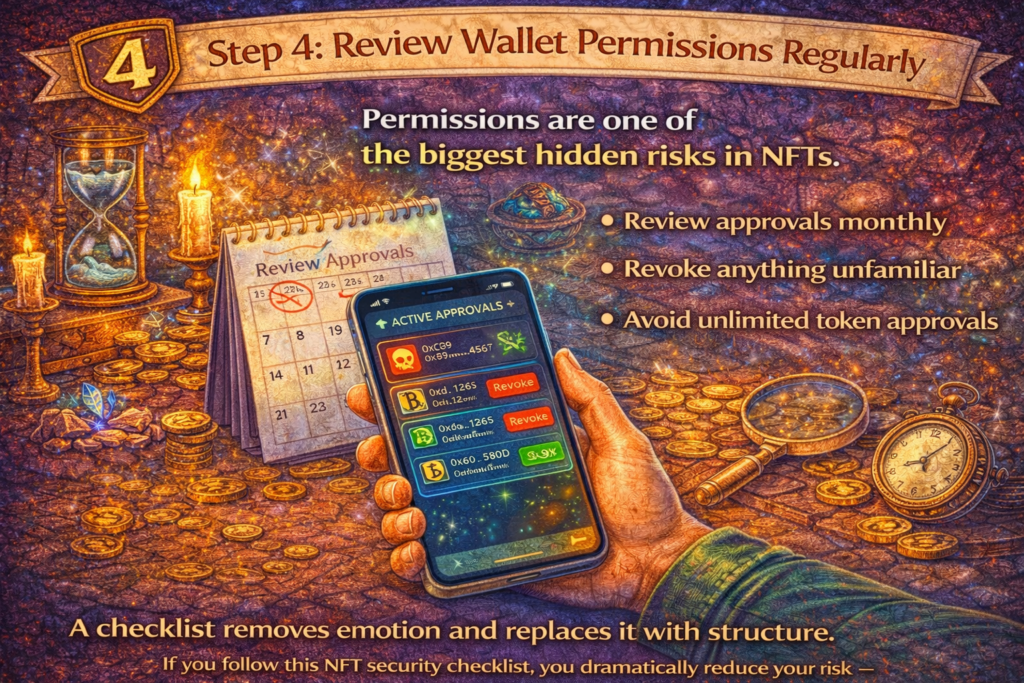
Permissions are one of the biggest hidden risks in NFTs.
You should:
- Review approvals monthly
- Revoke anything unfamiliar
- Avoid unlimited token approvals
👉 Step-by-step guide: How to Revoke Wallet Permissions Safely
If you don’t recognise it, revoke it.
Step 5: Understand How Scams Actually Work
Scams are patterns, not accidents.
Common NFT scam types include:
- Fake giveaways
- Wallet drainers
- Impersonation
- Rug pulls
👉 Start here: Most Common NFT Scams
👉 Deep dive: How Wallet Drainers Steal NFTs
Understanding patterns removes fear.
Step 6: Know the Warning Signs of a Compromised Wallet
Act immediately if you see:
- Missing NFTs or tokens
- Transactions you didn’t approve
- Unexpected approvals
- Wallet prompts you don’t recognise
👉 What to do next: What to Do If Your NFT Wallet Is Compromised
Fast action limits damage.
Step 7: Never Rush Transactions
Urgency is a scammer’s best weapon.
Before signing anything:
- Read the wallet prompt
- Confirm what’s being approved
- Ask yourself why it’s urgent
If you feel pressure, stop.
Step 8: Be Realistic About Recovery
Important truth for beginners:
- Blockchain transactions are irreversible
- NFTs usually cannot be recovered
- There are no chargebacks
If something goes wrong, focus on damage control and prevention, not recovery scams.
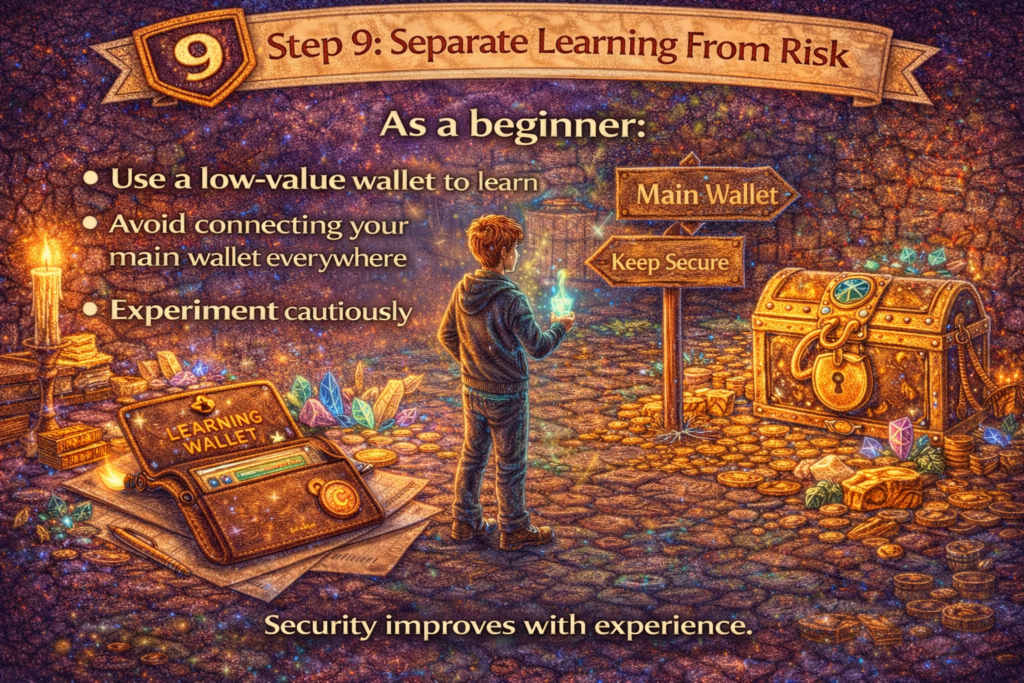
Step 9: Separate Learning From Risk
As a beginner:
- Use a low-value wallet to learn
- Avoid connecting your main wallet everywhere
- Experiment cautiously
Security improves with experience.
Step 10: Revisit This Checklist Regularly
NFT security is not “set and forget”.
Good habits include:
- Monthly permission checks
- Reviewing scam trends
- Updating wallet knowledge
- Staying calm and sceptical
Bookmark this checklist and come back to it.
Why This Checklist Works
This NFT security checklist for beginners works because it:
- Removes emotion
- Focuses on behaviour, not tools
- Covers prevention, detection, and response
- Scales with experience
Most losses happen when one of these steps is skipped.
Final Thoughts
You don’t need to be technical to be safe in NFTs.
You just need:
- Awareness
- Patience
- A repeatable process
Following this NFT security checklist for beginners puts you ahead of most users — even those with more experience.
Where to Go Next
If you want to deepen your safety knowledge, start here:
👉 Most Common NFT Scams