How to Check If an NFT Project Is Legit (Beginner Safety Guide)
One of the biggest fears beginners have in NFTs is buying into a project that turns out to be fake, abandoned, or a scam.
The good news?
Most illegitimate NFT projects show clear warning signs — if you know what to look for.
In this guide, you’ll learn how to check if an NFT project is legit, what red flags matter most, and how beginners can evaluate projects safely before risking money.
No hype. No insider talk. Just clarity.
Why Beginners Struggle to Spot Legit NFT Projects
Many scams succeed because:
- Projects look professional
- Social media appears active
- Hype creates urgency
- Beginners don’t know what “normal” looks like
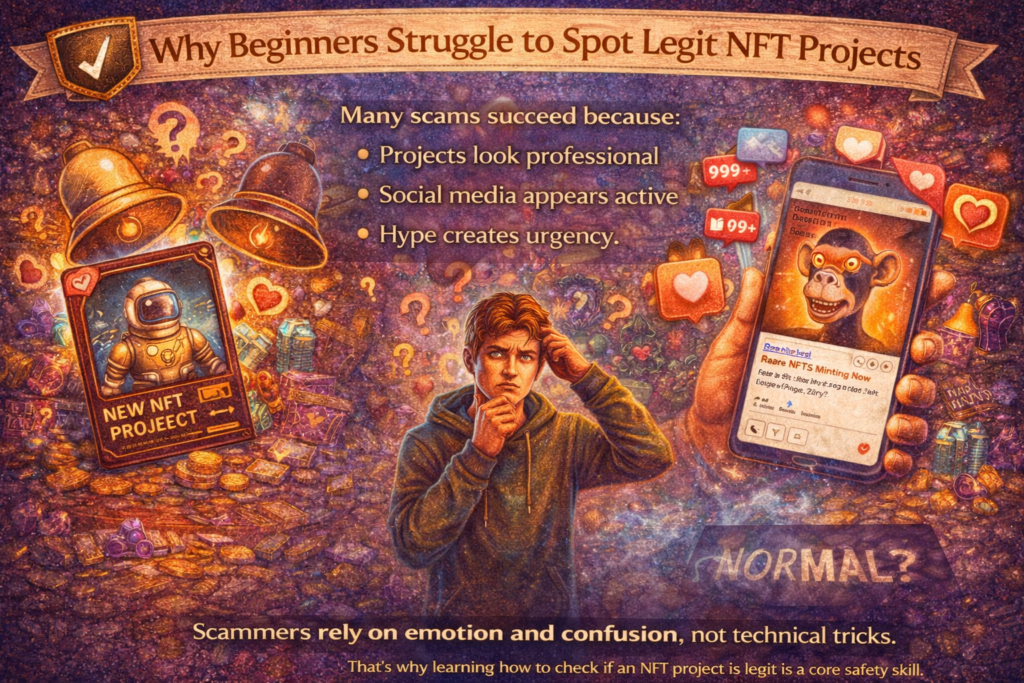
Scammers rely on emotion and confusion, not technical tricks.
That’s why learning how to check if an NFT project is legit is a core safety skill.
Step 1: Check the Project’s Website Carefully
A legitimate NFT project should have:
- A clear website (not just a mint page)
- Transparent information
- Consistent branding
- Working links
Be cautious if:
- The site feels rushed or incomplete
- Important pages are missing
- Copy is vague or full of buzzwords
A real project explains what it is without pressure.
Step 2: Look for Team Transparency (or Lack of It)
Legitimate projects usually provide:
- Team members or founders
- Background information
- Past work or experience
Red flags include:
- Completely anonymous teams (without explanation)
- Stock photos
- No verifiable history
An anonymous team isn’t automatically a scam — but it raises risk, especially for beginners.
Step 3: Review the Roadmap (And Whether It Makes Sense)
A legit NFT project’s roadmap should:
- Be realistic
- Explain goals clearly
- Avoid vague promises like “metaverse soon”
Watch out for:
- Overly ambitious claims
- Guaranteed profits
- No timeline or accountability
A roadmap is a plan, not a promise.
Step 4: Analyse Community Behaviour (Not Just Size)
Large follower counts don’t mean legitimacy.
Instead, look at:
- Quality of conversation
- How questions are answered
- Whether concerns are allowed
- Developer engagement
Warning signs:
- Critical questions deleted
- Only hype allowed
- Mods pressuring people to mint
Healthy communities allow discussion.
Step 5: Verify Contract & Marketplace Details
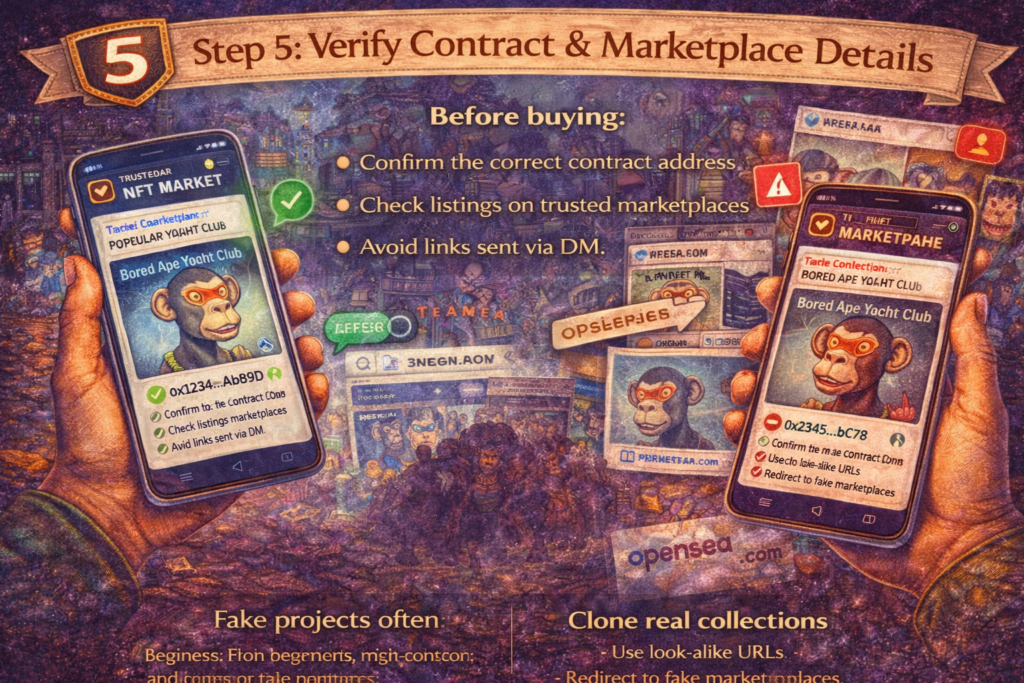
Before buying:
- Confirm the correct contract address
- Check listings on trusted marketplaces
- Avoid links sent via DMs
Fake projects often:
- Clone real collections
- Use look-alike URLs
- Redirect to fake marketplaces
👉 Related reading: How to Avoid Fake NFT Marketplaces
Step 6: Check Trading Activity & Liquidity
Legit projects usually show:
- Some trading history
- Organic price movement
- Multiple buyers and sellers
Be cautious if:
- All volume happens instantly
- Wash trading is suspected
- No secondary market activity exists
Liquidity matters more than hype.
Step 7: Watch for Common Scam Patterns
Many illegitimate projects follow known patterns:
- Fake giveaways
- Urgent mint deadlines
- “Last chance” pressure
- Sudden silence after mint
👉 Learn the patterns:
Scams repeat because they work.
Step 8: Protect Yourself With Proper Wallet Habits
Even legit projects can become risky if you:
- Approve malicious contracts
- Connect wallets carelessly
- Ignore permissions
👉 Learn how to research safely using beginner-friendly NFT wallets
Wallet behaviour matters as much as project quality.
Common Beginner Mistakes When Checking Legitimacy
Avoid these:
- Trusting follower counts alone
- Rushing because of hype
- Ignoring gut instincts
- Skipping due diligence
If something feels off, pause.
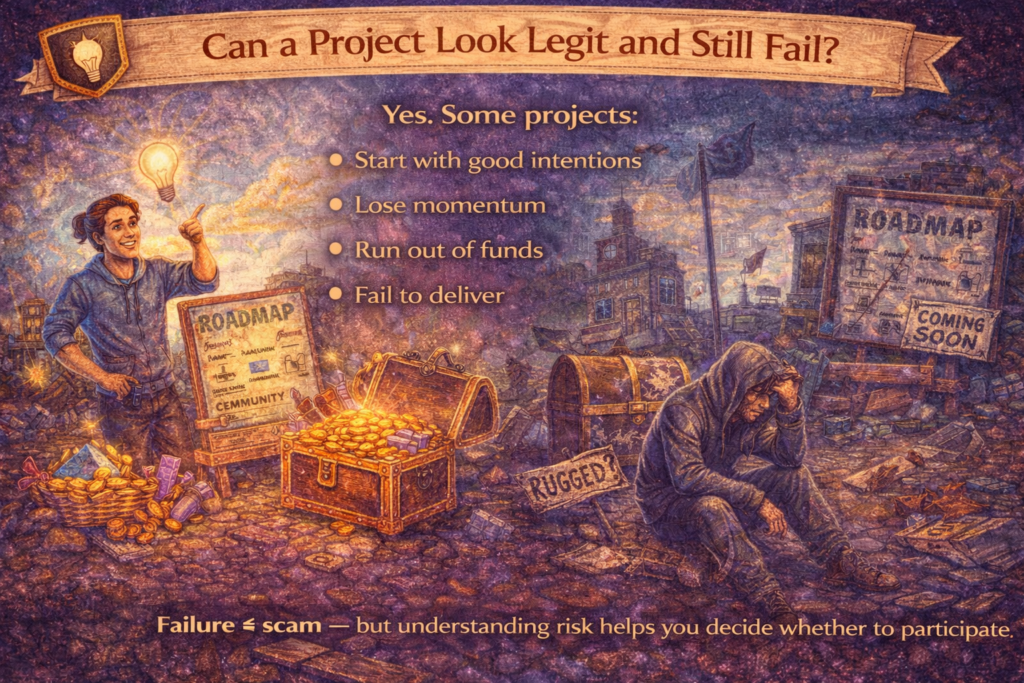
Can a Project Look Legit and Still Fail?
Yes.
Some projects:
- Start with good intentions
- Lose momentum
- Run out of funds
- Fail to deliver
Failure ≠ scam — but understanding risk helps you decide whether to participate.
So… How Do You Check If an NFT Project Is Legit?
To summarise:
- Review the website
- Evaluate the team
- Analyse the roadmap
- Observe the community
- Verify links and contracts
- Check liquidity
- Protect your wallet
Knowing how to check if an NFT project is legit dramatically reduces beginner risk.
Where to Go Next
If you want deeper protection:
👉 NFT Due Diligence Checklist
👉 Most Common NFT Scams
Those guides build directly on what you learned here.