
How to Monitor Wallet Activity (Beginner’s Guide to NFT Safety)
Most NFT losses don’t happen because wallets are hacked.
They happen because suspicious wallet activity goes unnoticed.
Learning how to monitor wallet activity is one of the most important habits beginners can develop — and it’s much simpler than most people think.
This guide explains what wallet activity monitoring means, what to watch for, which tools help, and how beginners can stay in control without paranoia.
What Does “Wallet Activity” Mean?
Wallet activity refers to everything that happens in and out of your wallet, including:
- NFT transfers
- Token movements
- Contract approvals
- Listings and sales
- Failed or pending transactions
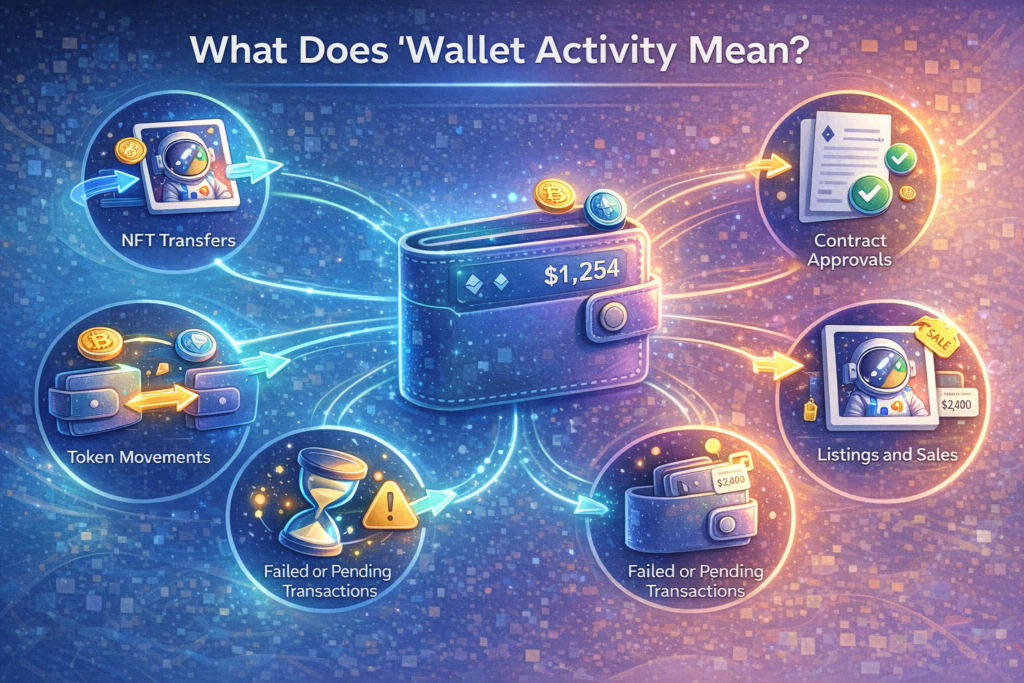
Monitoring wallet activity helps you understand what your wallet is doing — and why.
Why Beginners Should Monitor Wallet Activity
Many beginners only check their wallet when something feels wrong.
That’s too late.
Monitoring wallet activity helps you:
- Spot unauthorised approvals early
- Detect suspicious transactions
- Understand normal vs abnormal behaviour
- React quickly if something is off
Wallet awareness reduces risk more than almost any tool.
How Wallet Activity Is Tracked
Most wallet activity is public blockchain data.
That means:
- Anyone can view transactions
- No login is required
- You don’t need to connect your wallet
Monitoring tools simply read public data and organise it clearly.
👉 For safe wallet setup, review:
Learn how to research safely using beginner-friendly NFT wallets
https://nftuniverse.com.au/best-nft-wallets-for-beginners/
Key Wallet Activity Beginners Should Monitor
1️⃣ Incoming & Outgoing Transactions
Regularly check:
- NFTs sent or received
- Tokens moving in or out
- Unexpected transfers
Any transaction you don’t recognise should be investigated immediately.
2️⃣ Contract Approvals
Approvals are one of the biggest hidden risks.
Watch for:
- Unlimited token approvals
- NFT transfer permissions
- Old approvals you no longer use
👉 Related guide:
How to Revoke Wallet Permissions Safely
3️⃣ Marketplace Activity
Monitor:
- Listings created
- Listings cancelled
- NFTs sold
Unexpected listings can signal compromised permissions.
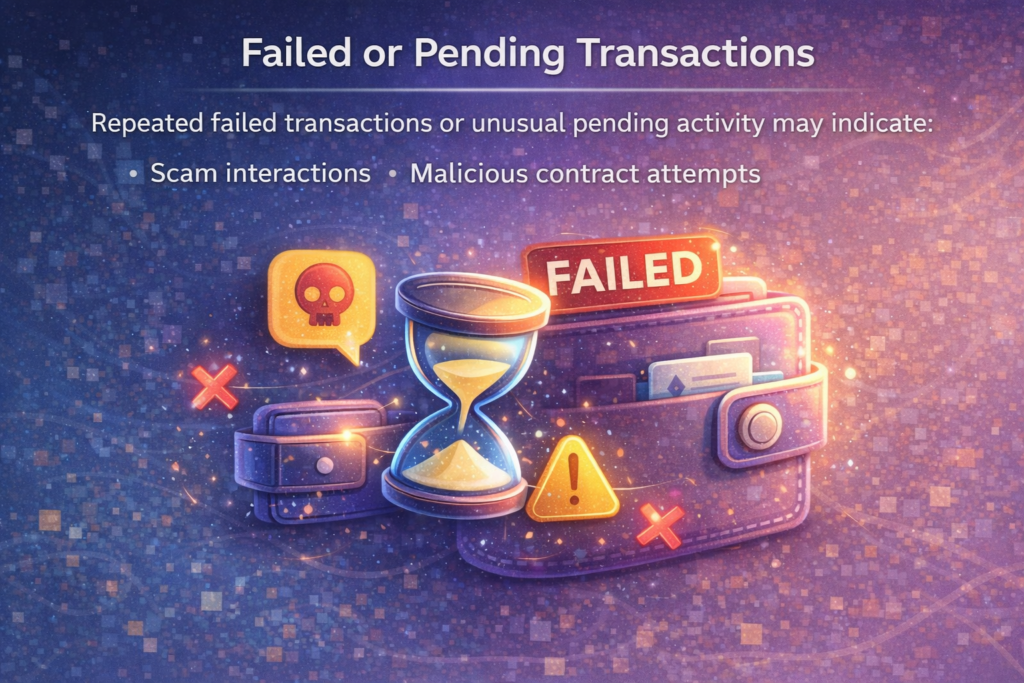
4️⃣ Failed or Pending Transactions
Repeated failed transactions or unusual pending activity may indicate:
- Scam interactions
- Malicious contract attempts
While not always dangerous, they’re worth reviewing.
Tools to Monitor Wallet Activity
Blockchain Explorers
Explorers like Etherscan allow you to:
- View full transaction history
- Inspect approvals
- See timestamps and contract interactions
Pros:
- Accurate
- No setup
Cons:
- Not beginner-friendly
NFT Portfolio & Wallet Tracking Tools
Many portfolio trackers also show wallet activity.
They help you:
- See activity chronologically
- Track NFTs and tokens together
- Monitor multiple wallets
👉 Start here:
Best NFT Portfolio Trackers (ARTICLE COMING SOON)
Wallet Activity Alerts
Some tools offer:
- Email alerts
- Push notifications
- Transaction monitoring
These are useful for:
- Large portfolios
- Long-term holders
- Users managing multiple wallets
How Often Should You Monitor Wallet Activity?
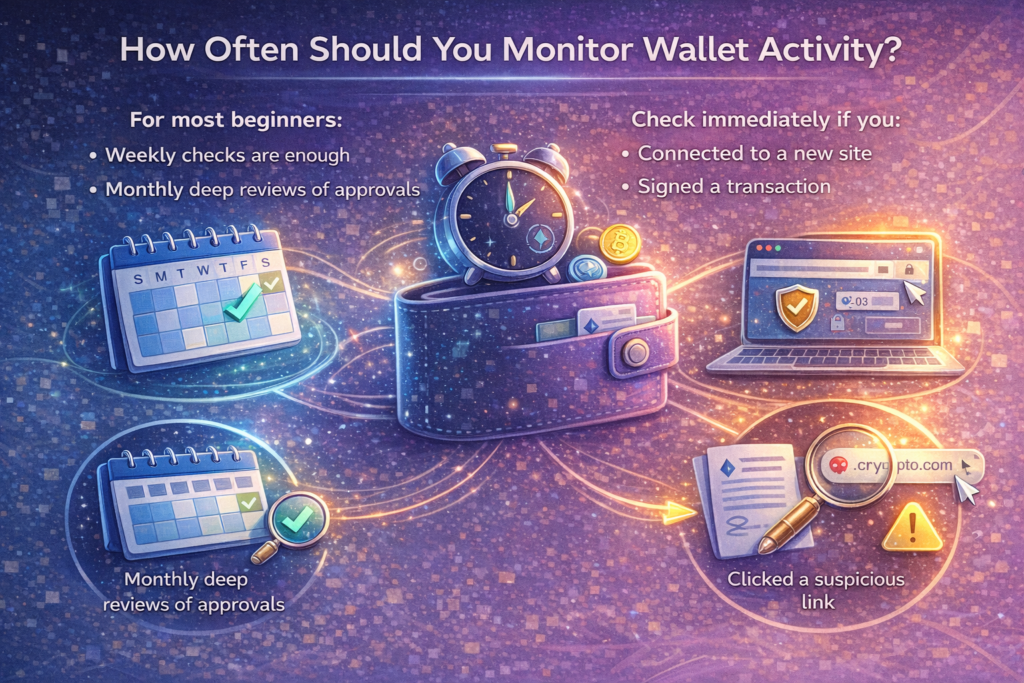
For most beginners:
- Weekly checks are enough
- Monthly deep reviews of approvals
Check immediately if you:
- Connected to a new site
- Signed a transaction
- Clicked a suspicious link
Common Beginner Mistakes When Monitoring Wallet Activity
Avoid:
- Only checking balance (not history)
- Ignoring approvals
- Overreacting to normal activity
- Never reviewing old permissions
Monitoring should be calm and consistent, not stressful.
What to Do If You Spot Suspicious Activity
Act quickly but calmly:
- Stop interacting with new sites
- Revoke suspicious approvals
- Monitor closely for further movement
- Move assets to a fresh wallet if needed
👉 Step-by-step guide:
What to Do If Your NFT Wallet Is Compromised
How Wallet Setup Affects Monitoring
Good wallet setup makes monitoring easier.
Best practices:
- Separate learning wallets from main holdings
- Avoid connecting your main wallet everywhere
- Keep approvals minimal
👉 Learn how to research safely using beginner-friendly NFT wallets:
Where to Go Next
To build a complete monitoring system:
👉 NFT Security Checklist for Beginners
👉 How to Track NFT Performance Over Time
👉 Best NFT Tools for Long-Term Holders (ARTICLE COMING SOON)
Final Thoughts: Is Wallet Activity Monitoring Worth It?
Absolutely.
Monitoring wallet activity:
- Prevents silent losses
- Builds confidence
- Helps you react early
- Reduces stress over time
It’s one of the simplest habits with the highest impact.