
Best NFT Tools for Long-Term Holders (Beginner-Friendly Guide)
Long-term NFT holders don’t need hype tools.
They need clarity, tracking, and safety.
If you plan to hold NFTs for months or years, the best NFT tools for long-term holders help you stay organised, reduce risk, and avoid costly mistakes — without watching charts all day.
This guide breaks down the most useful NFT tools for long-term holding, what each tool does, and how beginners can use them calmly and effectively.
What Does “Long-Term NFT Holding” Mean?
Long-term holding means:
- You’re not flipping daily
- You care about security and tracking
- You want to monitor value over time
- You want fewer mistakes, not more trades
Your tools should support patience, not urgency.
Why Long-Term NFT Holders Need Different Tools
Short-term traders focus on:
- Price volatility
- Quick exits
- Timing
Long-term holders focus on:
- Wallet safety
- Portfolio tracking
- Performance trends
- Risk management
That’s why tool choice matters.
Core Categories of NFT Tools for Long-Term Holders
1️⃣ NFT Wallets (Your Foundation)
Your wallet is the most important tool you use.
Long-term holders should prioritise:
- Clear transaction history
- Approval visibility
- Security warnings
- Easy permission management
👉 Start here:
Learn how to research safely using beginner-friendly NFT wallets
A good wallet makes every other tool safer.
2️⃣ NFT Portfolio Trackers
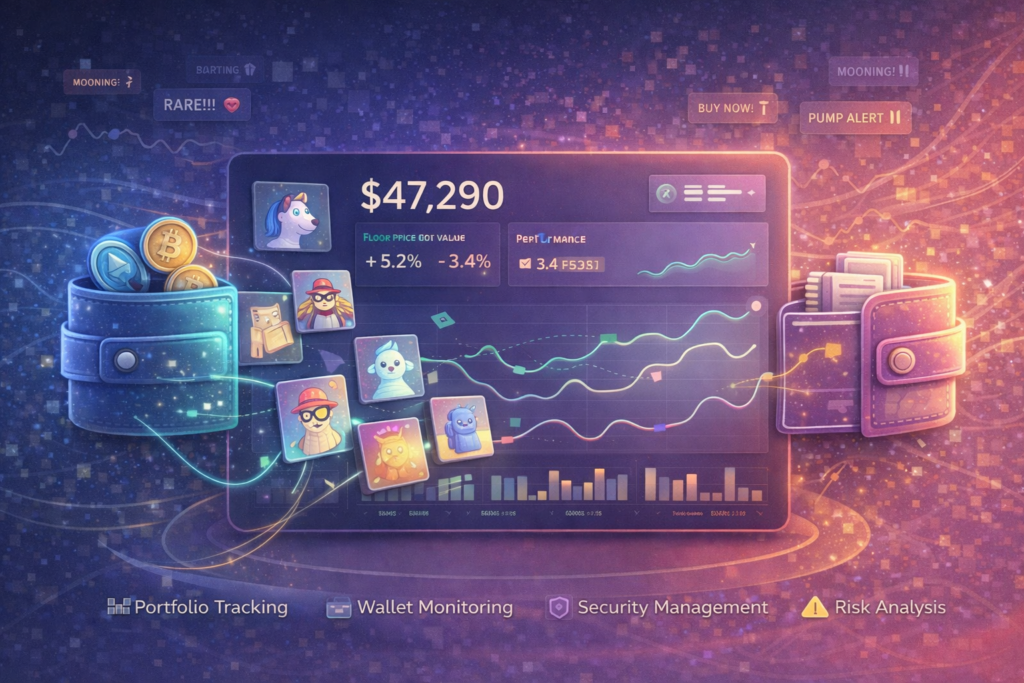
Portfolio trackers help you:
- Track NFTs across wallets
- View estimated portfolio value
- Monitor floor price changes
- See performance over time
These tools are essential for long-term holders because they:
- Reduce emotional decision-making
- Replace guesswork with data
👉 Related guide:
Best NFT Portfolio Trackers
3️⃣ Wallet Activity Monitoring Tools
Long-term holders don’t check wallets constantly — but they check consistently.
Wallet monitoring tools help you:
- Review transactions
- Spot unusual activity
- Catch forgotten approvals
- React early to problems
👉 Learn more:
How to Monitor Wallet Activity
4️⃣ NFT Analytics Tools
Analytics tools help long-term holders understand:
- Demand vs hype
- Volume trends
- Liquidity changes
- Market health
They’re especially useful for deciding:
- Whether to keep holding
- Whether risk is increasing
- Whether fundamentals still make sense
👉 Deep dive:
Best NFT Analytics Tools for Beginners (ARTICLE COMING SOON)
5️⃣ Permission & Approval Management Tools
One of the biggest long-term risks is forgotten permissions.
Approval tools allow you to:
- Review active approvals
- Revoke unused contracts
- Reduce wallet attack surface
👉 Step-by-step guide:
How to Revoke Wallet Permissions Safely
This is one of the highest ROI habits you can build.
Free vs Paid NFT Tools for Long-Term Holders
Free Tools Are Good For:
- Beginners
- Small portfolios
- Learning market behaviour
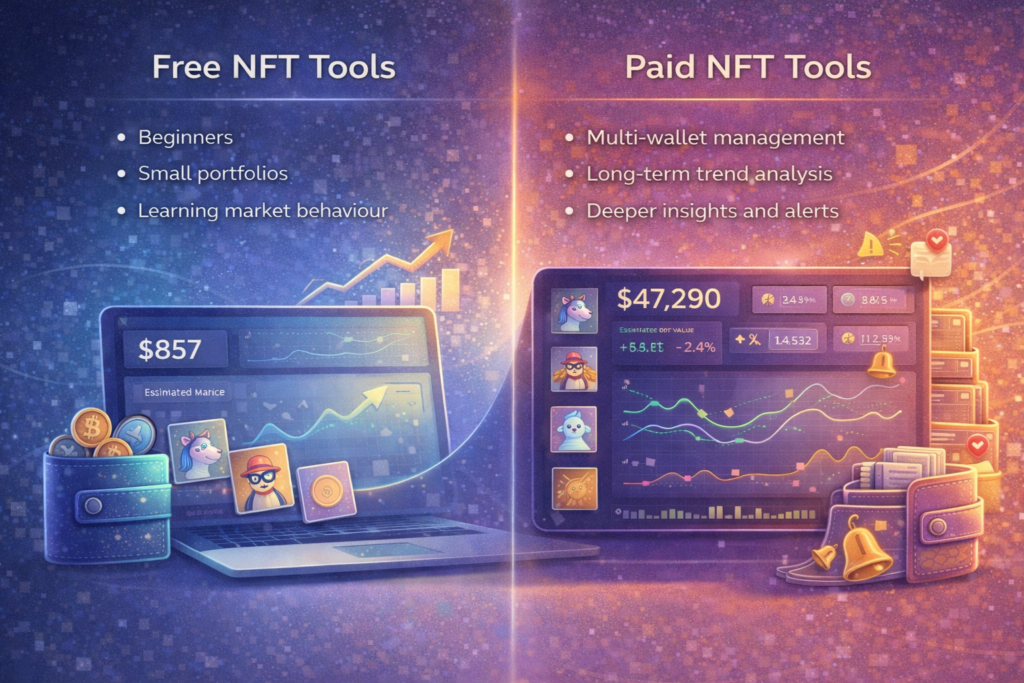
Paid Tools Are Better For:
- Multi-wallet management
- Long-term trend analysis
- Deeper insights and alerts
👉 Comparison guide:
Free vs Paid NFT Tools – What’s Worth It? (ARTICLE COMING SOON)
You can always upgrade later.
How to Build a Simple Long-Term NFT Tool Stack
For most beginners, this setup is enough:
- 1 secure wallet
- 1 portfolio tracker
- 1 analytics tool
- Monthly approval reviews
No complexity required.
Common Mistakes Long-Term Holders Make With Tools
Avoid:
- Using too many tools
- Ignoring approvals
- Never checking activity
- Relying only on price
Tools should reduce stress — not create it.
How Tool Choice Affects Safety
Better tools help you:
- Avoid scams
- Spot mistakes earlier
- Understand what’s normal
- Stay calm during volatility
👉 Safety foundation:
NFT Security Checklist for Beginners
Where to Go Next
If you’re holding NFTs long-term, continue here:
👉 How to Track NFT Performance Over Time
👉 How to Organise NFTs Across Multiple Wallets
👉 How to Manage NFTs for Tax Purposes (AU) (ARTICLE COMING SOON)
Final Thoughts: Do Tools Really Matter?
Yes — but only the right ones.
The best NFT tools for long-term holders:
- Protect your assets
- Give you clarity
- Help you avoid emotional decisions
You don’t need more tools.
You need better habits supported by simple tools.