
How to Organise NFTs Across Multiple Wallets (Beginner Guide)
As your NFT journey grows, so does the number of wallets you use.
Learning how to organise NFTs across multiple wallets is essential for:
- Better security
- Cleaner tracking
- Lower stress
- Fewer costly mistakes
This guide explains why multiple wallets are useful, how beginners should structure them, and how to stay organised without complexity.
Why Do People Use Multiple NFT Wallets?
Using more than one wallet is normal — and smart.
Common reasons include:
- Separating learning from value
- Reducing security risk
- Managing different purposes
- Keeping long-term holdings safe
Organisation is what makes this strategy work.
The Biggest Problem Beginners Face With Multiple Wallets
Most beginners don’t plan wallet structure.
This leads to:
- Forgotten NFTs
- Lost approvals
- Missed activity
- Confusing tax records
Organisation solves all of this.
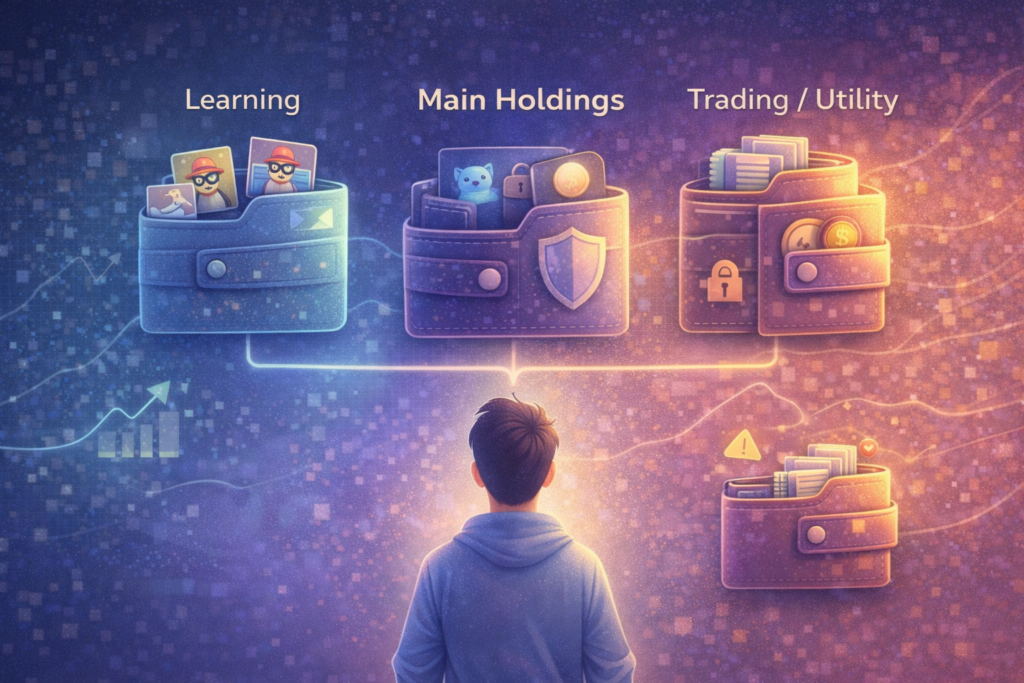
A Simple Wallet Structure for Beginners
You don’t need many wallets — just purpose-based ones.
1️⃣ Learning / Testing Wallet
Use this wallet for:
- New sites
- Mints
- Experiments
- Unknown tools
This wallet should hold low-value assets only.
2️⃣ Main Holding Wallet
Use this wallet for:
- Long-term NFT holdings
- Higher-value assets
- Minimal interactions
This wallet should:
- Connect to very few sites
- Have limited approvals
3️⃣ Optional: Trading or Utility Wallet
Some users add a third wallet for:
- Listings
- Marketplace activity
- Utility NFTs
This is optional, not required.
How to Track NFTs Across Multiple Wallets
This is where beginners often struggle.
Use NFT Portfolio Trackers
Portfolio trackers allow you to:
- View NFTs from multiple wallets in one place
- Track estimated value
- Monitor floor price changes
- See performance over time

👉 Start here:
Best NFT Portfolio Trackers
This removes the need to manually check each wallet.
How to Label and Document Your Wallets
Simple documentation prevents confusion later.
Best practices:
- Name each wallet by purpose
- Keep a private note with wallet roles
- Never store seed phrases digitally
A basic wallet map is enough.
How Wallet Organisation Improves Security
Organised wallets:
- Limit damage from scams
- Reduce approval exposure
- Make unusual activity easier to spot
If one wallet is compromised, others remain safe.
👉 Related guide:
How to Monitor Wallet Activity
Managing Approvals Across Multiple Wallets
Approvals are easier to manage when wallets have clear purposes.
Tips:
- Review approvals monthly
- Revoke unused permissions
- Keep main wallet approvals minimal
👉 Step-by-step help:
How to Revoke Wallet Permissions Safely
How Organisation Helps With Long-Term Holding
For long-term holders, organisation means:
- Less stress
- Fewer mistakes
- Better tracking
- Clear decision-making
👉 Related guide:
Best NFT Tools for Long-Term Holders (ARTICLE COMING SOON)

Tax & Record-Keeping Benefits (AU Context)
Multiple wallets are fine — if you track them.
Organisation helps:
- Identify which wallet did what
- Track purchase and sale history
- Simplify tax reporting
👉 Learn more:
How to Manage NFTs for Tax Purposes (AU Focus) (ARTICLE COMING SOON)
Common Beginner Mistakes to Avoid
Avoid:
- Using one wallet for everything
- Forgetting which wallet holds what
- Never tracking activity
- Storing seed phrases online
Simple structure beats complexity.
How Wallet Choice Affects Organisation
Good wallets make organisation easier by:
- Showing clear transaction history
- Warning about approvals
- Supporting multiple accounts
👉 Learn how to research safely using beginner-friendly NFT wallets:
Where to Go Next
To complete your wallet management system:
👉 How to Monitor Wallet Activity
👉 NFT Security Checklist for Beginners
👉 Best NFT Tools for Long-Term Holders (ARTICLE COMING SOON)
Final Thoughts: Do You Really Need Multiple Wallets?
You don’t need many wallets — you need intentional ones.
When organised properly, multiple wallets:
- Increase safety
- Improve clarity
- Reduce stress
- Support long-term success
Organisation isn’t advanced — it’s foundational.