
What Is NFT Volume? (Beginner Guide)
If you’re researching NFTs, you’ve likely seen the term volume next to floor price.
But what is NFT volume exactly?
NFT volume (also called NFT trading volume) refers to the total value of NFTs traded within a specific time period, usually measured over 24 hours or 7 days.
Understanding what NFT volume means helps you measure demand, liquidity, and real buying activity inside a collection — not just the price someone listed at.
Before you start connecting to marketplaces or analytics tools, make sure your wallet setup is secure. If you haven’t yet, start here: best NFT wallets for beginners.
If you haven’t already, read our guide on how to check NFT floor price to understand how these two metrics work together.
👉 How to Check NFT Floor Price (Beginner Guide)
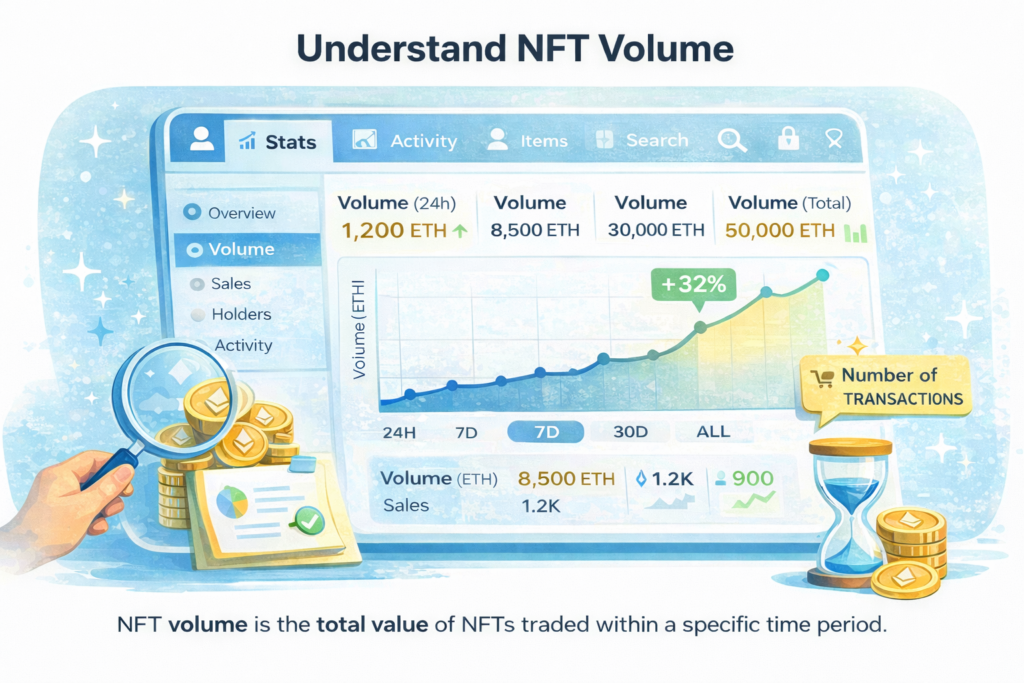
Quick Checklist: How to Read NFT Volume Correctly
If you want to use NFT volume properly (and avoid getting fooled by hype), check these five things:
- Time period: 24h volume vs 7d volume vs total volume
- Sales count: is the volume coming from many sales or just a few large buys?
- Frequency: steady trades vs one-off spikes
- Floor price context: volume should support the floor price
- Source credibility: use official marketplaces and trusted tools, not random trackers
For a safe, beginner-friendly toolkit, see: best NFT tools for beginners.
What Does NFT Volume Measure?
NFT volume measures:
- Total sales value
- Number of transactions
- Market activity
- Buyer and seller participation
For example:
If 100 NFTs are sold in 24 hours at an average of 1 ETH each, daily volume equals 100 ETH.
In other words: volume reflects liquidity — not just listing price.
If you also want to understand floor price properly, read: what is a floor price in NFTs.
Why NFT Volume Is Important
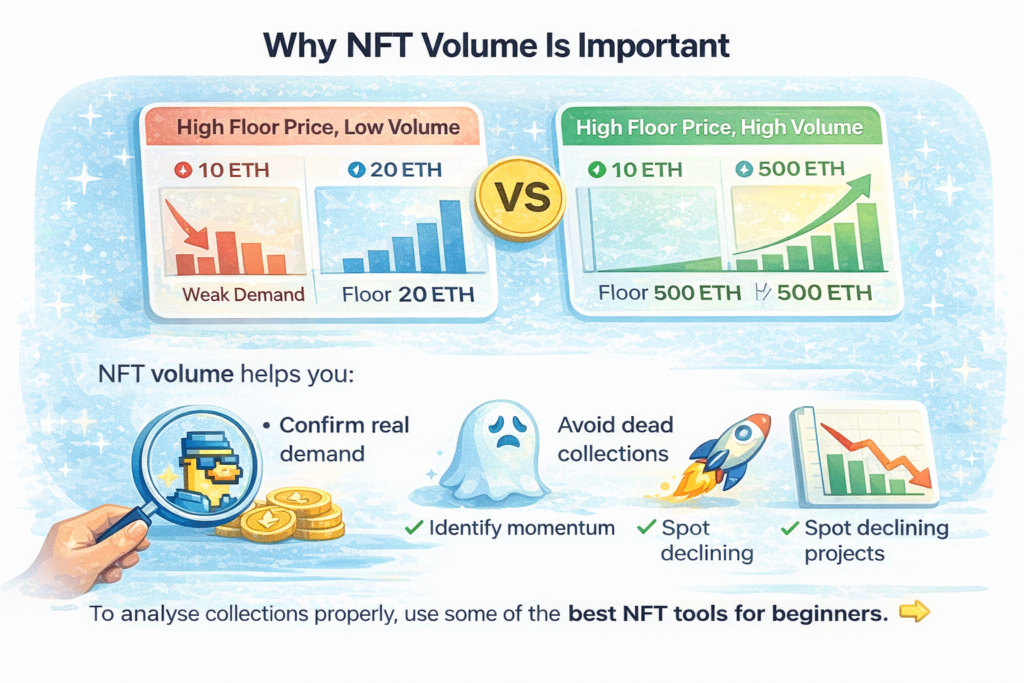
Floor price alone can be misleading.
High floor price + low volume = weak demand or thin liquidity.
High floor price + high volume = strong activity and real participation.
NFT volume helps you:
- Confirm real demand
- Avoid dead collections
- Identify momentum
- Spot declining projects
To analyse collections properly, use some of the best NFT tools for beginners.
How to Check NFT Volume
Step 1: Visit the Official Marketplace
Most marketplaces display:
- 24-hour volume
- Total collection volume
- Number of sales
Always verify you are on the correct website to avoid phishing attempts. For safety tips, read how to avoid NFT scams and how to avoid fake NFT marketplaces.
Step 2: Use NFT Analytics Platforms
Analytics platforms show:
- Historical volume trends
- Volume spikes
- Sales distribution
- Holder data
Volume charts help identify:
- Organic growth
- Hype-driven spikes
- Long-term stability
If you want a dedicated tool list, see: best NFT analytics tools for beginners (ARTICLE COMING SOON).
What Is Good NFT Volume?
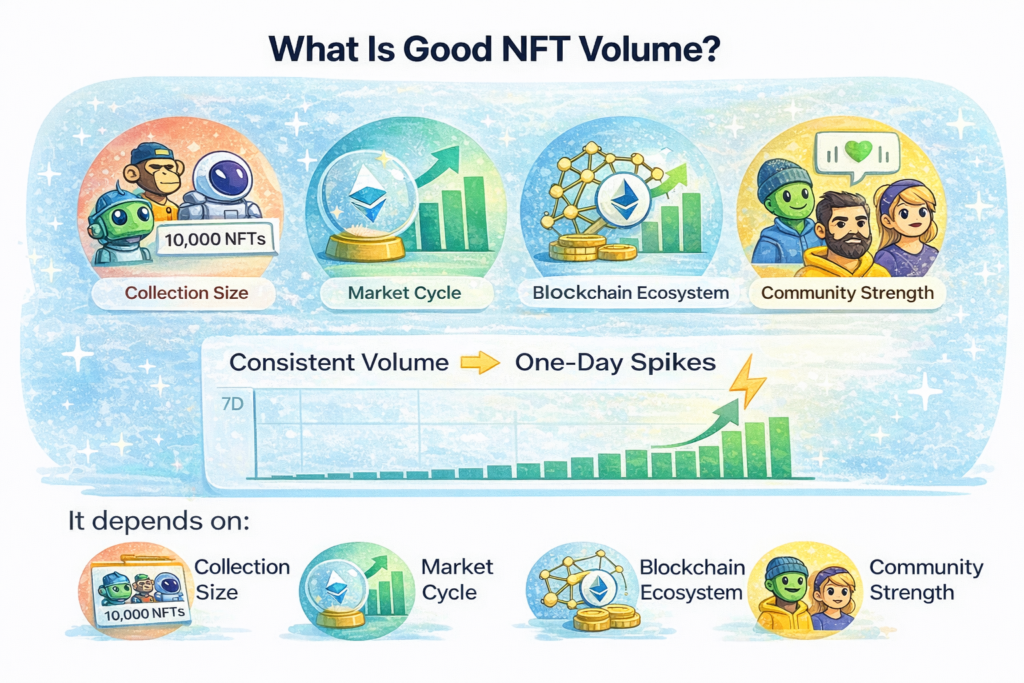
There is no universal “good” number for NFT trading volume.
It depends on:
- Collection size
- Market cycle
- Blockchain ecosystem
- Community strength
However, consistent volume is usually more meaningful than one-day spikes — because consistency suggests ongoing demand rather than short-term hype.
Volume vs Floor Price: What’s the Difference?
Floor price = lowest listed NFT.
Volume = total traded value (NFT volume) over a time period.
Floor price shows entry cost.
Volume shows activity and liquidity.
Both should be analysed together. Start here: how to check NFT floor price.
Common Mistakes When Checking NFT Volume
- Ignoring the time period (24h vs 7d vs total)
- Confusing volume with number of listings
- Not checking transaction frequency and sales count
- Trusting unofficial sites or fake dashboards
If you’re unsure how contract permissions can become dangerous while trading, read what is a malicious smart contract (ARTICLE COMING SOON).
Final Thoughts
Understanding what NFT volume is gives you deeper insight into market demand and liquidity.
Before buying, always:
- Check floor price
- Check NFT volume (24h and 7d)
- Check trend consistency
- Verify marketplace authenticity
- Use a secure wallet
If you haven’t already, choose one of the best NFT wallets for beginners before interacting with NFT marketplaces.
FAQ Section
What does NFT volume mean?
NFT volume is the total value of NFTs traded within a specific time period (such as 24 hours or 7 days).
Is high NFT volume good?
Generally, yes. Higher NFT trading volume suggests stronger market activity and liquidity, but it should be compared with floor price and sales count.
Can NFT volume predict price?
Not directly. Rising volume can signal increased demand, but it does not guarantee future price movement.
Where can I check NFT volume?
You can check NFT volume on official marketplaces and trusted NFT analytics tools that show 24-hour and 7-day trading volume.