
How to Time Selling an NFT (Beginner Exit Timing Guide)
How to Time Selling an NFT (Beginner Exit Timing Guide)
Buying an NFT is exciting.
But timing the sell is what determines your result.
Most beginners spend hours researching rarity, mint prices, and hype cycles — but very few learn how to time selling an NFT using real demand and liquidity signals.
If you want to reduce risk, protect capital, and avoid emotional decisions, you need a simple framework for when to sell — based on market behaviour, not social media noise.
Start here first: make sure your wallet setup is secure before you list, transfer, or sign anything. Use this beginner-safe wallet guide (affiliate): best NFT wallets for beginners.
If you’re still building fundamentals, read this first: how to research NFTs before buying.
Now let’s break down how to time selling an NFT using demand signals, volume trends, and clear exit rules.
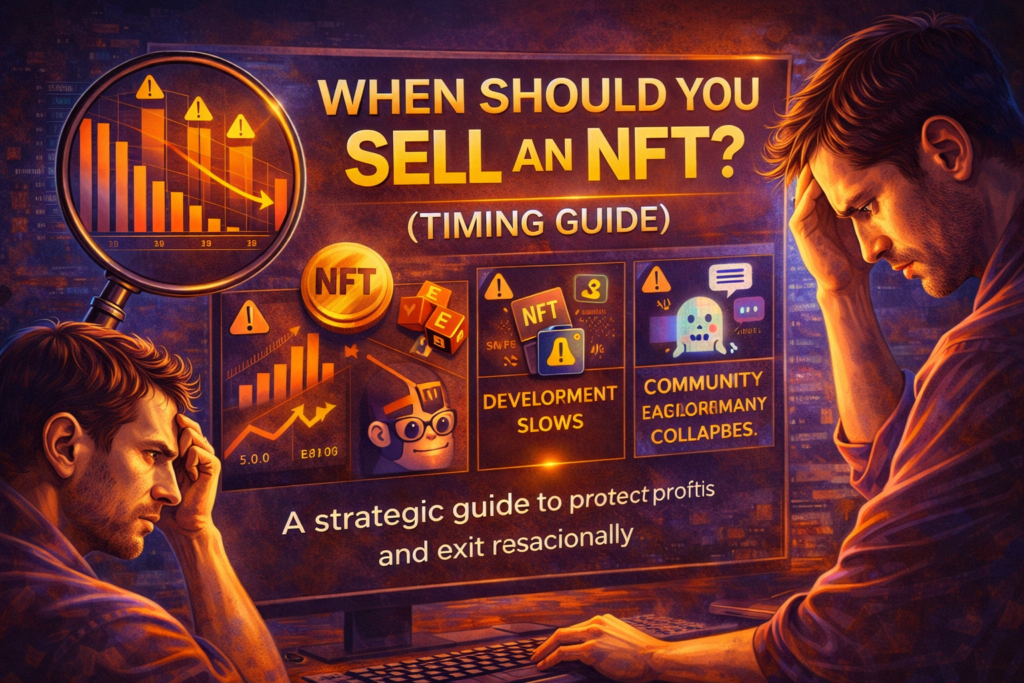
What “Timing the Sell” Actually Means
Timing the sell means you decide your exit rules before emotions take over.
Instead of reacting to fear or hype, you’re watching the signals that matter:
- Is demand still strong?
- Is liquidity expanding or shrinking?
- Are buyers increasing or disappearing?
- Is volume supporting price?
- Has the project thesis changed?
If you want the classic “sell timing” version of this topic, see: when should you sell an NFT.
Why Beginners Struggle With Selling Timing
NFT markets are volatile. Liquidity can disappear quickly. Narratives change fast.
Without exit rules, beginners often:
- Hold too long and watch profits evaporate
- Sell too early due to fear
- Panic sell during normal volatility
- Refuse to sell because they’re anchored to a previous high
To sell with structure, you need to understand demand and trading behaviour first:
How to Time Selling an NFT: 6 Beginner Signals
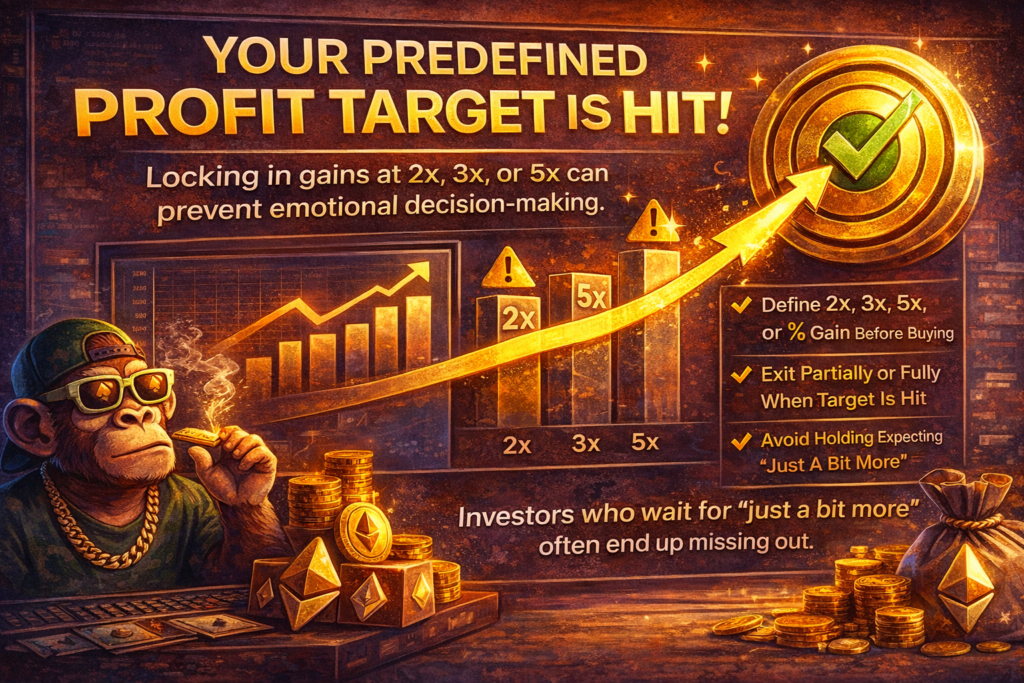
1) Your Predefined Target Is Hit
The most disciplined timing signal is simple: your plan triggers.
Before buying, define what “enough” looks like:
- 2x?
- 3x?
- 5x?
- Fixed percentage gain?
When your target is reached, partial or full profit-taking becomes rational. Without a target, you’re likely to hold until the market forces your hand.
2) 7-Day Volume Starts Declining
Volume is one of the clearest demand signals. If 7-day volume declines while the floor stays high, liquidity may be weakening.
Learn volume properly here: what is NFT volume?
When volume fades, exits become harder:
- Fewer buyers
- Slower sales
- More undercutting
- Wider spreads between bids and asks
3) Unique Buyers Shrink
Healthy markets expand participation. If the same wallets trade repeatedly and new buyers stop arriving, liquidity risk rises.
This is a core concept in: how to spot strong NFT demand.
4) Floor Price Stops Being Supported by Activity
Floor price is what sellers want. Demand is what buyers actually do.
If the floor looks stable but volume and sales are fading, the floor can “snap” lower quickly once undercutting begins.
Use these guides to read floor correctly:
5) Your Thesis Changes
If the original reason you bought no longer applies, holding becomes speculation.
Reassess with:
6) You Spot Manipulation or Risky Behaviour
If activity looks artificial (wash trading, repeated wallets, strange price jumps), your “demand” may be fake.
Also protect your wallet while researching. Read:
- how to avoid NFT scams
- how wallet drainers steal NFTs
- how to avoid fake NFT marketplaces
- what is a malicious smart contract
Common Selling Timing Mistakes
- Only watching floor price
- Ignoring 7-day volume trends
- Holding without a target
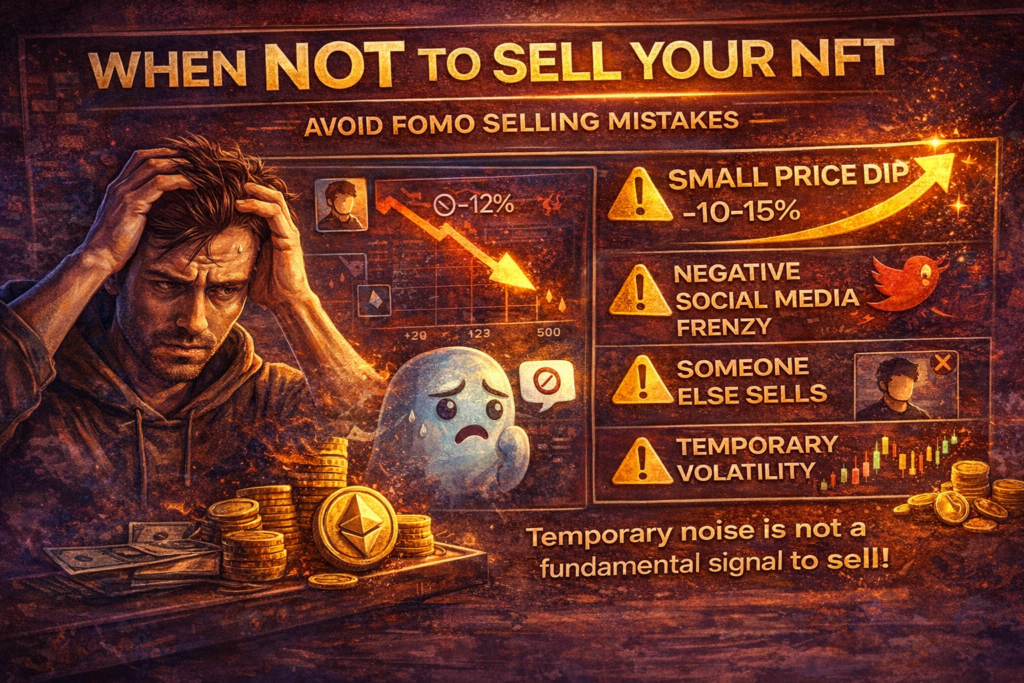
- Panic selling during normal dips
- Letting Twitter/X dictate the plan
A Simple Beginner Timing Framework
Before you sell, ask:
- Did I hit my predefined target?
- Is 7-day volume rising or fading?
- Are unique buyers expanding or shrinking?
- Is floor price supported by sales activity?
- Has my thesis changed?
If multiple answers point to weakening demand, timing an exit becomes structured — not impulsive.
If you want to track your NFTs properly after buying (so you can time exits with clearer data), read: what happens after you buy an NFT and how to track NFT performance over time.
Final Thoughts: Timing Improves When You Watch Demand
Learning how to time selling an NFT is less about perfection and more about avoiding the big mistakes: holding through fading liquidity and exiting based on emotion.
Use volume trends, unique buyers, floor support, and thesis clarity — and you’ll make consistently better exit decisions over time.
And again: wallet security comes first. If you haven’t set that foundation yet, start here (affiliate): best NFT wallets for beginners.