
How to Know If an NFT Is Overvalued (Beginner Guide)
How to Know If an NFT Is Overvalued (Beginner Guide)
Buying at the wrong price is one of the fastest ways to lose money in NFTs.
Many beginners focus on hype, rarity, or social media momentum — but very few ask the most important question:
Is this NFT overvalued?
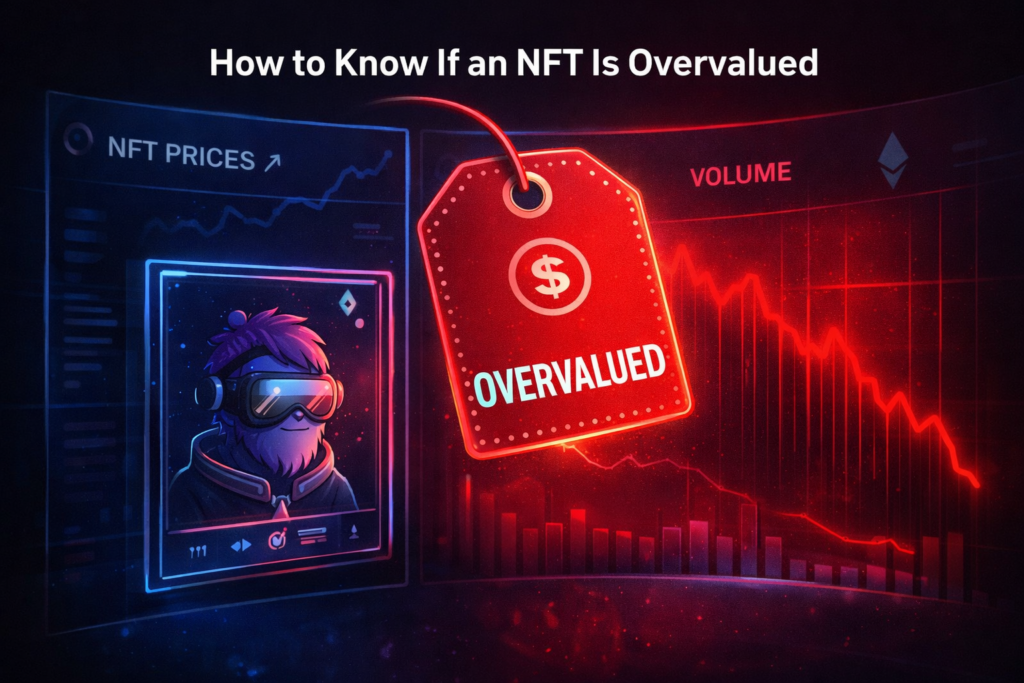
Learning how to know if an NFT is overvalued can protect your capital before you buy — and help you avoid holding through unsustainable price levels.
Before interacting with marketplaces, make sure your wallet is secure. If you haven’t set one up safely yet, start with one of the best NFT wallets for beginners.
This guide explains how to identify overvaluation using volume trends, buyer participation, liquidity strength, and project fundamentals — not emotion or FOMO.
What Does “Overvalued” Mean in NFTs?
An NFT is overvalued when:
- Price rises faster than demand
- Floor price is unsupported by trading activity
- Buyer growth stalls
- Volume weakens while listings increase
- Speculation replaces fundamentals
Unlike stocks, NFTs don’t have earnings or balance sheets. Value is determined almost entirely by demand and liquidity.
If you don’t understand core mechanics, read:
1. Floor Price Is Rising But Volume Is Falling
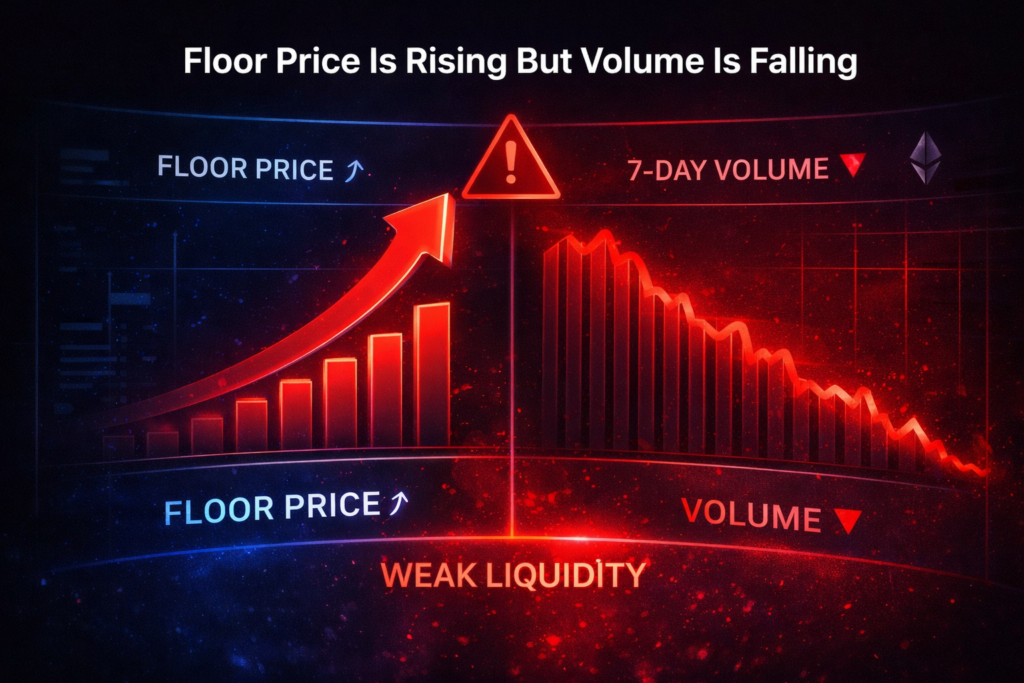
If floor increases but 7-day volume declines, the price may be driven by thin liquidity or short-term speculation.
Healthy price increases are supported by expanding volume.
Learn how to measure this properly:
2. Unique Buyers Are Not Growing
Strong NFT markets expand participation. If new wallets stop entering, liquidity becomes fragile.
See:
3. Listings Increase Faster Than Sales
If listings rise while daily sales slow, sellers may be preparing to exit. This often precedes a floor drop.
Track performance trends here:
4. Price Is Driven by Narrative, Not Utility
If price rises without development progress or roadmap delivery, valuation may be speculative.
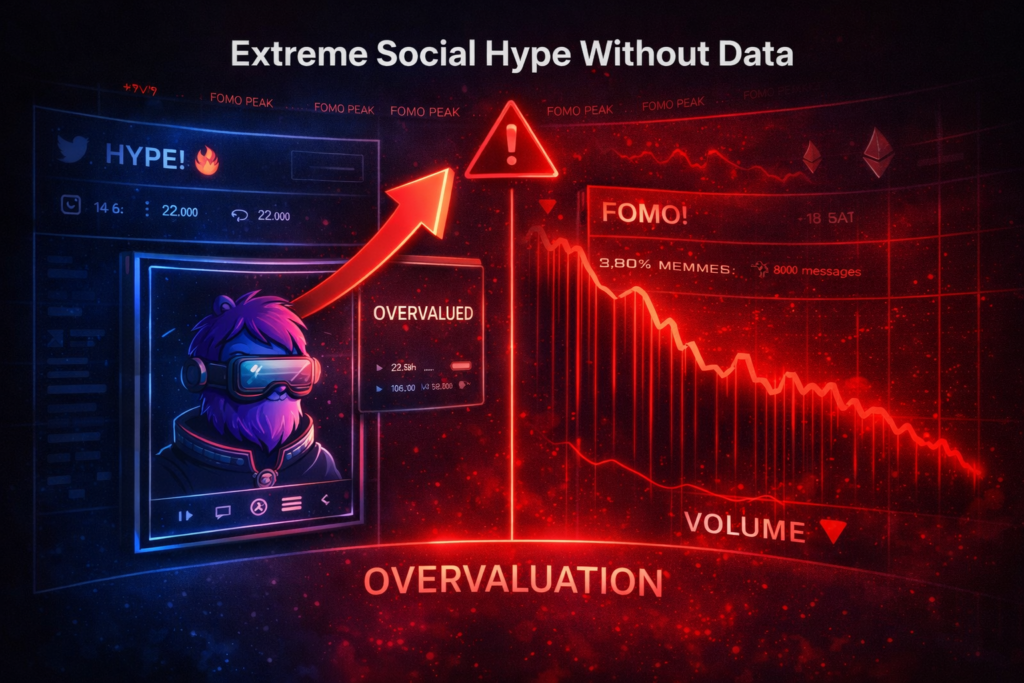
5. Extreme Social Hype Without Data
Overvaluation often forms at emotional peaks.
If you’re unsure about timing exits, review:
6. Floor Is Thin (Low Depth)
If only a few NFTs sit near the floor and large price gaps exist between listings, the market may be fragile.
Understand floor mechanics here:
How to Protect Yourself From Buying Overvalued NFTs
- Always check 7-day volume
- Compare floor vs volume trends
- Monitor unique buyers
- Assess listing growth
- Re-evaluate fundamentals
- Avoid emotional entry during hype spikes
If you’re still learning fundamentals, revisit:
Final Thoughts
Learning how to know if an NFT is overvalued is one of the most powerful risk management skills in the space.
Most losses happen not because people buy bad NFTs — but because they buy good NFTs at unsustainable prices.
Watch liquidity. Watch volume. Watch buyers. Let data guide you — not hype.