Best NFT Tools for Beginners: Track, Analyse & Research NFTs
As you get more involved with NFTs, tools become essential. From tracking floor prices to analysing rarity and monitoring collections, the right NFT tools can help beginners make smarter decisions and avoid costly mistakes.
This guide covers the best NFT tools for beginners, explaining what each tool does, how it’s used, and which ones are worth your time. Whether you’re researching a new collection or tracking NFTs you already own, these tools can give you a clearer picture of the market.
If you’re still setting up, start with our NFTs for beginners step-by-step guide before using advanced tools.
This guide outlines the best NFT tools for beginners and explains how to use them to research collections and monitor your portfolio safely.
What Are NFT Tools and Why Do Beginners Need Them?
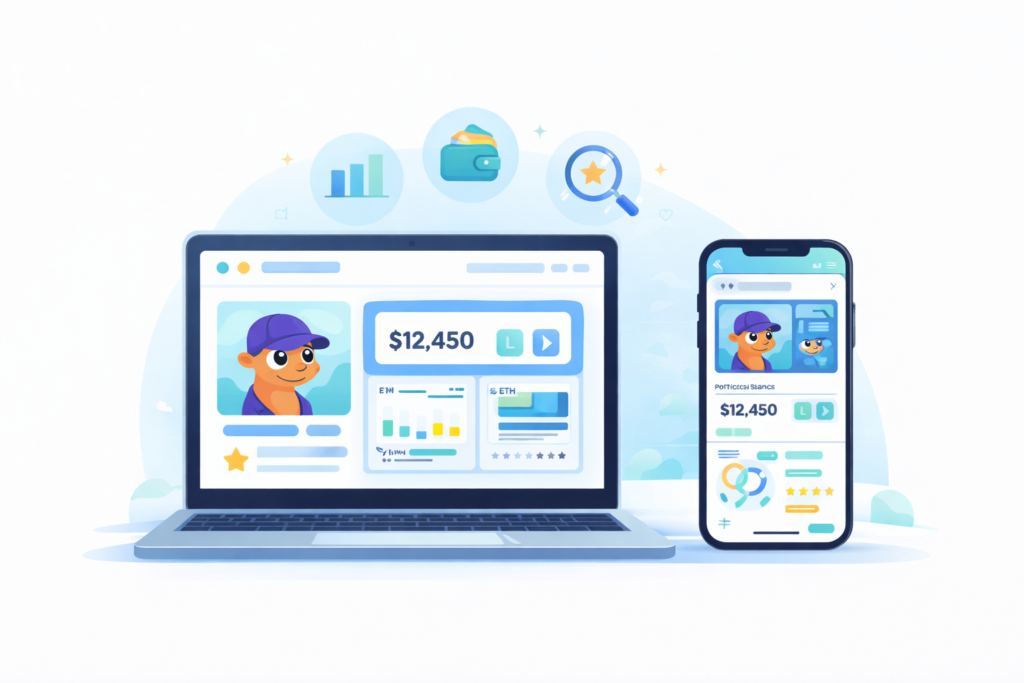
NFT tools are platforms that help users research collections, analyse rarity, track prices, and monitor NFT portfolios. While beginners can buy NFTs without using tools, doing so often means missing important information such as historical prices, ownership trends, and market activity.
Using the right tools can help beginners spot red flags, avoid overpaying, and better understand how NFT markets behave over time. Many tools are free to start with, making them easy to explore without committing money upfront.
Best NFT Tools for Beginners (Compared)
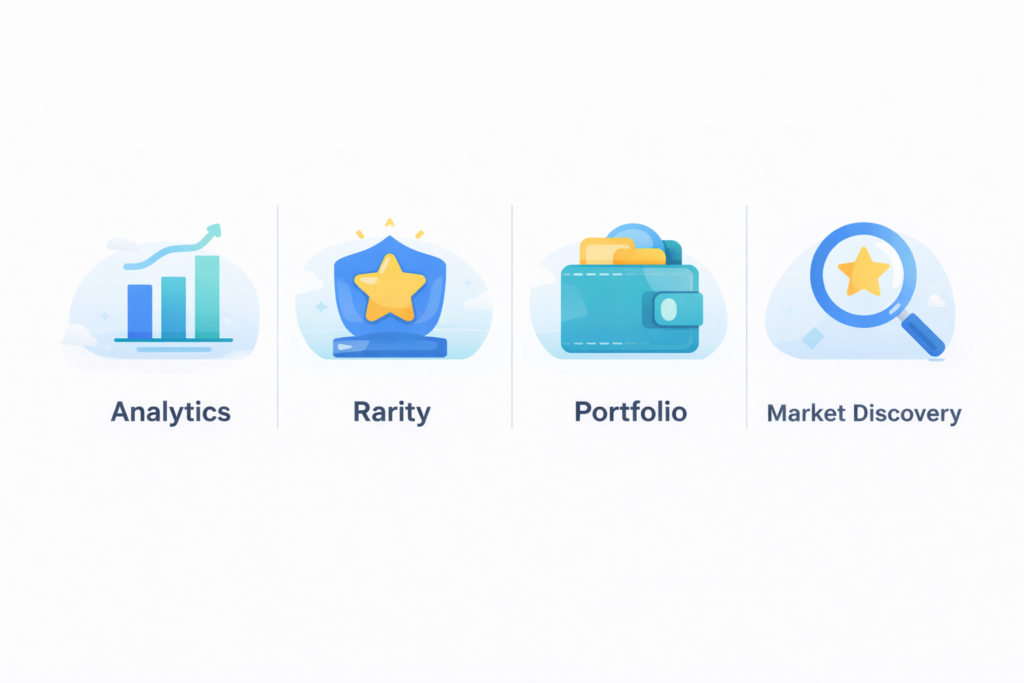
NFT tools are widely used by collectors and traders. Each serves a different purpose, from price tracking to rarity analysis, and can be useful at different stages of your NFT journey.
Below are some of the best NFT tools for beginners you can start using today to understand NFT markets and collections.
OpenSea Stats & Collection Analytics (Free & Beginner-Friendly)
OpenSea provides built-in statistics and analytics that beginners can use to track NFT collections. These stats include floor prices, volume, recent sales, and ownership trends.
For beginners, OpenSea’s analytics are often the easiest place to start. They require no extra accounts or setup and allow users to quickly check whether a collection is active or losing interest.
These insights are most useful when paired with an understanding of where NFTs are bought and sold — see our guide to the best NFT marketplaces for beginners to compare platforms.
While OpenSea’s tools are basic compared to advanced analytics platforms, they are more than enough for beginners learning how NFT markets move.
Best for:
Beginners who want simple, free insights before exploring advanced NFT tools.
👉 You can explore NFT collection stats directly on OpenSea.
DappRadar (NFT & Marketplace Analytics for Beginners)
DappRadar is one of the most widely used analytics platforms in the Web3 space. It allows beginners to track NFT marketplaces, collections, and decentralised applications across multiple blockchains from one dashboard.
For NFT beginners, DappRadar is especially useful for spotting trending collections, comparing marketplace activity, and understanding which projects are gaining real traction. The platform provides metrics such as trading volume, unique wallets, and transaction counts, helping users avoid inactive or low-interest NFTs.
DappRadar offers free access to many features, with optional paid plans for deeper insights. This makes it easy for beginners to start learning without committing money upfront, while still having room to upgrade as their experience grows.
Best for:
Beginners who want an easy way to track NFT marketplaces, discover trending collections, and understand broader NFT market activity.
👉 You can explore NFT analytics using DappRadar on the official website.
HowRare.is (Solana NFT Rarity Tool)
HowRare.is is a browser-based rarity platform designed specifically for Solana NFT collections. It helps buyers understand how rare an NFT is within a collection by analysing traits and ranking items based on scarcity.
For beginners, rarity tools like HowRare.is are useful for avoiding overpaying for NFTs with common traits. Because it runs directly in a web browser and doesn’t require an account, it’s an easy starting point for learning how rarity affects NFT value.
While it’s not a corporate product with a large brand presence, many Solana users rely on it to understand how rare an NFT is. The tool is maintained by an active developer and accessible through a browser interface.
Best for:
Beginners researching Solana-based NFTs and learning how rarity rankings work.
👉 Visit HowRare.is to check Solana NFT rarity rankings.
Zapper (NFT & Web3 Portfolio Tracker)
Zapper is a browser-based portfolio tracker that allows users to view NFTs, tokens, and DeFi positions across multiple wallets in one dashboard. For beginners, Zapper is especially useful because it removes the need to manually track assets across different blockchains and platforms.
To use portfolio tracking tools safely, you’ll need a secure wallet — see our guide to the best NFT wallets for beginners to get set up correctly.
By simply connecting a wallet address, users can see their NFT holdings, recent activity, and overall portfolio value. This makes it easier to monitor purchases, spot changes in value, and keep track of assets spread across multiple wallets.
Zapper works directly in the browser and does not require users to move funds or give up custody, making it a low-risk and beginner-friendly option for portfolio tracking.
Best for:
Beginners who want an easy way to track NFTs and crypto assets across multiple wallets in one place.
👉 You can track NFTs and Web3 assets using Zapper on the official website.
Zerion (All-in-One NFT & Crypto Portfolio Tracker)
Zerion is a widely trusted Web3 portfolio tracker that allows users to monitor NFTs, tokens, and DeFi assets across multiple wallets and blockchains. It offers both a browser interface and a mobile app, making it accessible for beginners and experienced users alike.
Zerion is especially helpful for NFT beginners who want a clear overview of their assets without juggling multiple wallets or platforms. Its clean design and long-standing reputation in the Web3 space make it one of the most trusted portfolio tools available.
Best for:
Beginners who want a reliable, professional portfolio tracker for NFTs and crypto assets.
👉 Track NFTs and crypto assets using Zerion on the official website.
CoinStats (Beginner-Friendly NFT & Crypto Portfolio Tracker)
CoinStats is a well-established portfolio tracking platform that supports NFTs, cryptocurrencies, and multiple wallets across different blockchains. It’s designed to give users a clear overview of their assets without requiring technical knowledge.
For NFT beginners, CoinStats is useful because it combines NFT tracking with broader crypto portfolio insights in one interface. Users can monitor NFT holdings, token balances, and overall portfolio performance without switching between multiple platforms.
CoinStats offers both a browser-based dashboard and mobile apps, making it easy for beginners to check their NFT portfolio on the go.
Best for:
Beginners who want a simple, reliable way to track NFTs alongside their crypto assets.
👉 Track NFTs and crypto assets using CoinStats on the official website.
Nansen (Advanced NFT & Wallet Analytics — For Experienced Users)
Nansen is one of the most respected analytics platforms in the Web3 space, used by professional traders, funds, and serious collectors. It provides deep insights into wallet activity, NFT ownership trends, and on-chain behaviour across multiple blockchains.
While Nansen is not designed specifically for beginners, it’s worth knowing about as users become more advanced. The platform allows users to analyse smart money movements, track influential wallets, and gain a deeper understanding of how NFTs and crypto assets move on-chain.
Because of its depth and complexity, beginners should treat Nansen as a future upgrade rather than a starting point.
Best for:
Experienced users and advanced NFT collectors who want professional-grade on-chain analytics.
👉 Explore advanced NFT and wallet analytics using Nansen on the official website.

Supporting Tools for NFT Beginners
While the tools above focus specifically on NFTs, the platforms below help beginners understand the broader crypto market that NFTs operate within. Tracking cryptocurrency prices, market trends, and blockchain activity is important because NFT costs, gas fees, and marketplace activity are directly influenced by these factors.
CoinMarketCap (Crypto Prices & Market Data for NFT Beginners)
CoinMarketCap is one of the most widely used cryptocurrency tracking platforms in the world. It provides real-time price data, market capitalisation rankings, trading volume, and historical charts for thousands of cryptocurrencies.
For NFT beginners, CoinMarketCap is especially useful for monitoring the prices of cryptocurrencies such as Ethereum (ETH), Solana (SOL), and Polygon (MATIC), which are commonly used to buy NFTs and pay transaction fees. Understanding how these prices move helps beginners anticipate changes in NFT costs and gas fees.
CoinMarketCap also includes basic information about blockchain networks, exchanges, and market trends, making it a useful reference tool for users who are still learning how the NFT and crypto ecosystems connect.
Best for:
Beginners who want a clear, reliable way to track cryptocurrency prices that directly impact NFT purchases and transaction fees.
👉 Visit CoinMarketCap to explore crypto prices and market data.
CoinGecko (Independent Crypto Market Tracking & Insights)
CoinGecko is a well-respected cryptocurrency data platform known for its independent approach to tracking crypto markets. It provides detailed price data, market rankings, and additional metrics such as developer activity, community growth, and project transparency.
For NFT beginners, CoinGecko is helpful when researching cryptocurrencies used across NFT ecosystems. Its additional metrics can help users better understand the health and long-term potential of blockchain networks that support NFT marketplaces.
CoinGecko is often used alongside CoinMarketCap, as it can provide alternative perspectives and deeper insight into how crypto projects evolve over time.
Best for:
Beginners who want deeper insight into cryptocurrencies and blockchain ecosystems that support NFTs.
👉 Visit CoinGecko to research cryptocurrencies and blockchain data.
CoinCheckup (Crypto Fundamentals & Market Metrics)
CoinCheckup is a crypto research platform that focuses on fundamental metrics such as market valuation models, network activity, and long-term project indicators.
For NFT beginners, CoinCheckup can be useful for understanding the broader blockchain ecosystems that NFTs rely on. Researching the health of networks like Ethereum or Solana can help users better understand market cycles, transaction costs, and long-term trends that affect NFT prices.
Best for:
Beginners who want deeper insight into the blockchain networks powering NFT marketplaces.
👉 Visit CoinCheckup to explore crypto market metrics.
As you gain experience, these best NFT tools for beginners will help you level up your research and tracking skills without overwhelming you.
Final Recommendations for Beginners
If you’re just getting started with NFTs, focus on using a small number of tools that help you understand the basics without overwhelming you. Platforms like OpenSea’s collection stats and DappRadar are great starting points for researching NFT projects and market activity.
As your collection grows, portfolio trackers such as Zapper, Zerion, or CoinStats can help you keep track of NFTs across multiple wallets and blockchains. For users exploring Solana NFTs, tools like HowRare.is offer a simple way to understand rarity without advanced technical knowledge.
More advanced platforms like Nansen are best saved for later, once you’re comfortable navigating NFT markets and on-chain data. There’s no need to use every tool at once — start simple, learn gradually, and add more advanced tools as your experience grows.
If you haven’t already, make sure you’re using a secure wallet before connecting to any tools. You can start with our guide to the best NFT wallets for beginners to set up safely.