How NFT Royalties Work: Buyers vs Creators Explained
If you’ve ever bought or sold an NFT, you may have noticed an extra fee called a royalty. This often leads beginners to ask: how do NFT royalties work, and who actually gets paid?
NFT royalties are one of the most misunderstood parts of the NFT ecosystem. In this guide, we’ll explain how NFT royalties work in plain English, what buyers and creators need to know, and how royalties affect resale value.
No technical jargon. No debates. Just clear explanations.
What Are NFT Royalties?
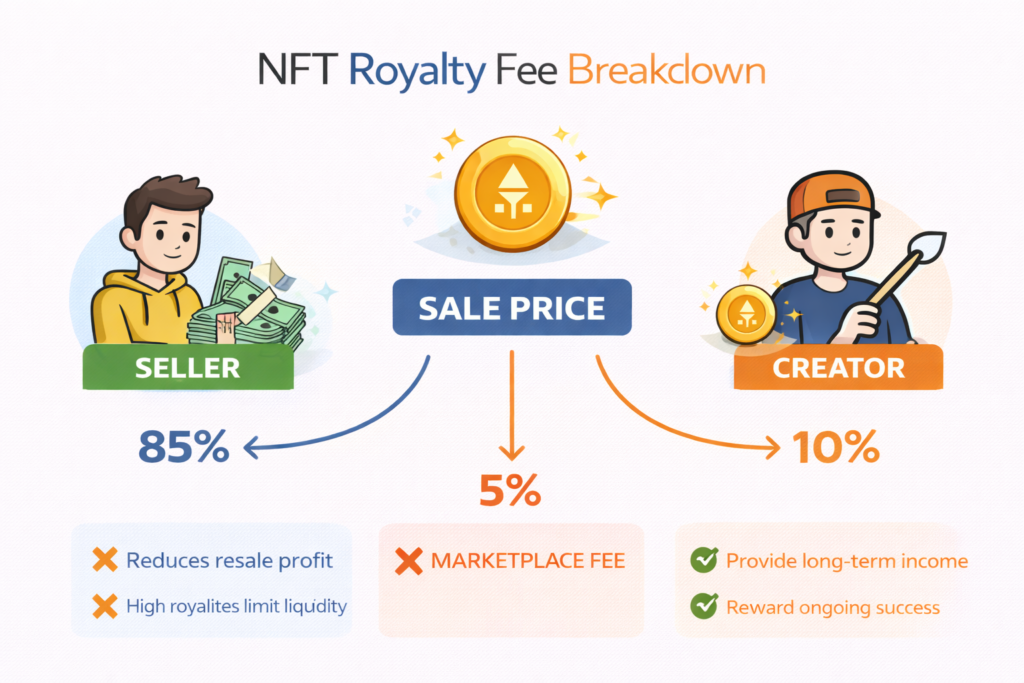
NFT royalties are fees paid to the original creator each time an NFT is resold on a marketplace.
When an NFT is created (minted), the creator can set a royalty percentage — commonly between 2.5% and 10%. This percentage is taken from the sale price whenever the NFT changes hands on the secondary market.
So instead of creators only earning money once, NFT royalties allow them to earn ongoing income as their work is resold.
How NFT Royalties Work Step by Step
To understand how NFT royalties work, let’s walk through a simple example.
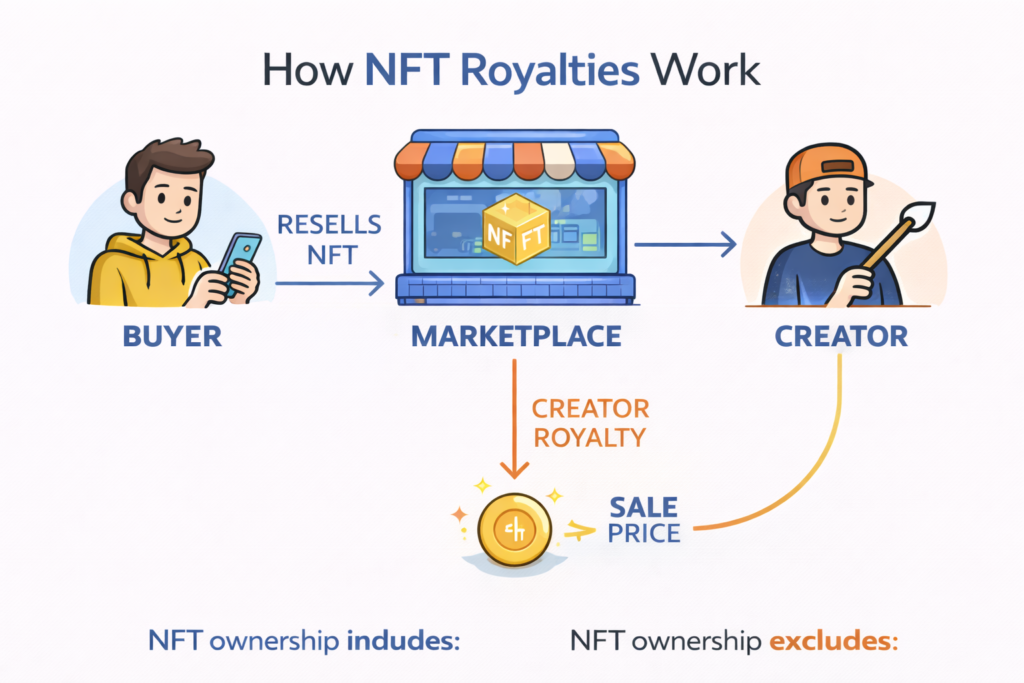
- A creator mints an NFT and sets a 5% royalty
- A buyer purchases the NFT
- The buyer later resells the NFT
- The marketplace automatically deducts the royalty
- The royalty is sent to the creator’s wallet
The buyer does not manually pay the creator. The process is handled automatically by the marketplace and smart contract.
Who Pays NFT Royalties?
This is a common point of confusion.
Buyers do not pay royalties upfront when buying an NFT.
Royalties are paid only when an NFT is resold.
If you:
- Buy an NFT and hold it → no royalty paid
- Sell an NFT → royalty is deducted from the sale proceeds
So while the seller technically pays the royalty, it’s usually factored into pricing decisions.
👉 Related reading: What Happens After You Buy an NFT?
How Much Are NFT Royalties?
Most NFT royalties fall into these ranges:
- 2.5% – 5% → Common and buyer-friendly
- 5% – 7.5% → Still reasonable
- 10%+ → High, may affect resale demand
High royalties can discourage traders, while very low royalties may reduce creator incentives.
There’s no universal “best” rate — it depends on the project and its goals.
Buyers vs Creators: Different Perspectives on Royalties
Understanding how NFT royalties work means seeing both sides.
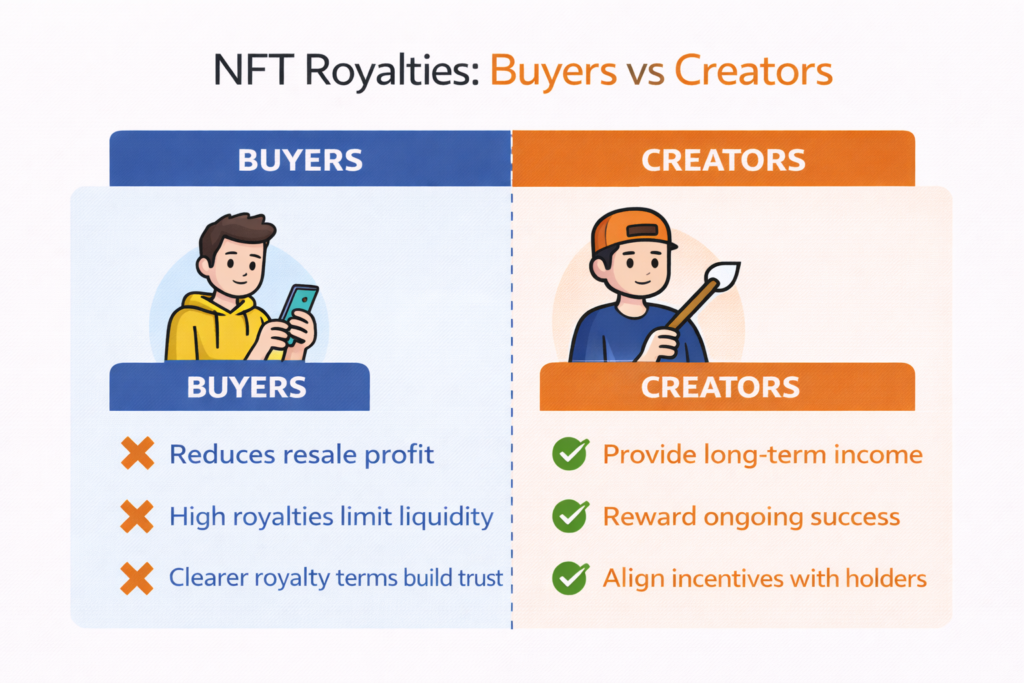
From the Creator’s Perspective
- Royalties provide long-term income
- They reward ongoing project success
- They align creator incentives with holders
From the Buyer’s Perspective
- Royalties reduce resale profit
- High royalties can limit liquidity
- Clear royalty terms build trust
Neither side is “wrong” — successful projects balance both.
Do All NFT Marketplaces Enforce Royalties?
No — and this is important for beginners to understand.
Some marketplaces:
- Fully enforce creator royalties
- Allow optional royalties
- Do not enforce royalties at all
This means how NFT royalties work can vary depending on where an NFT is sold.
Creators often encourage trading on marketplaces that respect royalties, while buyers may prefer lower fees.
👉 Learn more: NFT Marketplaces Guide
Can NFT Royalties Change After Minting?
In most cases:
- Royalty percentages are set at mint
- They cannot be changed later
However, some newer NFT standards and marketplaces allow limited flexibility.
Beginners should always:
- Check the royalty rate before buying
- Assume it will stay the same
How NFT Royalties Affect Resale Value
Royalties directly impact resale decisions.
High royalties:
- Reduce net profit on resale
- Can lower floor prices
- May reduce trading volume
Low or reasonable royalties:
- Encourage healthier secondary markets
- Improve liquidity
- Attract long-term holders
This is why royalties are closely tied to floor price dynamics.
👉 Coming next: What Is a Floor Price and Why It Matters
Common Beginner Misunderstandings About NFT Royalties
Let’s clear up a few myths:
- ❌ “Royalties are a scam”
→ They’re a creator revenue mechanism - ❌ “Buyers pay royalties when purchasing”
→ Royalties apply on resale, not initial purchase - ❌ “Royalties guarantee project success”
→ They don’t replace good fundamentals - ❌ “All marketplaces handle royalties the same”
→ Enforcement varies
Understanding these points helps beginners avoid frustration.
How to Check NFT Royalties Before Buying
Before purchasing any NFT, you should:
- Check the marketplace listing
- Review the royalty percentage
- Look for creator documentation
- Factor royalties into resale plans
This is a key part of NFT due diligence.
👉 Learn more: How to Evaluate NFT Projects
So… How Do NFT Royalties Work in Simple Terms?
To summarise:
- NFT royalties are paid to creators on resale
- They are set as a percentage of the sale price
- They are enforced by marketplaces and smart contracts
- They affect resale profits and liquidity
Once you understand how NFT royalties work, NFTs become much easier to evaluate as assets rather than hype.
What Beginners Should Learn Next
If you’re serious about understanding NFT value, your next steps should be:
- Learn how gas fees affect transactions
- Understand floor prices and market psychology
- Know when holding vs selling makes sense
👉 Continue here: What Are Gas Fees in NFTs and How to Reduce Them