
How to Price an NFT to Sell (Beginner Pricing Strategy Guide)
How to Price an NFT to Sell (Beginner Pricing Strategy Guide)
Selling an NFT is simple.
Pricing it correctly is not.
Many beginners either:
- Overprice and never sell
- Underprice and leave money on the table
- Panic and undercut too aggressively
- Copy the floor without understanding demand
Learning how to price an NFT to sell is a critical skill if you want consistent exits without emotional decisions.
Before listing anything: make sure your wallet is secure. If you haven’t set yours up safely yet, start here: 👉 best NFT wallets for beginners (affiliate link).
This guide explains how to price an NFT to sell using floor structure, volume trends, listing depth, buyer behaviour, and exit timing signals — not guesswork.
What Determines NFT Sale Price?
NFT pricing is driven by demand + liquidity. The most useful signals include:
- Floor price (lowest current listing)
- 7-day trading volume (recent demand strength)
- Unique buyer participation (market breadth)
- Listing depth (how “thick” the floor is)
- Narrative momentum (hype vs reality)
- Market conditions (risk-on vs risk-off)
If you’re still learning the foundation, these three pages make pricing decisions far easier:
Without understanding liquidity, pricing becomes speculation.
Step 1: Understand the Current Floor Structure
Never price blindly. Before listing, check:
- How many NFTs are listed at the floor?
- Is the floor thin (only a few listings)?
- Are there large gaps between price tiers?
- Are sellers undercutting aggressively?
If only 2–3 NFTs sit at the floor, pricing slightly above may still sell.
If 30–50 NFTs are stacked at floor, you usually need to be more competitive.
To measure the floor correctly (instead of guessing), read:
Step 2: Check 7-Day Volume Before Listing
Volume tells you whether buyers are actually active right now.
High volume = stronger demand (faster fills)
Low volume = weaker demand (slower fills)
If 7-day volume is declining while listings are increasing, pricing aggressively may be necessary.
If volume is expanding, you may not need to undercut as hard — especially if your NFT is well-positioned near the floor.
Want to judge demand strength properly? Read:
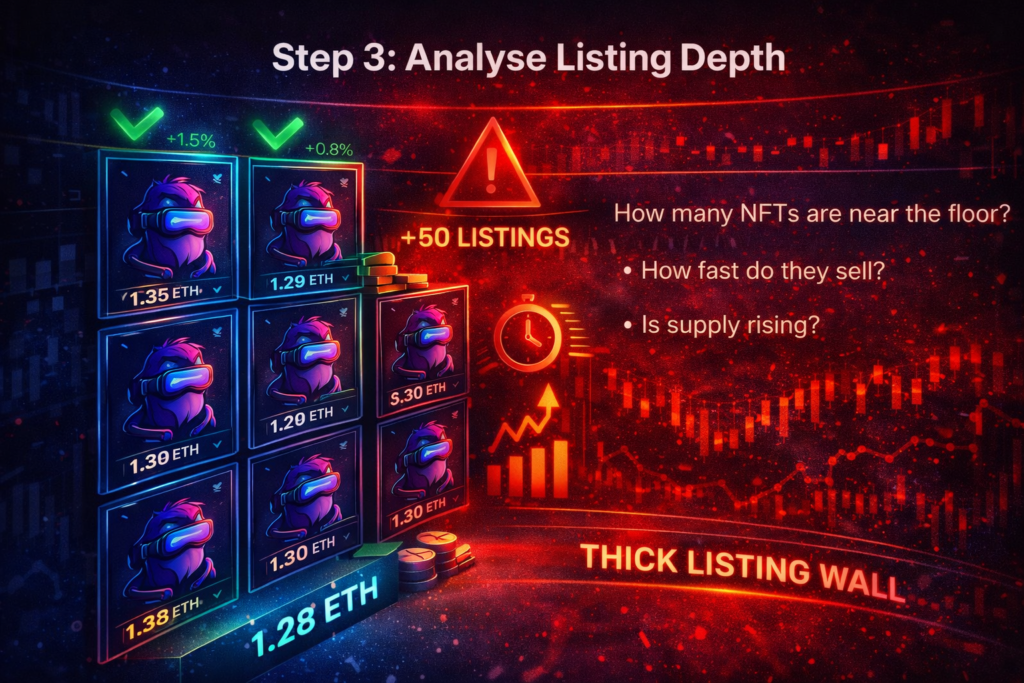
Step 3: Analyse Listing Depth
Look beyond the first listing. Listing depth tells you how hard it will be to sell without dropping price.
Ask:
- How many NFTs are within ~5% of the floor?
- How quickly are floor listings actually selling?
- Is supply (listings) increasing each day?
If the “listing wall” is thick, small price differences matter.
If the market is thin, strategic patience may work — but only if demand supports it.
Step 4: Consider Unique Buyer Participation
If new buyers are consistently entering, pricing strength improves.
If only the same wallets are trading repeatedly, liquidity risk rises — even if the floor looks stable.
To monitor market behaviour more safely, use:
Step 5: Align Your Pricing With Your Exit Strategy
Pricing depends on your goal. Are you:
- Taking profit?
- Recovering initial capital?
- Scaling out?
- Exiting entirely?
If you don’t have a structured plan, pricing decisions become emotional. These guides help:
Common Pricing Mistakes
1. Blindly Matching Floor
The floor is the lowest ask — not automatically “fair value.” Floor pricing only works when demand is stable.
2. Undercutting Aggressively
Dropping 10% below floor in a healthy market destroys margin and often triggers more undercutting.
3. Ignoring Volume Trends
Floor without demand is fragile. Volume is often the earliest warning sign.
4. Anchoring to an Old High Price
Just because it hit 5 ETH once doesn’t mean it will again. Markets move with liquidity.
Three Beginner Pricing Approaches
1. Competitive Floor Strategy
Price at or just below floor to maximise speed.
Best for:
- Low volume environments
- Quick exits
- High liquidity risk scenarios
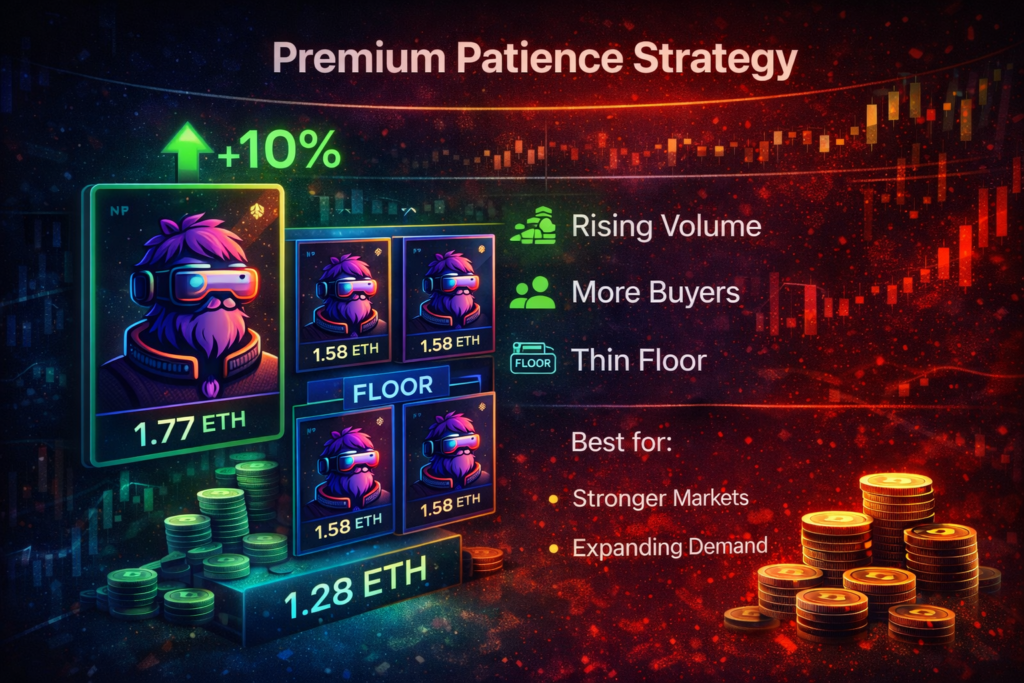
2. Premium Patience Strategy
Price slightly above floor if:
- Volume is rising
- Unique buyers are increasing
- The floor is thin (few listings)
Best for:
- Stronger markets
- Expanding demand
3. Partial Exit Strategy
If you own multiple NFTs, you can reduce stress by scaling out:
- Sell one at floor
- Price another higher
- Recover capital first
- Leave upside exposure
If you’re holding long-term, compare strategies here:
When to Lower Your Price
Consider reducing price if:
- 7-day volume drops significantly
- Listings increase rapidly
- Unique buyers decline
- You see repeated undercutting
If you suspect the price is inflated, compare against overvaluation signals here:
When NOT to Lower Your Price
Avoid panic adjustments during:
- Minor volatility
- Short-term dips
- Temporary liquidity pauses
Review emotional sell mistakes here:
Final Thoughts
Learning how to price an NFT to sell is about reading liquidity — not chasing emotion.
Watch:
- Floor structure
- Volume trends
- Buyer participation
- Listing depth
Price strategically. Sell intentionally. Don’t let the market force your hand.