
What Are Gas Fees in NFTs and How to Reduce Them
If you’ve ever tried to buy, sell, or transfer an NFT and been surprised by an extra charge, you’ve likely encountered gas fees.
So beginners often ask: what are gas fees in NFTs, why do they exist, and how can you reduce them?
Gas fees are one of the most confusing — and frustrating — parts of NFTs for beginners. In this guide, we’ll explain what gas fees in NFTs are, how they work in simple terms, when you pay them, and practical ways to reduce them.
What Are Gas Fees in NFTs?
Gas fees in NFTs are transaction fees paid to process actions on a blockchain.
Whenever you:
- Buy an NFT
- Sell an NFT
- Transfer an NFT
- Mint an NFT
…your transaction needs to be validated and recorded on the blockchain. Gas fees are the cost of that processing.
In simple terms:
Gas fees pay the blockchain network to do the work.
They do not go to the NFT creator or marketplace.
Why Are They Called “Gas” Fees?
The term “gas” comes from Ethereum, the most common blockchain for NFTs.
Just like fuel powers a car, gas powers blockchain transactions. More complex actions require more “fuel,” which means higher fees.
NFT transactions are often more complex than simple crypto transfers — which is why gas fees can feel expensive.
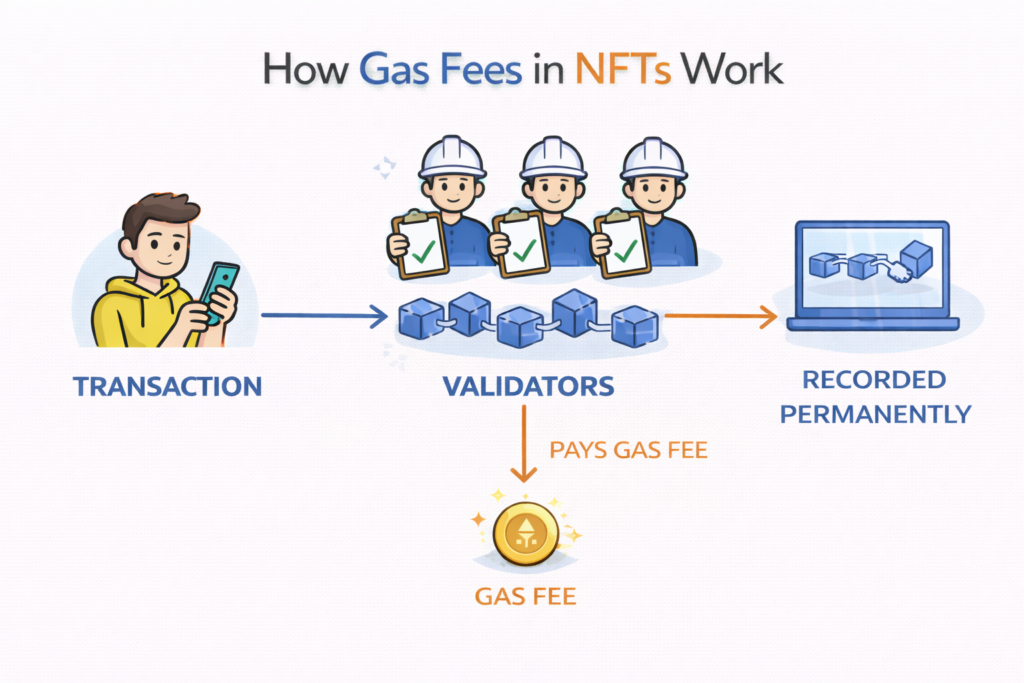
How Gas Fees in NFTs Work (Step by Step)
To understand what gas fees in NFTs are, here’s a simplified flow:
- You submit an NFT transaction
- The blockchain network processes it
- Validators confirm the transaction
- The transaction is recorded permanently
- You pay a gas fee for this work
The gas fee amount depends on:
- Network congestion
- Transaction complexity
- Blockchain used
When Do You Pay Gas Fees With NFTs?
Beginners often assume gas fees apply only when buying NFTs — but that’s not true.
You may pay gas fees when you:
- Buy an NFT
- List an NFT for sale
- Accept an offer
- Transfer an NFT to another wallet
- Mint an NFT
Some marketplaces cover certain fees, but gas fees always exist somewhere in the process.
👉 Related: What Happens After You Buy an NFT?
Why Are Gas Fees Sometimes So High?
Gas fees in NFTs fluctuate constantly.
They increase when:
- Many people are using the blockchain at once
- Popular NFT mints launch
- Market volatility spikes
Think of it like surge pricing:
- More demand = higher fees
- Less demand = lower fees
This is why the same transaction can cost $5 one day and $100 the next.
Which Blockchains Have Gas Fees?
Not all NFT blockchains have the same gas fee structure.
Common Examples:
- Ethereum: High but secure
- Polygon: Very low
- Solana: Low
- Immutable: Often gas-free for users
Understanding the blockchain matters just as much as understanding the NFT itself.
👉 Learn more: NFT Marketplaces Guide
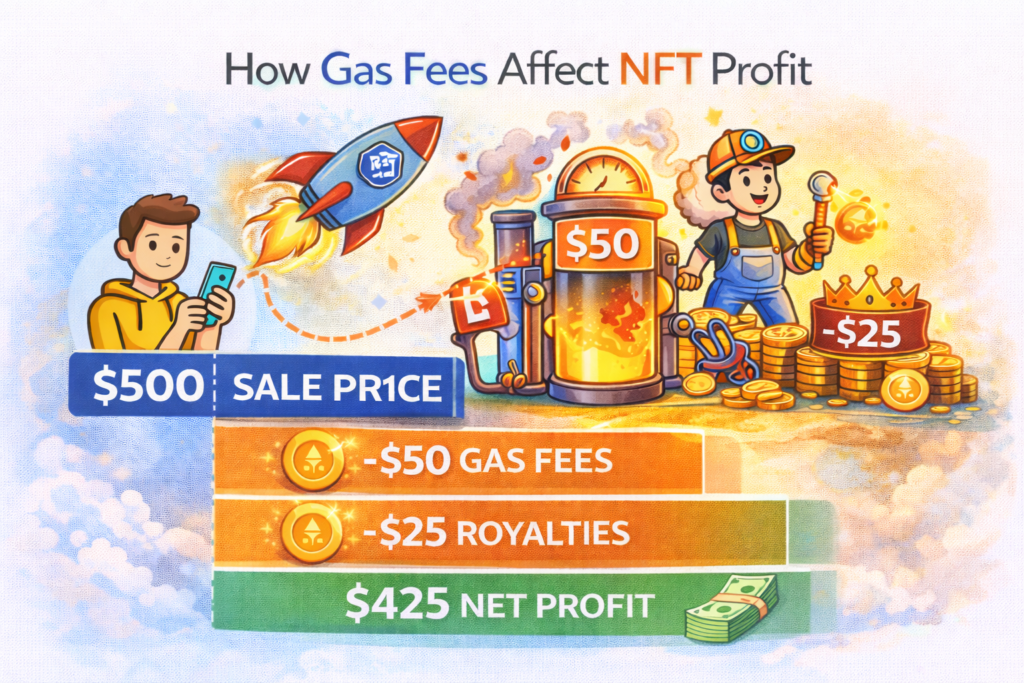
How Gas Fees Affect NFT Profits
Gas fees directly impact profitability.
For example:
- Buying an NFT with high gas increases entry cost
- Selling with high gas reduces net profit
- Multiple transactions compound fees
This is why gas fees must be considered alongside royalties and resale value.
👉 Related: How NFT Royalties Work
How to Reduce Gas Fees in NFTs (Beginner Tips)
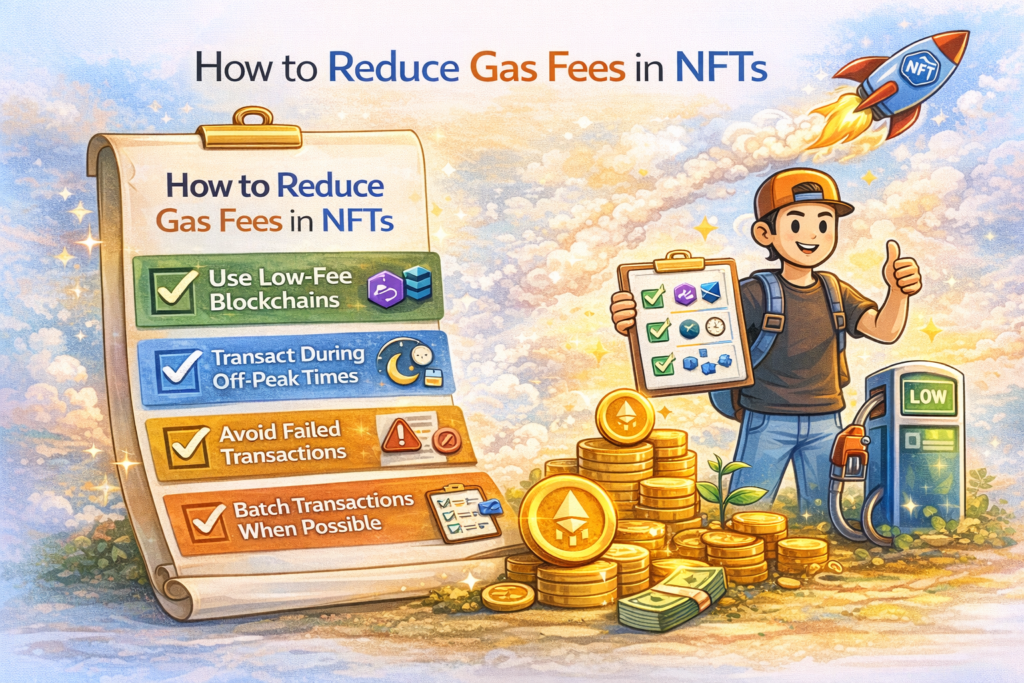
Now that you understand what gas fees in NFTs are, here are practical ways to reduce them.
1. Use Low-Fee Blockchains
Choosing networks like Polygon or Solana can drastically reduce fees.
2. Transact During Off-Peak Times
Gas fees are often lower:
- Late night
- Early morning
- Weekends (depending on network)
3. Avoid Failed Transactions
Failed transactions still consume gas. Always double-check details before confirming.
4. Batch Transactions When Possible
Some marketplaces allow actions to be combined, reducing total gas cost.
5. Factor Gas Into Your Strategy
Don’t ignore gas when pricing NFTs or evaluating flips.
Common Beginner Misunderstandings About Gas Fees
Let’s clear up some myths:
- ❌ “Gas fees go to the creator”
→ They go to the blockchain network - ❌ “Marketplaces control gas fees”
→ They don’t - ❌ “Gas fees are fixed”
→ They change constantly - ❌ “Gas fees mean NFTs are a scam”
→ They’re a technical cost, not a scheme
Understanding this reduces frustration and mistakes.
Should Gas Fees Stop You From Buying NFTs?
Not necessarily.
Gas fees are just one variable in NFT decisions. What matters is:
- Total cost vs value
- Long-term utility
- Liquidity and demand
Once you factor gas fees into your thinking, they become manageable instead of confusing.
So… What Are Gas Fees in NFTs?
To summarise:
- Gas fees are blockchain transaction costs
- They apply to buying, selling, minting, and transferring NFTs
- They fluctuate based on network demand
- They affect profitability and strategy
Understanding what gas fees in NFTs are is essential before evaluating floor prices or holding strategies.
What Beginners Should Learn Next
Once gas fees make sense, the next concept is critical:
How NFT prices are determined — and why floor price matters.
👉 Continue here: What Is a Floor Price and Why It Matters