NFT Scams to Avoid: A Beginner’s Safety Guide
Entering the NFT space can be exciting, but it’s also where beginners are most vulnerable.
Scammers actively target new users who are still learning how wallets, marketplaces, and NFT tools work.
This guide explains the most common NFT scams, how they work, and—most importantly—how to avoid them before you connect a wallet or buy your first NFT.
Understanding NFT scams to avoid is one of the most important steps before connecting a wallet or buying your first NFT.
If you’re new, take a few minutes to read this first. It can save you from irreversible mistakes.
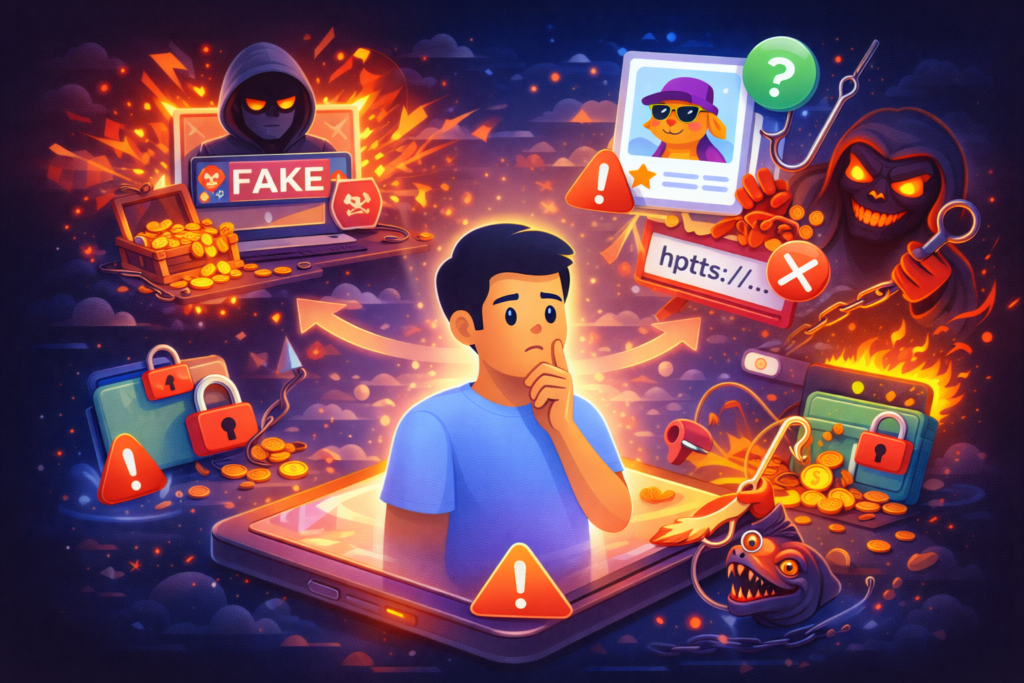
Why NFT Scams Target Beginners
NFT transactions are:
- Irreversible
- Pseudonymous
- Often unfamiliar to new users
Scammers rely on:
- Urgency (“Act now”)
- Authority impersonation
- Confusing technical language
- Fake rewards or giveaways
Understanding how these scams work removes most of their power.
Fake NFT Giveaways & Airdrops
One of the most common beginner traps.
How it works
You’ll see messages like:
- “You’ve been selected for a free NFT”
- “Exclusive airdrop for early users”
- “Claim before it expires”
These often appear:
- On X (Twitter)
- In Discord DMs
- In Telegram groups
- Via email pretending to be a known brand
Clicking the link may ask you to:
- Connect your wallet
- Approve a transaction
- Sign a message
That action can drain your wallet.
How to stay safe
- Ignore “limited-time” pressure tactics
- Legitimate airdrops do not DM you first
- Never connect your wallet to links you didn’t seek out
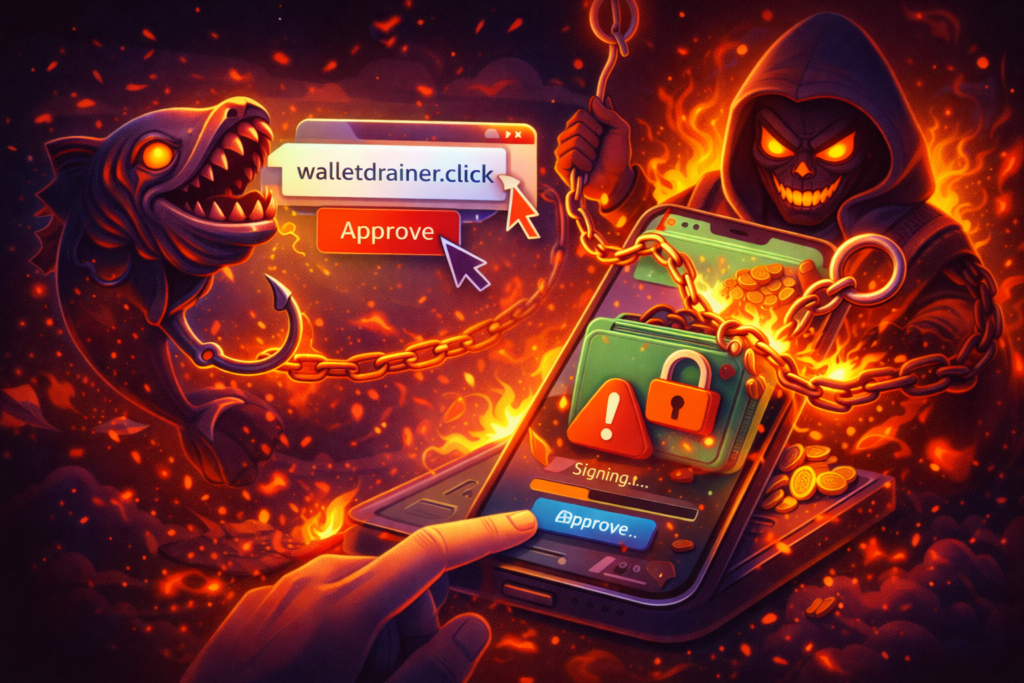
Wallet Drainer Links (The Most Dangerous Scam)
Wallet drainers are malicious websites designed to look legitimate.
Where they appear
- Fake Discord announcements
- “Support” replies on X
- Sponsored comments under NFT posts
- Fake Google ads
What happens
Once connected, the site asks for approval that:
- Transfers NFTs
- Approves unlimited token access
- Empties your wallet silently
There is no recovery once this happens.
Protection basics
- Always double-check URLs
- Bookmark official sites
- Use a beginner-safe wallet setup before interacting with tools
(If you haven’t yet, see our Best NFT Wallets for Beginners guide before connecting anything.)
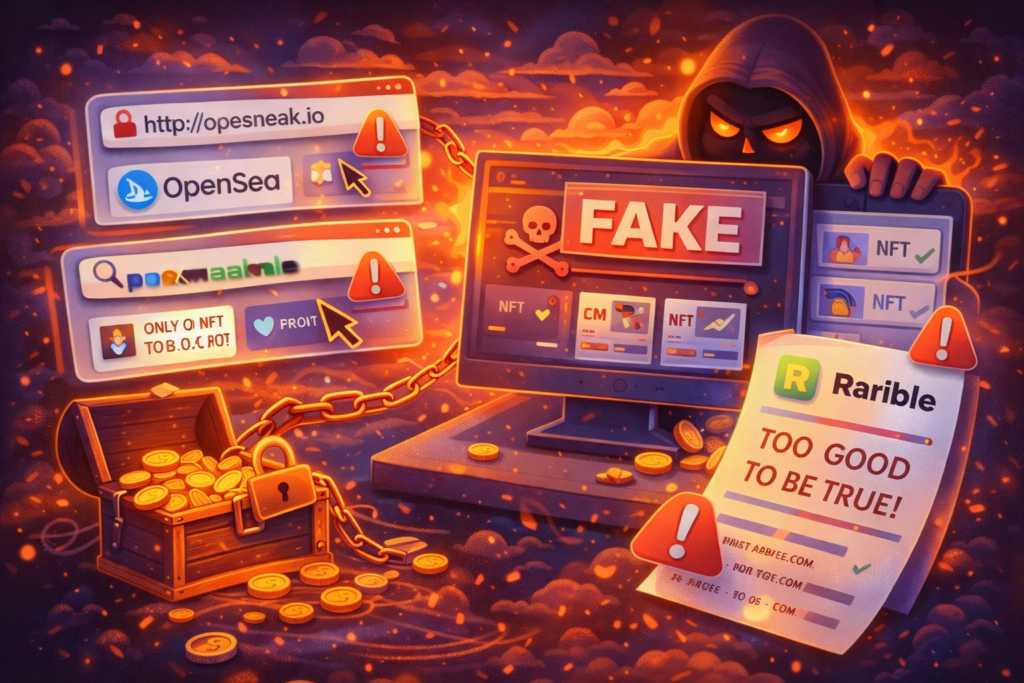
Fake NFT Marketplaces
Scammers clone popular NFT marketplaces and slightly alter the domain name.
Stick to well-known marketplaces and avoid links shared privately.
Always access marketplaces like OpenSea by typing the official website address manually into your browser, rather than clicking links from messages or social media, to avoid mirrored or fake websites.
Common signs
- Slight spelling changes in the URL
- “Too good to be true” listings
- No social presence or community history
These sites exist solely to:
- Steal wallet approvals
- Capture private information
- Trick users into signing transactions
Stick to well-known marketplaces and avoid links shared privately.
Impersonator Accounts & Verified Badge Scams
Scammers frequently impersonate:
- NFT founders
- Marketplace support teams
- Influencers
- Well-known NFT projects
Even “verified” accounts can be compromised or spoofed.
Red flags
- Asking for wallet access
- Offering “help” via DM
- Asking you to “verify” your wallet
No legitimate team will ever ask for:
- Private messages for support
- Your seed phrase
- Direct wallet access
Rug Pulls vs Poor Projects (Important Difference)
Not every failed NFT project is a scam.
Rug pull
- Team disappears
- Funds are drained
- Roadmap is abandoned intentionally
Poor project
- Team is inexperienced
- Market interest fades
- No malicious intent
Understanding this difference helps you:
- Avoid emotional decisions
- Research projects more effectively
- Learn instead of panic
To reduce risk, use proper research tools and avoid impulsive buys.
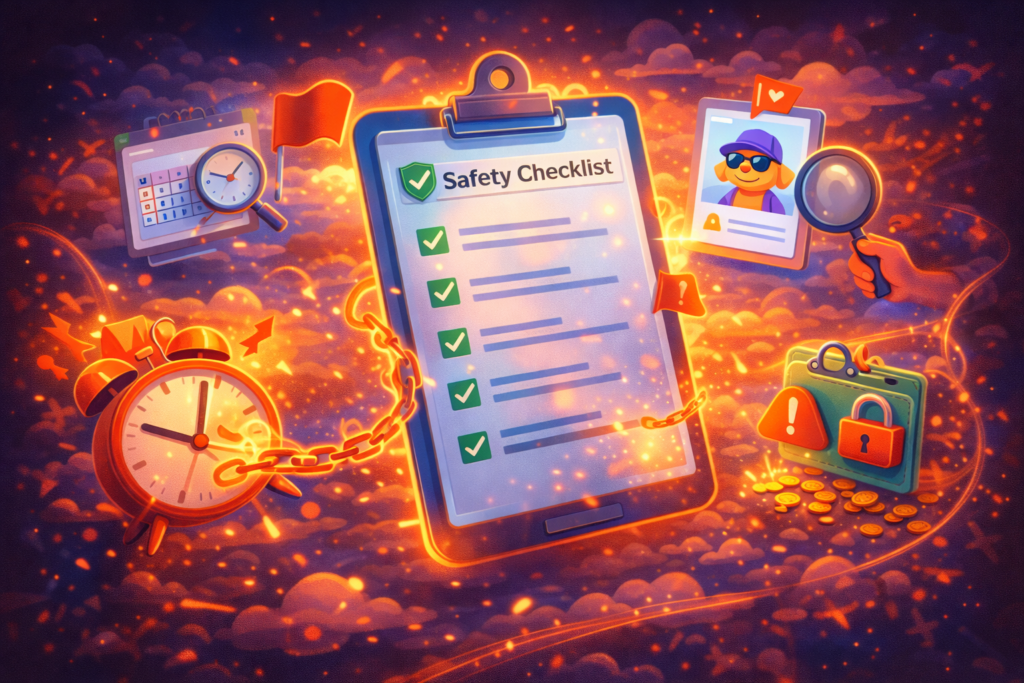
Beginner Safety Checklist (Read Before You Buy)
Before interacting with any NFT project:
- Take your time—urgency is a red flag
- Use a wallet designed for beginners
- Never share your seed phrase
- Avoid clicking links sent privately
- Double-check URLs every time
- Start with small test transactions
- Use research tools to verify collections
Keeping a list of NFT scams to avoid in mind every time you explore a new project will help you reduce risk and avoid costly mistakes.
Where to Go Next (Safe Progression)
If you’re just getting started, follow this order:
- Learn NFT basics → NFTs for Beginners
- Set up a safe wallet → Best NFT Wallets for Beginners
- Research tools & markets → Best NFT Tools for Beginners
This progression helps you learn without unnecessary risk.
Final Thoughts
NFT scams thrive on confusion and speed.
Education, patience, and simple habits eliminate most risk.
There’s no need to rush—opportunities will still be there tomorrow.
Staying safe is the real first win in NFTs.