How to Sell NFTs: A Beginner’s Guide to Listing, Pricing & Exiting Safely
Selling an NFT isn’t just clicking “list” and hoping for the best.
For beginners, knowing how to sell NFTs properly can be the difference between locking in profits — or losing value through poor timing, bad pricing, or avoidable mistakes.
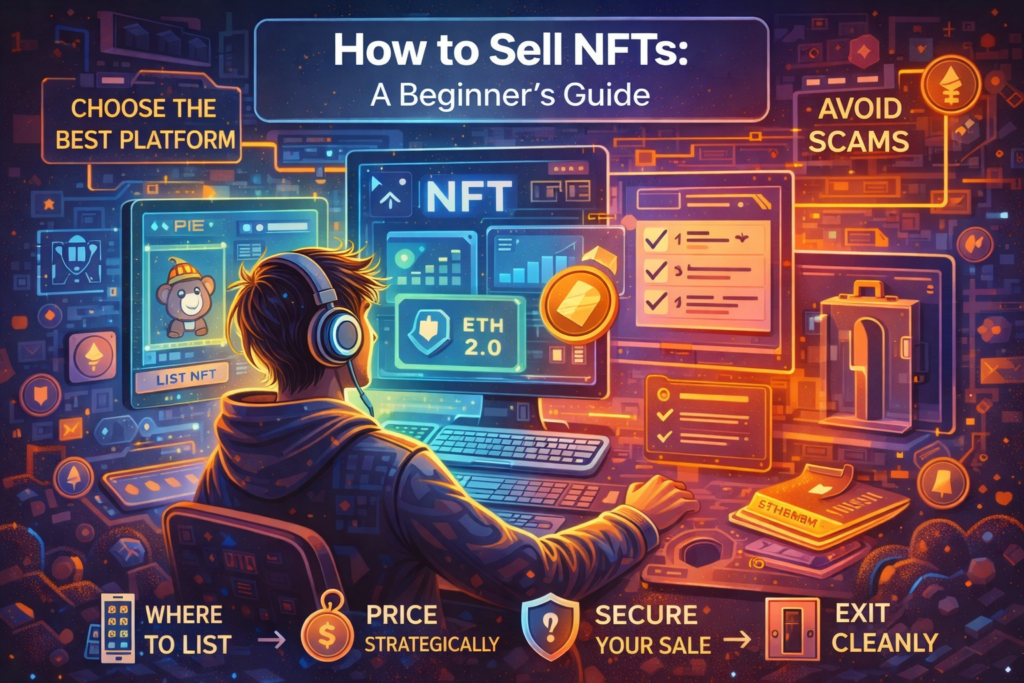
This guide walks you through where to sell NFTs, how to price them, and how to exit safely, even if it’s your first sale.
If you’re brand new to NFTs, start with NFTs for Beginners: A Step-by-Step Guide to Getting Started Safely before continuing.
Why Selling NFTs Is Harder Than Buying
Buying an NFT is often emotional.
Selling one should be strategic.
Most beginners struggle because they:
- List NFTs without understanding demand
- Overprice and scare buyers away
- Panic sell during market dips
- Ignore fees and royalties
- Fall for fake offers or impersonators
Before selling anything, make sure you’ve already evaluated the project properly using How to Evaluate NFT Projects (A Beginner Framework That Actually Works).
Step 1: Choose the Right Marketplace to Sell Your NFT
The first step in learning how to sell NFTs is choosing the correct marketplace.
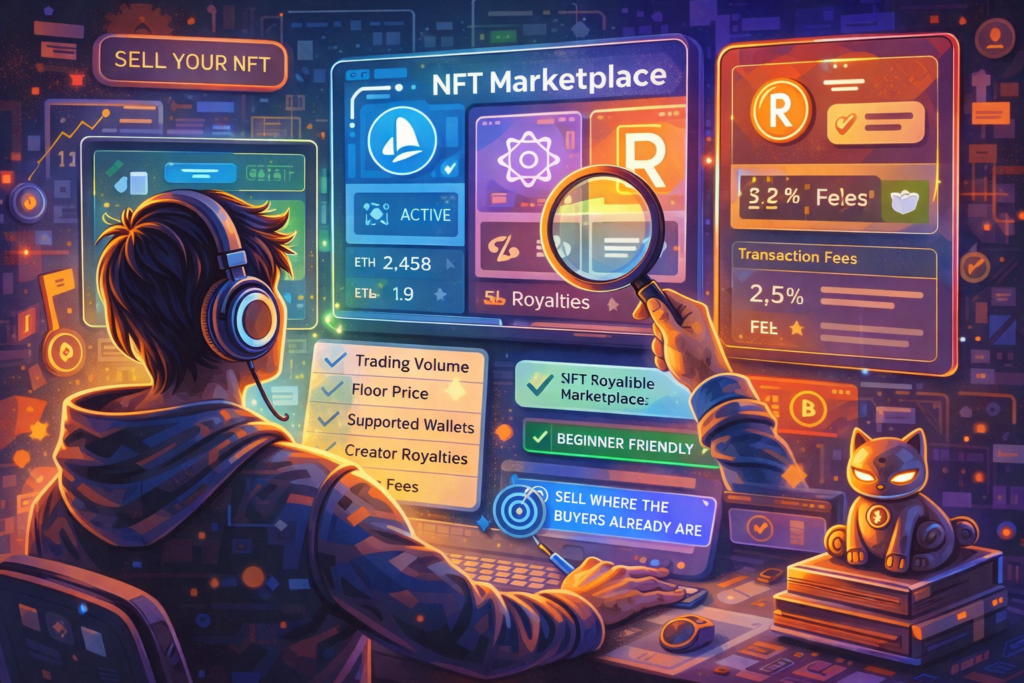
Different marketplaces attract different buyers, liquidity levels, and fee structures.
Beginner-friendly options are covered in detail in Best NFT Marketplaces for Beginners: Safe Places to Buy Your First NFT.
When choosing where to sell, consider:
- Where the collection is most active
- Trading volume and floor price
- Supported wallets
- Creator royalties
- Listing and transaction fees
Tip: Selling where the buyers already are matters more than selling on the “biggest” platform.
Step 2: Make Sure Your Wallet Is Secure Before Selling
Selling NFTs requires signing transactions — and that’s where many users get drained.
Before listing anything, confirm your wallet setup is secure using:
- Best NFT Wallets for Beginners: Safe & Easy Options to Get Started
- NFT Wallet Safety & Management: How to Secure, Track & Protect Your NFTs Long-Term
Never:
- Approve random contracts
- Accept “private offers” via DMs
- Connect your main wallet to unknown tools
If something feels rushed or confusing, revisit NFT Scams to Avoid: A Beginner’s Safety Guide.
Step 3: Understand NFT Pricing (Floor, Rarity & Timing)
Pricing is the most misunderstood part of how to sell NFTs.
Before listing, check:
- Current floor price
- Recent sales (not listings)
- Rarity traits compared to similar NFTs
- Overall market sentiment
Common beginner mistakes:
- Listing far above market reality
- Undercutting the floor out of fear
- Ignoring liquidity (no buyers ≠ bad price)
If you haven’t researched the project deeply, pause and revisit How to Research NFTs Before Buying: A Beginner’s Guide — it applies just as much when selling.
Step 4: Choose Your Selling Method (Fixed Price vs Auction)
Most marketplaces offer two main ways to sell NFTs:
Fixed Price
Best for:
- Stable markets
- Popular collections
- Clear floor prices
Auction
Best for:
- Rare NFTs
- High-demand moments
- Community hype phases
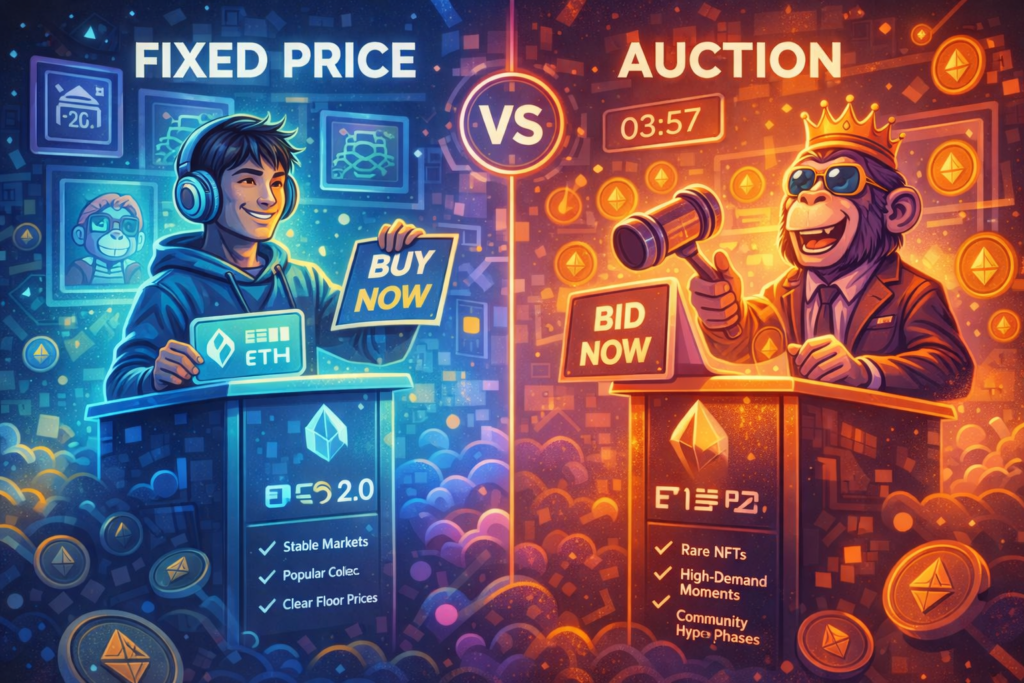
Beginners should usually start with fixed price listings until they understand buyer behavior.
Step 5: Factor in Fees, Royalties & Taxes
When selling NFTs, your final payout is not the listed price.
Be aware of:
- Marketplace fees
- Creator royalties
- Network (gas) fees
- Tax obligations (depending on jurisdiction)
Ignoring fees is how many sellers “win” a sale but lose value overall.
(We’ll be covering NFT taxes in a dedicated guide soon.)
Step 6: Avoid Common NFT Selling Scams
Scams don’t stop once you own the NFT — they increase when you try to sell.
Watch out for:
- Fake offers that redirect you off-platform
- Impersonation accounts offering “help”
- Requests to re-sign contracts
- “Too good to be true” private bids
If anything feels off, stop and cross-check with NFT Scams to Avoid: A Beginner’s Safety Guide again.
Step 7: Know When to Sell (and When Not To)
Not every NFT needs to be sold immediately.
Ask yourself:
- Has the thesis changed?
- Is liquidity increasing or declining?
- Are you selling emotionally or strategically?
- Does holding still align with your goals?
Sometimes the smartest move is waiting.
Other times, it’s exiting cleanly and reallocating.
That judgment improves with experience — and strong fundamentals.
Final Thoughts: Selling NFTs Is a Skill
Learning how to sell NFTs is just as important as learning how to buy them.
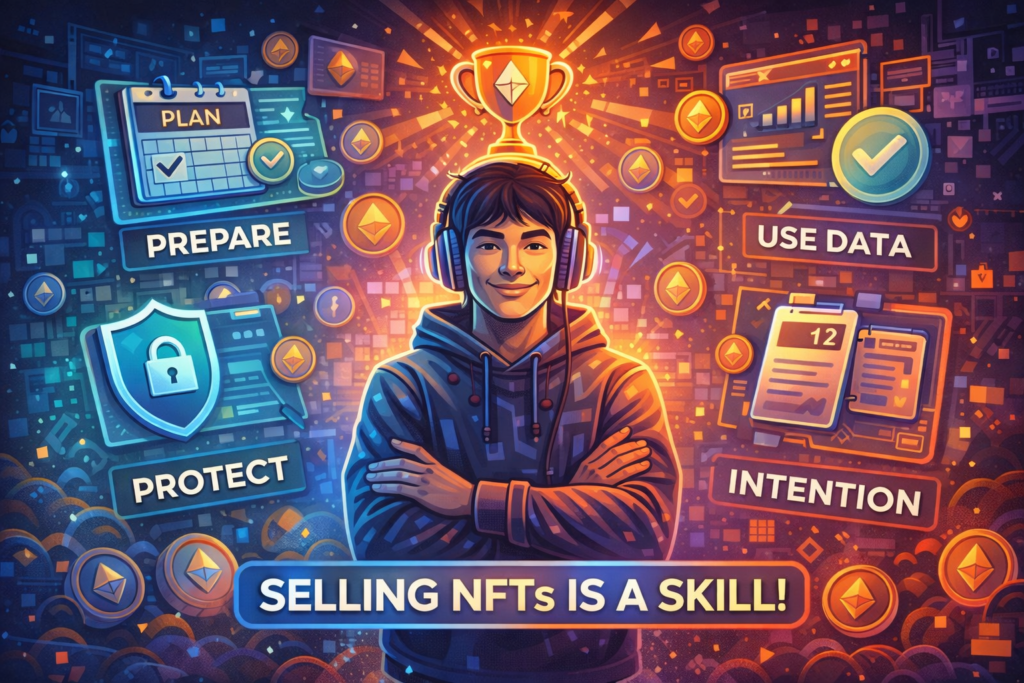
Strong sellers:
- Prepare before listing
- Protect their wallets
- Price based on data, not hope
- Avoid rushed decisions
- Exit with intention
The NFT market will always fluctuate — but a disciplined selling process protects both your capital and your confidence.