Best NFT Portfolio Trackers for Beginners (Free & Paid Tools Compared)
Tracking NFTs manually becomes difficult very quickly — especially once you own more than a few NFTs or start using multiple wallets.
Before using any portfolio tracker, make sure you’re using a secure and reputable wallet. If you haven’t chosen one yet, start with our guide to the:
👉 best NFT wallets for beginners.
Once your wallet setup is secure, that’s where NFT portfolio trackers come in.
In this guide, we’ll break down the best NFT portfolio trackers for beginners, explain how NFT portfolio tracking works, compare free vs paid tools, and help you choose the right tracker based on your experience level.
No hype. No trading advice. Just clear, practical guidance.
What Is an NFT Portfolio Tracker?
An NFT portfolio tracker is a tool that helps you monitor NFTs you own across one or more wallets.
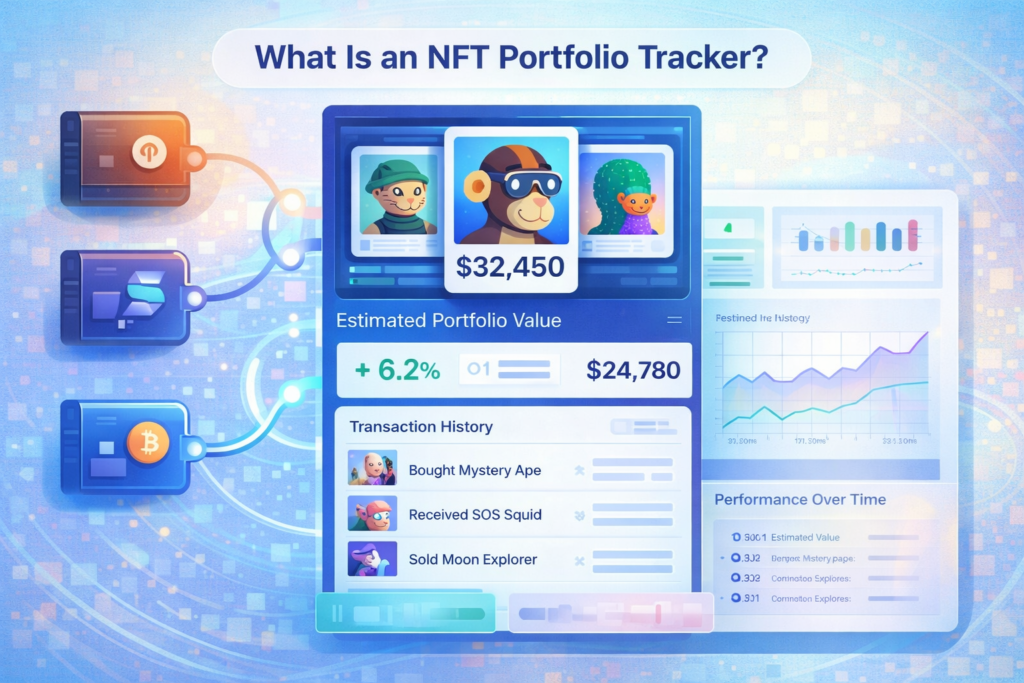
Most NFT portfolio tracking tools allow you to:
- Track NFTs across wallets automatically
- View estimated portfolio value
- Monitor floor price changes
- See transaction history
- Track performance over time
Instead of checking marketplaces manually, a tracker pulls this data together in one dashboard.
Why Beginners Should Use an NFT Portfolio Tracker
Beginners often underestimate how quickly NFT portfolios become hard to manage.
Using an NFT portfolio tracker helps beginners:
- Avoid missing important activity
- Spot unusual wallet behaviour early
- Track value without emotional decision-making
- Understand performance trends over time
Portfolio tracking isn’t about flipping — it’s about visibility and control.
How NFT Portfolio Trackers Work
Most NFT portfolio trackers work by connecting to your public wallet address.
Important clarification for beginners:
- You do not need to sign transactions
- You do not give spending permissions
- The tool only reads public blockchain data
This makes NFT portfolio trackers much safer than tools that require wallet approvals.
👉 For safe wallet setup, see:
Learn how to research safely using beginner-friendly NFT wallets
Best NFT Portfolio Trackers for Beginners
Below are some of the best NFT portfolio trackers beginners commonly use. Each has different strengths.
1️⃣ NFTBank
Best for: Long-term portfolio tracking and value estimates
NFTBank is one of the most popular NFT portfolio trackers for beginners.
Key features:
- Automatic NFT portfolio tracking
- Portfolio value estimates
- Historical performance charts
- Multi-wallet support
Pros:
- Clean interface
- Beginner-friendly
- Strong long-term tracking tools
Cons:
- Advanced features require paid plans
NFTBank is ideal if your goal is monitoring over time, not constant trading.
2️⃣ Zapper
Best for: Tracking NFTs alongside DeFi assets
Zapper allows users to track NFTs and tokens in one dashboard.
Key features:
- NFT portfolio tracking
- Token and DeFi tracking
- Wallet activity monitoring
Pros:
- All-in-one dashboard
- Good for users with mixed portfolios
Cons:
- NFT-specific data is less detailed than dedicated NFT trackers
Zapper works well if you want a broader crypto overview, not just NFTs.
3️⃣ OpenSea Portfolio View
Best for: Simple tracking inside a marketplace
OpenSea offers a basic NFT portfolio view linked to your wallet.
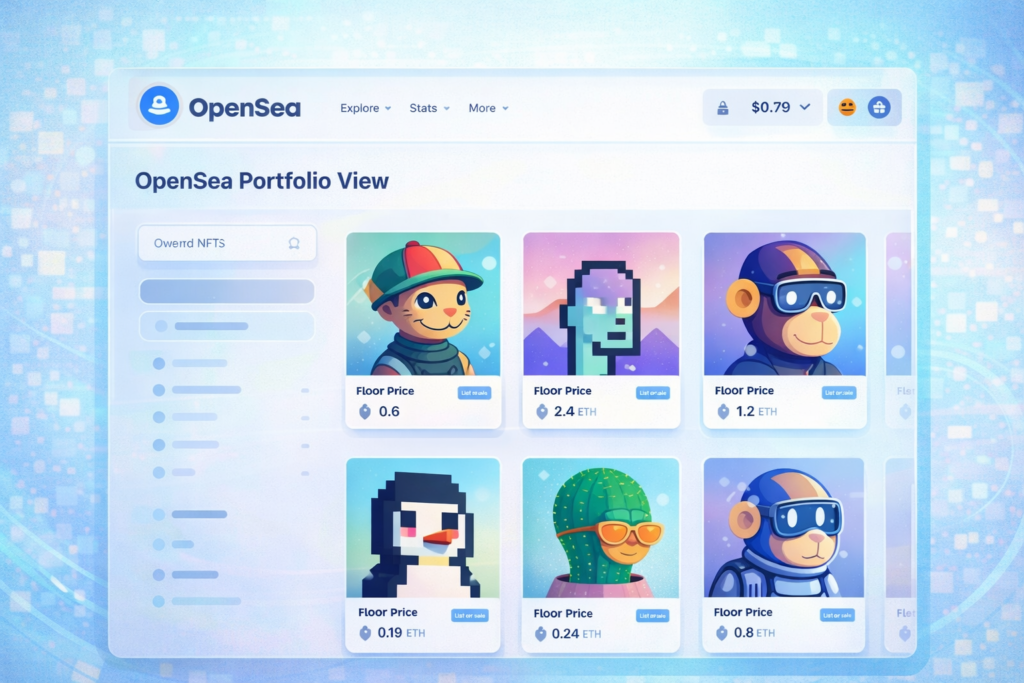
Key features:
- View owned NFTs
- Floor price reference
- Easy access to listings
Pros:
- No setup required
- Familiar interface
Cons:
- Limited analytics
- Only useful inside OpenSea
This is fine for beginners — but most users eventually outgrow it.
4️⃣ DappRadar NFT Portfolio Tools
Best for: Cross-chain NFT portfolio tracking
DappRadar supports NFT tracking across multiple blockchains.
Key features:
- Cross-chain support
- Portfolio overview
- Market insights
Pros:
- Broad ecosystem coverage
- Useful for multi-chain users
Cons:
- Interface can feel busy for beginners
Free vs Paid NFT Portfolio Trackers
Many beginners ask whether free NFT portfolio trackers are enough.
Free NFT Portfolio Trackers
Good for:
- Small portfolios
- Learning how tracking works
- Basic visibility
Limitations:
- Fewer analytics
- Delayed data
- Limited history
Paid NFT Portfolio Trackers
Better for:
- Multiple wallets
- Long-term holders
- Performance tracking
Paid tools often provide:
- Historical pricing
- Advanced insights
- Better reporting
👉 We compare this in detail here:
Free vs Paid NFT Tools – What’s Worth It? (ARTICLE COMING SOON)
Are NFT Portfolio Trackers Safe?
Generally, yes — if used correctly.
Safe NFT portfolio trackers:
- Only require your public wallet address
- Do not request transaction approvals
- Do not ask for private keys
Avoid any “tracker” that asks you to:
- Sign transactions
- Approve spending
- Enter your seed phrase
👉 If unsure, review:
NFT Security Checklist for Beginners
How to Choose the Best NFT Portfolio Tracker for You
Ask yourself:
- How many wallets do I use?
- Do I want long-term tracking or short-term insights?
- Do I need cross-chain support?
- Am I comfortable upgrading later?
There is no single best NFT portfolio tracker — only the best one for your needs.

Common Beginner Mistakes When Tracking NFTs
Avoid these mistakes:
- Relying only on floor price
- Ignoring transaction history
- Forgetting to monitor wallet activity
- Using tools that require permissions
Tracking is about awareness, not prediction.
Where to Go Next
If you want deeper insight after setting up a tracker:
👉 Best NFT Analytics Tools for Beginners (ARTICLE COMING SOON)
👉 How to Track NFT Performance Over Time (ARTICLE COMING SOON)
👉 How to Monitor Wallet Activity (ARTICLE COMING SOON)
These pages build on what you’ve learned here.
Final Thoughts: Are NFT Portfolio Trackers Worth It?
For most beginners, yes.
Using an NFT portfolio tracker helps you:
- Stay organised
- Reduce mistakes
- Understand performance
- Make calmer decisions
It’s one of the simplest upgrades you can make as you grow.