
How to Track NFT Performance Over Time (Beginner-Friendly Guide)
Buying an NFT is easy.
Understanding whether it’s actually performing well over time is where most beginners struggle.
In this guide, you’ll learn how to track NFT performance over time, what metrics matter, which tools to use, and how to avoid common mistakes that lead to emotional decisions.
No hype. Just structure.
What Does “NFT Performance” Actually Mean?
NFT performance is not just about price.
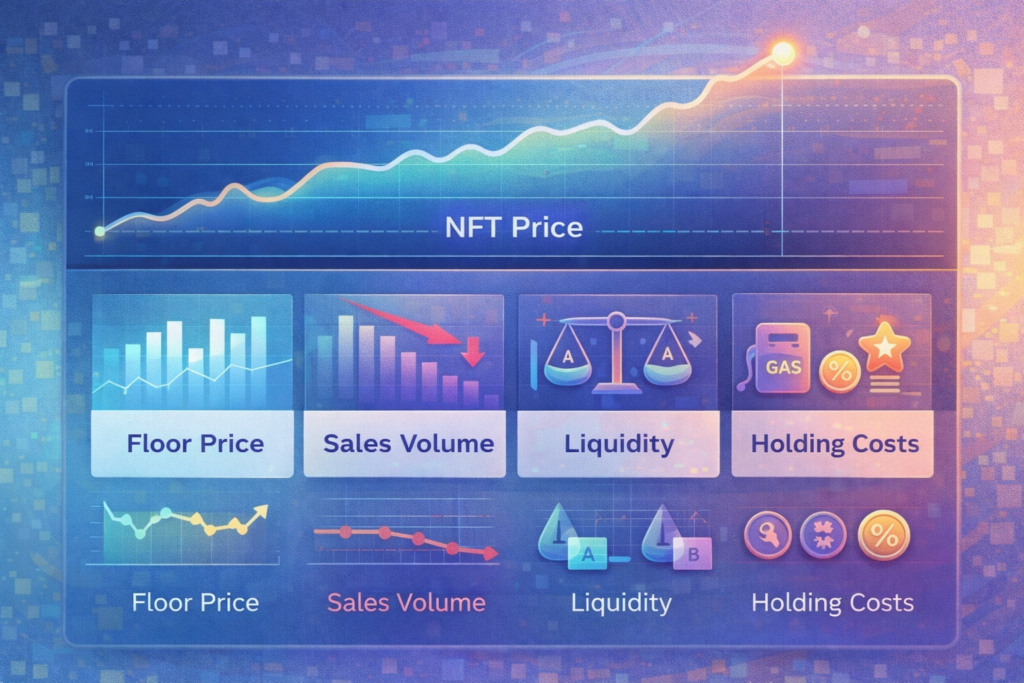
Tracking NFT performance over time involves monitoring:
- Price changes
- Floor price movement
- Sales volume
- Liquidity
- Holding costs (fees, royalties)
A rising floor price with falling volume can signal weakness — even if price looks good.
Why Beginners Should Track NFT Performance Over Time
Most beginner mistakes happen because:
- Performance isn’t tracked consistently
- Decisions are made emotionally
- Short-term noise is mistaken for trends
Tracking NFT performance over time helps you:
- See real demand changes
- Avoid panic selling
- Recognise exit opportunities
- Learn how NFT markets behave
Data builds confidence.
Key Metrics to Track NFT Performance
1️⃣ Floor Price (With Context)
Floor price is the lowest listed price, not the “true value”.
Track:
- Direction (up, down, flat)
- Stability over time
- Relationship to volume
👉 Learn more here:
What Is a Floor Price and Why It Matters
2️⃣ Sales Volume
Volume shows real buyer activity.
Watch for:
- Increasing volume = growing interest
- Decreasing volume = declining liquidity
Price without volume is unreliable.
3️⃣ Transaction History
Transaction history reveals:
- How often NFTs are selling
- Whether listings are moving
- Price consistency
Sparse history = potential liquidity risk.
4️⃣ Time-Based Performance
Always zoom out.
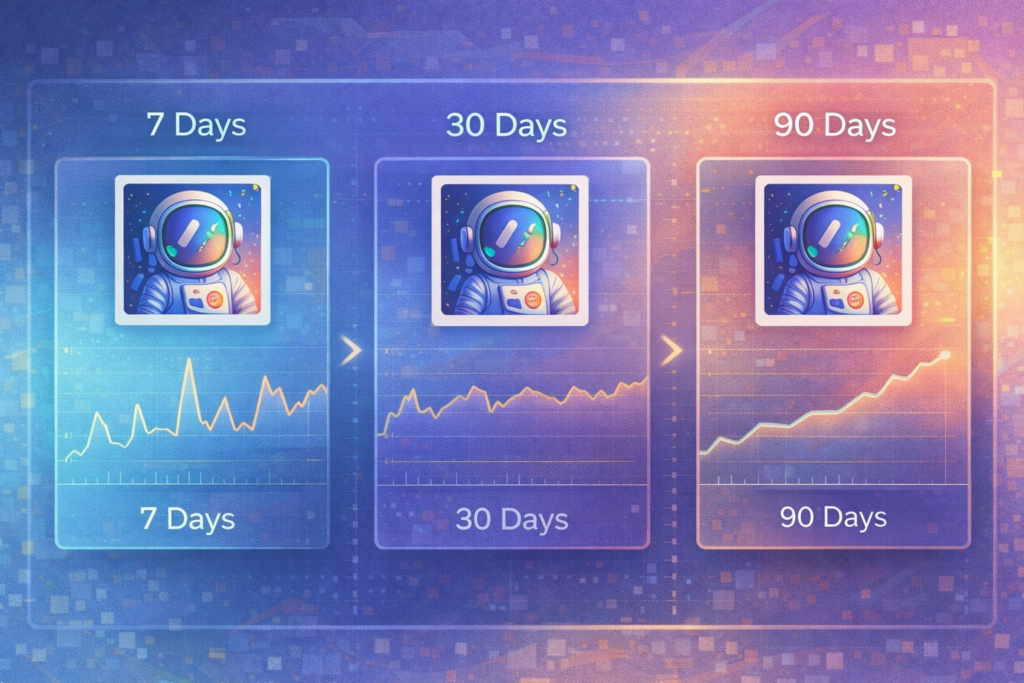
Track performance across:
- 7 days
- 30 days
- 90 days
Short-term spikes often fade. Long-term trends matter.
Tools to Track NFT Performance Over Time
NFT Portfolio Trackers
Portfolio trackers help you monitor your NFTs.
They typically allow you to:
- Track value changes
- Monitor floor price updates
- View historical performance
👉 Start here:
Best NFT Portfolio Trackers (ARTICLE COMING SOON)
NFT Analytics Tools
Analytics tools track market-wide performance.
They help you:
- Analyse volume trends
- Compare collections
- Understand broader demand
👉 Learn more here:
Best NFT Analytics Tools for Beginners (ARTICLE COMING SOON)
Wallet-Based Tracking
Some users track performance directly through wallet activity.
This helps you:
- See inflows and outflows
- Monitor approvals and transfers
- Catch unusual activity
👉 Related guide:
How to Monitor Wallet Activity (ARTICLE COMING SOON)
Free vs Paid Tracking Tools
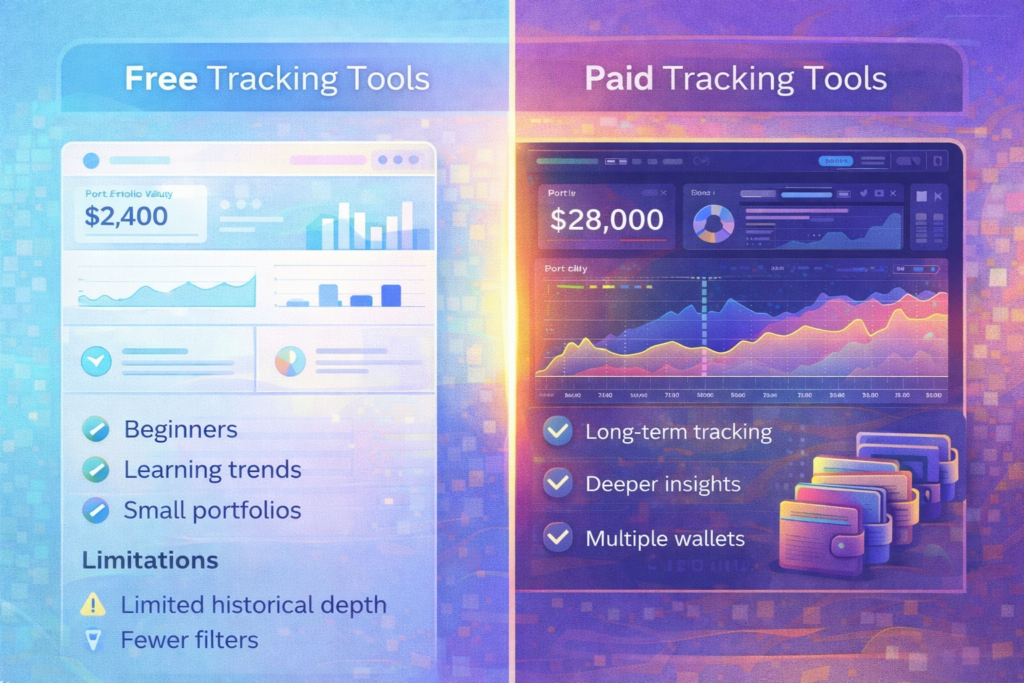
Free Tools
Best for:
- Beginners
- Learning trends
- Small portfolios
Limitations:
- Limited historical depth
- Fewer filters
Paid Tools
Better for:
- Long-term tracking
- Deeper insights
- Multiple wallets
👉 Full breakdown:
Free vs Paid NFT Tools – What’s Worth It? (ARTICLE COMING SOON)
Common Beginner Mistakes When Tracking NFT Performance
Avoid these:
- Checking performance too often
- Reacting to daily price noise
- Ignoring volume trends
- Forgetting fees and royalties
Performance tracking is about patterns, not perfection.
How Often Should You Track NFT Performance?
For most beginners:
- Weekly checks are sufficient
- Monthly reviews reveal trends
Over-monitoring increases stress — not accuracy.
How Wallet Setup Affects Performance Tracking
Using secure, organised wallets makes tracking easier.
Best practices:
- Separate learning wallets from main holdings
- Avoid unnecessary approvals
- Keep tracking tools read-only
👉 Learn how to research safely using beginner-friendly NFT wallets:
Where to Go Next
To build a full tracking system, continue with:
👉 How to Monitor Wallet Activity (ARTICLE COMING SOON)
👉 Best NFT Tools for Long-Term Holders (ARTICLE COMING SOON)
👉 How to Organise NFTs Across Multiple Wallets (ARTICLE COMING SOON)
Final Thoughts: Is Tracking NFT Performance Worth It?
Absolutely — if you track calmly and consistently.
Tracking NFT performance over time helps you:
- Learn faster
- Reduce emotional decisions
- Understand real market behaviour
It won’t guarantee profits — but it will improve judgment.