How to Avoid NFT Scams (Complete Beginner Safety Guide)
If you’re new to NFTs, learning how to avoid NFT scams is one of the most important skills you can build. NFT scams don’t “hack” the blockchain — they trick people into connecting wallets, approving malicious smart contracts, or signing dangerous transactions.
Before you connect to any NFT marketplace or mint page, start with a secure wallet setup. Here’s our beginner-friendly guide to the best NFT wallets for beginners (recommended read before anything else).
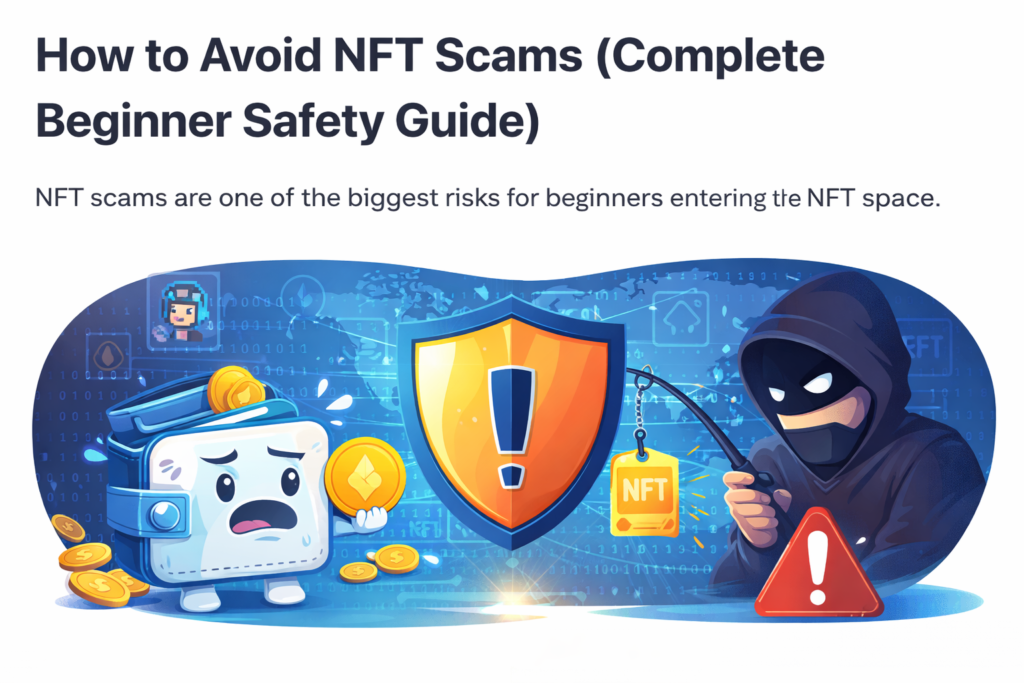
NFT scams are one of the biggest risks for beginners entering the NFT space — especially when you don’t yet understand wallets, approvals, and smart contracts.
This guide explains exactly how NFT scams work, the most common scam types, and the practical steps you can take to protect your wallet and NFTs.
- How fake mint sites steal NFTs
- How malicious approvals drain wallets later
- How to spot phishing and fake marketplaces
- How to protect your NFT wallet long-term
Why NFT Scams Happen
NFT scams are common because blockchain transactions are:
- Irreversible (you can’t “charge back” crypto)
- Permission-based (approvals can give ongoing access)
- Executed through smart contracts (code runs exactly as signed)
If you approve the wrong contract or sign a malicious transaction, assets can be transferred instantly — and there is no “refund department” on-chain. That’s why prevention matters.
If you want the deeper technical explanation, see: What is a malicious smart contract? (ARTICLE COMING SOON)
The Most Common NFT Scams (And How to Avoid Them)
1️⃣ Fake Mint Websites
Scammers clone popular NFT project websites and create fake mint pages. You connect your wallet → approve a transaction → lose funds or NFTs.
How to avoid fake mint sites:
- Only use official links from verified project accounts
- Double-check URLs carefully (clones often look identical)
- Never click random Discord/X mint links
Also read: How to avoid fake NFT marketplaces
2️⃣ Malicious Wallet Approvals
Some sites request unlimited token approvals or hidden permissions. If you approve them, scammers may drain assets later — even if nothing happens immediately.
How to avoid malicious approvals:
- Read what you’re approving (don’t blindly click “Confirm”)
- Avoid unlimited approvals when possible
- Regularly check and revoke old approvals
Helpful next steps:
- How to revoke smart contract approvals (ARTICLE COMING SOON)
- How to revoke wallet permissions safely
3️⃣ Phishing DMs
You may receive messages saying:
- “You won a whitelist”
- “Your wallet is compromised”
- “Claim your airdrop”
These are almost always scams. Never connect your wallet from a DM link.
If you suspect you clicked something risky, use: What to do if your NFT wallet is compromised
4️⃣ Fake NFT Marketplaces
Some sites mimic legitimate NFT marketplaces. They look real — but transactions send assets directly to scammers.
How to avoid fake NFT marketplaces: always verify you’re on the official domain, and bookmark trusted sites.
Read: How to avoid fake NFT marketplaces (beginner guide)
5️⃣ Airdrop Scams
You may receive random NFTs in your wallet. If you interact with them, they can trigger malicious contracts or phishing flows.
Best practice:
Ignore unknown airdrops entirely.
How to Protect Your NFT Wallet (Beginner Checklist)
If you want a full security workflow, see our NFT security checklist for beginners.
Use a Separate Wallet for Minting
Keep:
- One wallet for long-term storage
- One wallet for interacting with new projects
This reduces risk exposure and limits damage if a mint wallet is compromised.
Helpful: How to organise NFTs across multiple wallets
Use Hardware Wallets
Hardware wallets add a physical confirmation layer before transactions are approved, which dramatically improves wallet security.
Revoke Old Approvals
Periodically review token approvals and smart contract permissions. Revoke anything you no longer use.
Guide: How to revoke wallet permissions safely
Bookmark Trusted Sites
Never rely on search results alone. Bookmark official marketplaces, trusted tools, and project websites to reduce phishing risk.
Tools can help you track suspicious activity too: Best NFT tools for beginners
What Happens If You Get Scammed?
Unfortunately:
- Blockchain transactions cannot be reversed
- Funds are rarely recoverable
- Scammers move assets quickly
If you think you signed something suspicious, take action immediately: What to do if your NFT wallet is compromised
Final Thoughts: How to Avoid NFT Scams Long-Term
NFTs aren’t inherently unsafe — but wallet security and safe browsing habits matter. If you:
- Double-check links and domains
- Review wallet approvals before signing
- Avoid FOMO decisions
- Separate mint and storage wallets
You dramatically reduce your risk of NFT scams.
If you want a broader “before you buy” framework, use: How to evaluate NFT projects and our NFT due diligence checklist.
Frequently Asked Questions About NFT Scams
Can NFTs be hacked?
NFTs themselves aren’t hacked. Wallets are compromised through phishing links, fake mint websites, or malicious approvals.
Are NFT marketplaces safe?
Major marketplaces are generally safe, but scammers create fake versions. Always verify the domain and bookmark the real site.
What is the safest NFT wallet?
The safest setup is a reputable wallet paired with a hardware wallet and cautious browsing habits. Start here: best NFT wallets for beginners.
Should I click random NFTs sent to my wallet?
No. Ignore unsolicited NFTs entirely — interacting with unknown airdrops can lead to scam pages or malicious contract prompts.