Most Common NFT Scams (Updated Beginner Guide)
NFTs offer exciting opportunities, but they also attract scammers. One of the most important things beginners can learn is how to recognise the most common NFT scams before losing money or assets.
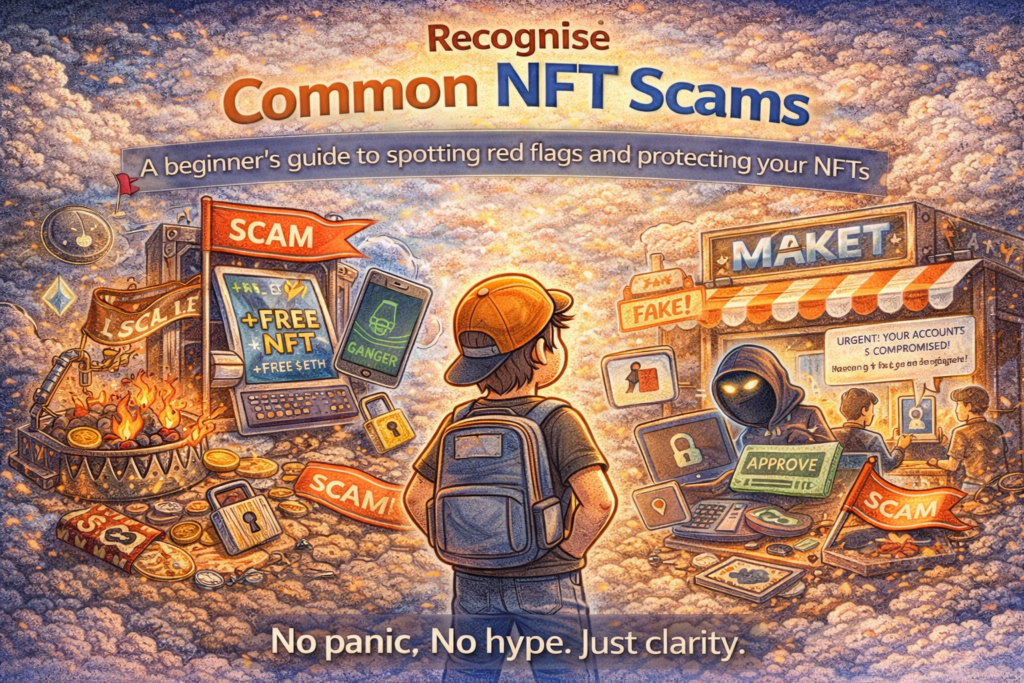
In this updated guide, we’ll break down the most common NFT scams, how they work, what red flags to watch for, and how beginners can protect themselves. This article is designed to be a central safety reference you can return to whenever something feels “off.”
No panic. No hype. Just clarity.
Why NFT Scams Target Beginners
NFT scams often succeed because:
- NFTs are still new to many users
- Transactions are irreversible
- Scammers exploit urgency and confusion
- Beginners don’t yet recognise red flags
Understanding the most common NFT scams drastically reduces your risk — even more than trying to “be early” or chase profits.
Fake NFT Giveaways (One of the Most Common Scams)
Fake giveaways are everywhere on:
- X (Twitter)
- Discord
- YouTube comments
- Telegram
They often promise:
- Free NFTs
- Free ETH
- “Exclusive airdrops”
The goal is to trick you into:
- Connecting your wallet
- Signing a malicious transaction
- Approving a wallet drainer
👉 Deep dive coming next: How Fake NFT Giveaways Work
Wallet Drainer Scams (The Most Dangerous)
Wallet drainers are among the most common NFT scams today.
They work by:
- Hiding malicious code in a transaction
- Asking you to “verify” or “claim” something
- Gaining approval to transfer assets
Once approved, they can:
- Steal NFTs
- Drain tokens
- Empty wallets instantly
👉 Learn more: How Wallet Drainers Steal NFTs
Rug Pulls in NFT Projects
A rug pull happens when:
- A project builds hype
- Sells NFTs
- Then abandons development or disappears
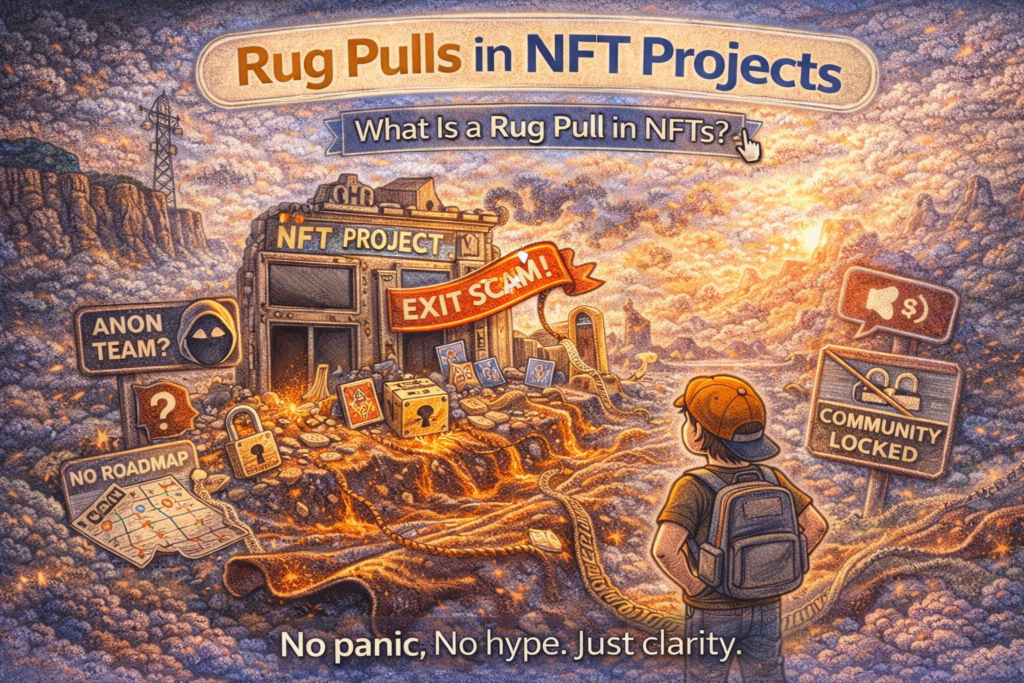
Signs of potential rug pulls include:
- Anonymous teams with no history
- No roadmap transparency
- Sudden silence after mint
- Locked or disabled communities
👉 Explained fully here: What Is a Rug Pull in NFTs?
Fake NFT Marketplaces
Fake marketplaces imitate real ones almost perfectly.
They use:
- Slightly altered URLs
- Fake ads
- Phishing links
- Sponsored scam results
Once connected, they may:
- Request dangerous approvals
- Redirect transactions
- Drain assets silently
👉 Learn how to spot them: How to Avoid Fake NFT Marketplaces
Impersonation Scams
Scammers impersonate:
- Well-known NFT projects
- Founders
- Moderators
- Support teams
Common tactics:
- Fake Discord DMs
- “Support” messages
- Urgent account warnings
Real projects do not DM first.
Malicious Contract Approvals
Not all scams steal immediately.
Some:
- Wait days or weeks
- Trigger only after you interact again
- Exploit forgotten permissions
This is why understanding approvals matters.
👉 What to do if it happens:
What to Do If Your NFT Wallet Is Compromised
How to Revoke Wallet Permissions Safely
Can NFTs Be Stolen After You Buy Them?
Yes — but not randomly.
NFTs can be stolen if:
- You sign malicious transactions
- You approve unsafe contracts
- Your wallet is compromised
Understanding this removes fear and replaces it with control.
👉 Explained here: Can NFTs Be Stolen After You Buy Them?
Why Most NFT Scams Work
The most common NFT scams rely on:
- Urgency (“limited time”)
- Authority (“official announcement”)
- Fear (“account compromised”)
- Greed (“free NFT”)
If something pressures you to act quickly, pause.
How Beginners Can Protect Themselves
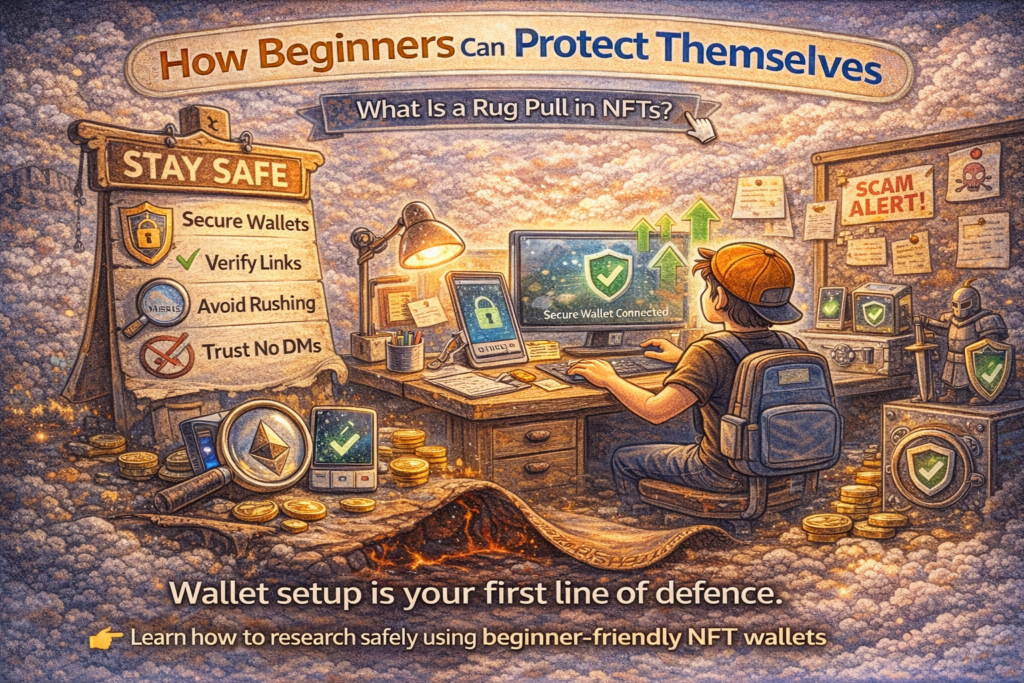
The safest beginners:
- Use secure, beginner-friendly wallets
- Avoid rushed decisions
- Verify links independently
- Never trust unsolicited messages
👉 Learn how to research safely using beginner-friendly NFT wallets
Wallet setup is your first line of defence.
The Importance of Verifying Projects
Many scams succeed because users skip verification.
Before interacting:
- Check official websites
- Verify social links
- Confirm marketplace listings
- Research past activity
👉 Step-by-step guide: How to Check If an NFT Project Is Legit
Why This Guide Matters
Understanding the most common NFT scams doesn’t just protect your assets — it protects your confidence.
The goal isn’t to be paranoid.
The goal is to be informed.
Once you recognise patterns, scams become obvious.
What Beginners Should Read Next
This guide is your Layer 3 foundation.
Next, we’ll zoom into the most common entry-point scam beginners fall for: