What Is a Malicious Smart Contract? (NFT Security Guide)
If you’re learning how to avoid NFT scams, you need to understand one critical concept:
What is a malicious smart contract?
A malicious smart contract is harmful blockchain code designed to trick users into approving transactions that let scammers steal crypto or NFTs from your wallet. In plain terms, a malicious smart contract uses wallet approvals, token approvals, or hidden contract permissions to enable an NFT wallet drain.
If you haven’t already, start with a secure NFT wallet setup before interacting with any dApps, NFT mint pages, or marketplaces. Our guide to the best NFT wallets for beginners shows the safest beginner-friendly options and basic setup habits that reduce smart contract scam risk.
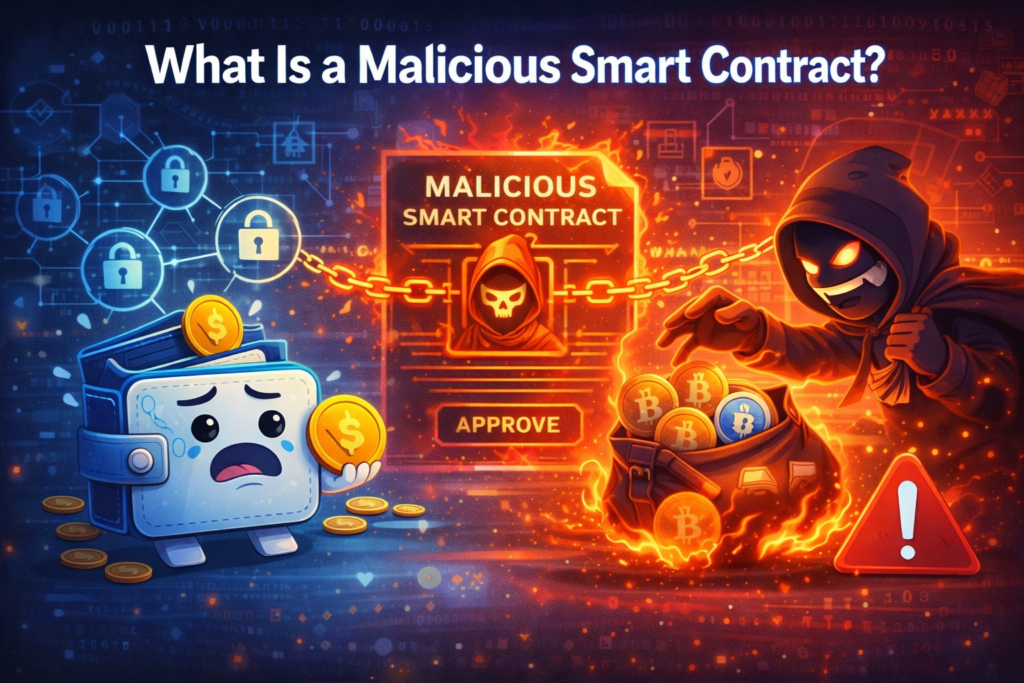
Unlike legitimate smart contracts used by trusted NFT platforms, a malicious smart contract often hides dangerous permissions. Once approved, the attacker can transfer NFTs or tokens within the limits you granted — and many approvals are broader than beginners realise.
For a full safety overview, you can also read: how to avoid NFT scams and NFT security checklist for beginners.
Quick Checklist: How to Spot a Malicious Smart Contract
If you’re unsure whether you’re about to sign a malicious smart contract, use this quick checklist:
- The site URL looks slightly “off” or newly created
- The transaction asks for unlimited token approvals
- You’re told to “verify your wallet” to claim something
- The site came from a Discord DM / X reply / random link
- The approval request doesn’t clearly explain what it does
If you’ve already approved something suspicious, follow: what to do if your NFT wallet is compromised.
What Is a Smart Contract?
Before understanding what a malicious smart contract is, you need to know what a normal smart contract does. Smart contracts are the core technology behind NFT minting, NFT marketplace trades, and many wallet approval flows.
A smart contract is:
- Code deployed on a blockchain
- Automatically executed when conditions are met
- Used in NFT minting, trading, staking, and approvals
Most NFT marketplaces rely on smart contracts to function properly. If you’re new to the process, read what happens after you buy an NFT to understand how smart contracts operate behind the scenes.
Most smart contracts are legitimate.
Some are not — and those are the ones used in NFT scams.
What Makes a Smart Contract Malicious?
A malicious smart contract is designed to abuse approvals and permissions. It typically aims to:
- Request unlimited token approvals
- Transfer assets without clear disclosure
- Exploit wallet permissions
- Drain NFTs after approval
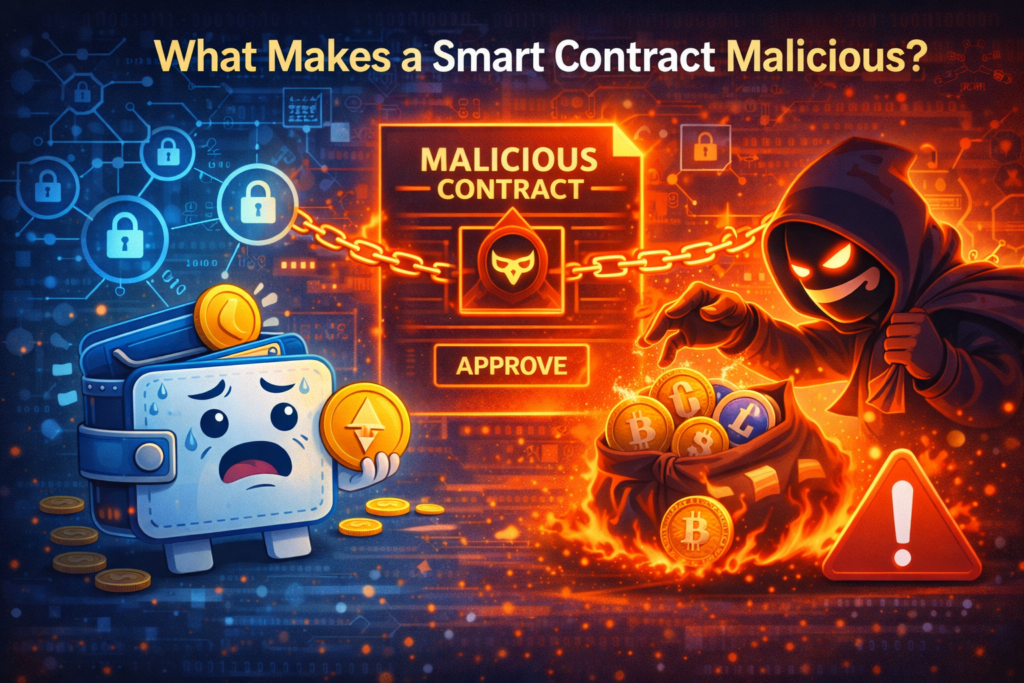
The danger is not the NFT itself — it’s the approval you sign.
For a broader overview of scam types, see NFT scams to avoid (beginner safety guide) and most common NFT scams.
Once approved, the malicious smart contract can interact with your wallet within the permission limits you granted. And blockchain transactions are irreversible.
How Malicious Smart Contracts Drain Wallets
Here’s how most NFT wallet drains happen when a malicious smart contract is involved:
1️⃣ You connect your wallet to a site
2️⃣ You approve a transaction
3️⃣ You grant token or NFT permissions
4️⃣ The contract executes transfer functions
5️⃣ Your assets move instantly
You didn’t “get hacked.”
You signed permission.
This is why choosing one of the best NFT wallets for beginners and separating mint wallets from storage wallets is essential. For long-term protection, see NFT wallet safety & management.
If you think you approved the wrong contract, act fast: what to do if your NFT wallet is compromised.
And if you want to clean up old permissions, follow how to revoke wallet permissions safely.
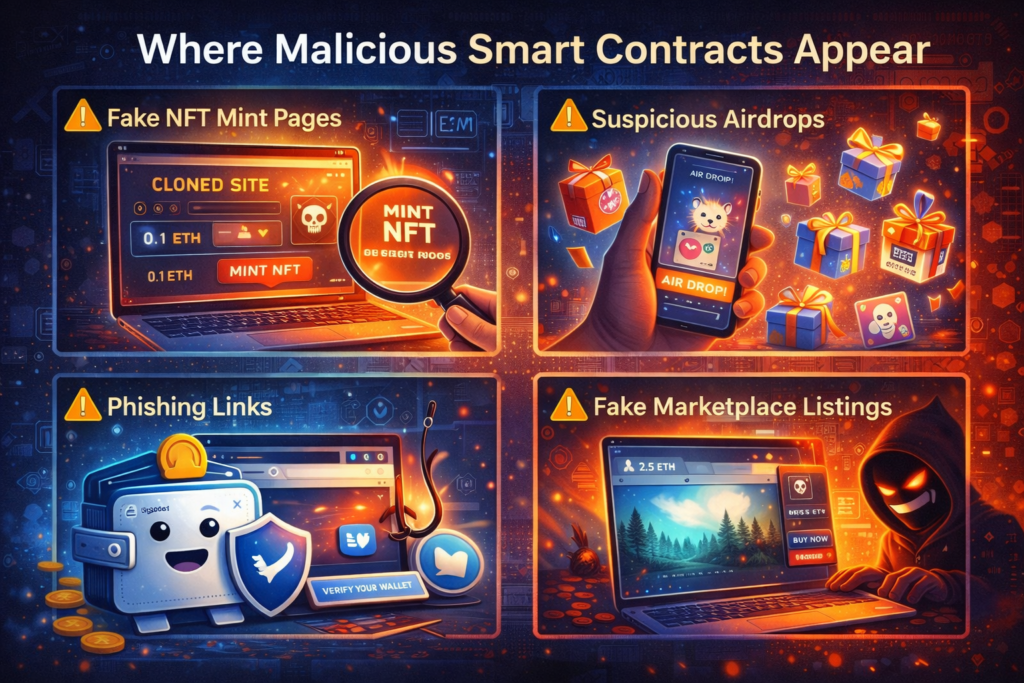
Common Scenarios Where Malicious Smart Contracts Appear
Fake NFT Mint Pages
Cloned websites asking you to mint NFTs often use a malicious smart contract behind the “mint” button. Learn domain safety in how to avoid fake NFT marketplaces.
Suspicious Airdrops
Random NFTs prompting interaction may route you into a malicious contract flow. See how fake NFT giveaways work.
Phishing Links
Discord or X links asking you to “verify” your wallet often lead to malicious smart contract approvals. Learn how this works in how wallet drainers steal NFTs.
Fake Marketplace Listings
Sites that look legitimate but deploy harmful contracts. Always use trusted platforms — see best NFT marketplaces for beginners.
To analyse suspicious projects, you can use several of the best NFT tools for beginners to inspect contract activity, transaction history, and wallet behaviour.
How to Protect Yourself From Malicious Smart Contracts
Use a Hardware Wallet
A hardware wallet adds a physical confirmation layer before smart contracts can execute.
Separate Wallets
Use one wallet for minting and one for storage. This limits damage if your mint wallet approves a malicious smart contract.
Review Transaction Details
Never click “Approve” blindly. Read the permission request and avoid unlimited approvals whenever possible.
Revoke Old Approvals
Periodically remove unused contract permissions. Follow how to revoke wallet permissions safely.
For a broader security framework, see NFT wallet safety & management.
Can You Reverse a Malicious Smart Contract Transaction?
No. Blockchain transactions cannot be reversed.
If assets are transferred via a malicious smart contract:
- They are usually unrecoverable
- Scammers move assets quickly
- Recovery success rates are extremely low
Your best defence is prevention: secure wallet setup, cautious approvals, and regularly revoking permissions you no longer need.