What Is an NFT and How Does It Work? (Plain English Guide)
NFTs can feel confusing at first — especially when explanations are filled with technical jargon and hype.
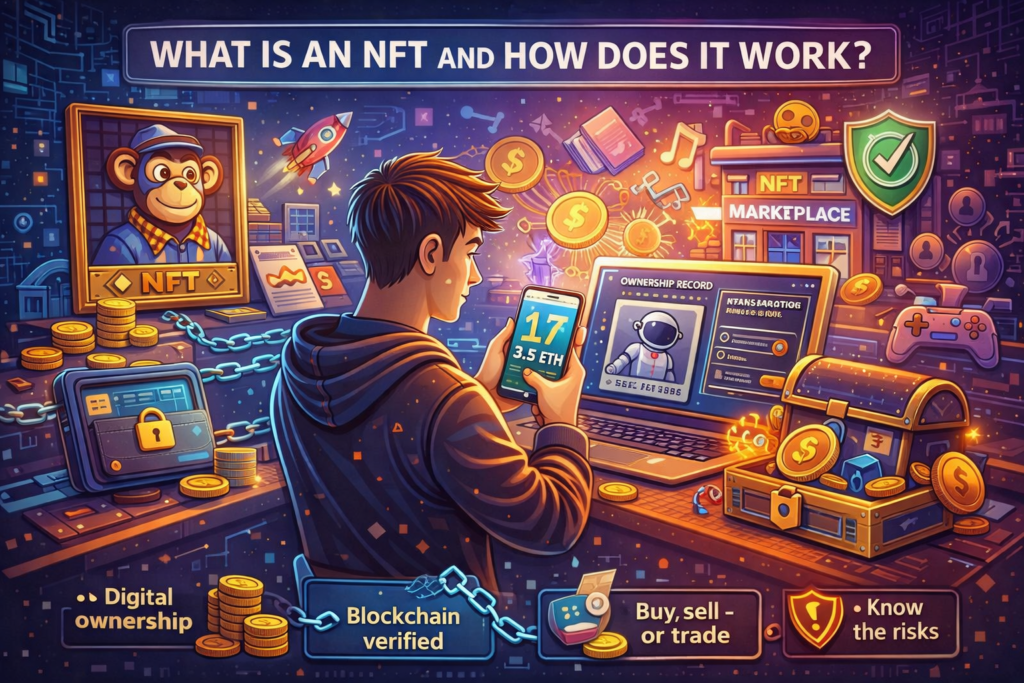
If you’ve ever wondered what an NFT actually is and how NFTs work in real life, this guide explains everything in plain English, step by step, with no assumptions.
By the end, you’ll understand:
- What an NFT is (without buzzwords)
- How NFTs work behind the scenes
- What happens when you buy one
- Why people value them
- The risks beginners should know about
If you’re completely new, you may also want to start with NFTs for Beginners: A Step-by-Step Guide to Getting Started Safely.
What Is an NFT? (Simple Explanation)
An NFT is a digital item that proves ownership.
NFT stands for Non-Fungible Token:
- Non-fungible means it’s unique and not interchangeable
- Token means it exists on a blockchain (a public digital ledger)
Think of an NFT like:
- A signed collectible
- A digital certificate of ownership
- A receipt that proves something is yours
Unlike cryptocurrencies (like Bitcoin or Ethereum), NFTs are not identical. Each one is different.
What Makes NFTs Different From Regular Digital Files?
You can right-click and save an image — but that doesn’t mean you own it.
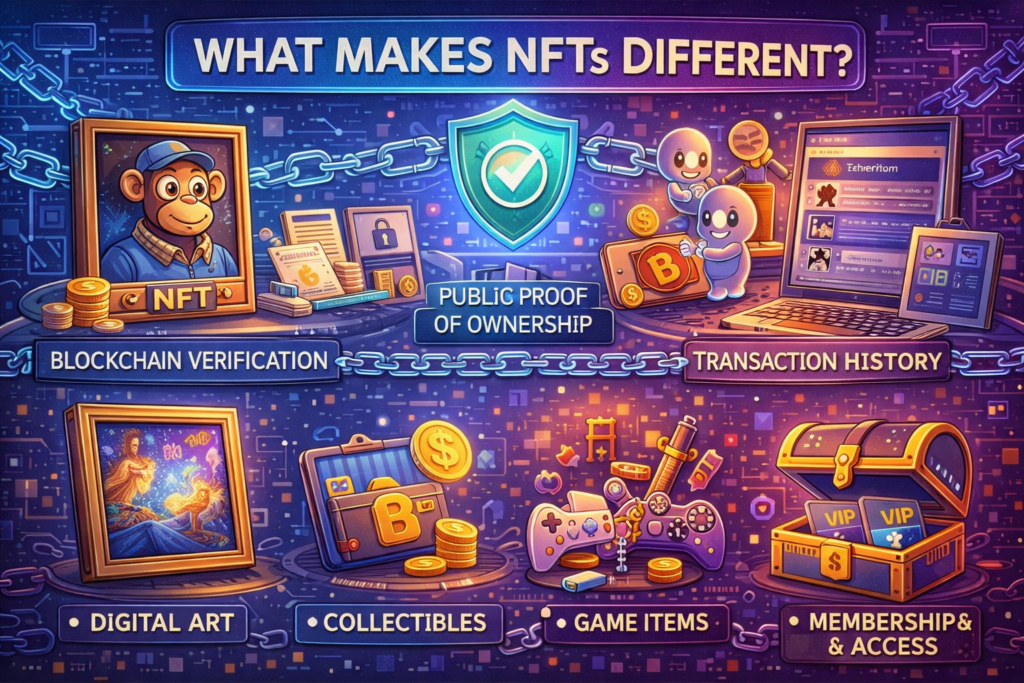
What makes NFTs different is verifiable ownership.
With NFTs:
- Ownership is recorded on a blockchain
- Anyone can verify who owns it
- Ownership can be transferred or sold
- The history of the NFT is public
This is why NFTs are often used for:
- Digital art
- Collectibles
- Game items
- Memberships
- Access passes
How Do NFTs Work? (Plain English)
Here’s how NFTs work, step by step:
- An NFT is created (“minted”) on a blockchain
- The blockchain records who owns it
- The NFT is stored in a digital wallet
- Ownership can be transferred or sold
- Every transaction is permanently recorded
You don’t physically hold the NFT — you hold the proof of ownership.
To understand how wallets fit into this, see Best NFT Wallets for Beginners: Safe & Easy Options to Get Started.
What Happens When You Buy an NFT?
When you buy an NFT:
- You connect your wallet
- You approve the transaction
- The NFT moves into your wallet
- The blockchain updates ownership
You now own:
- The NFT token
- Proof of ownership
- The ability to sell or transfer it
However, owning an NFT does not always mean owning copyright. Rights depend on the project.
Where Are NFTs Bought and Sold?
NFTs are bought and sold on NFT marketplaces.
Marketplaces allow users to:
- List NFTs for sale
- Buy from others
- View price history
- See ownership data
Beginner-friendly platforms are explained in Best NFT Marketplaces for Beginners: Safe Places to Buy Your First NFT.
Why Do NFTs Have Value?
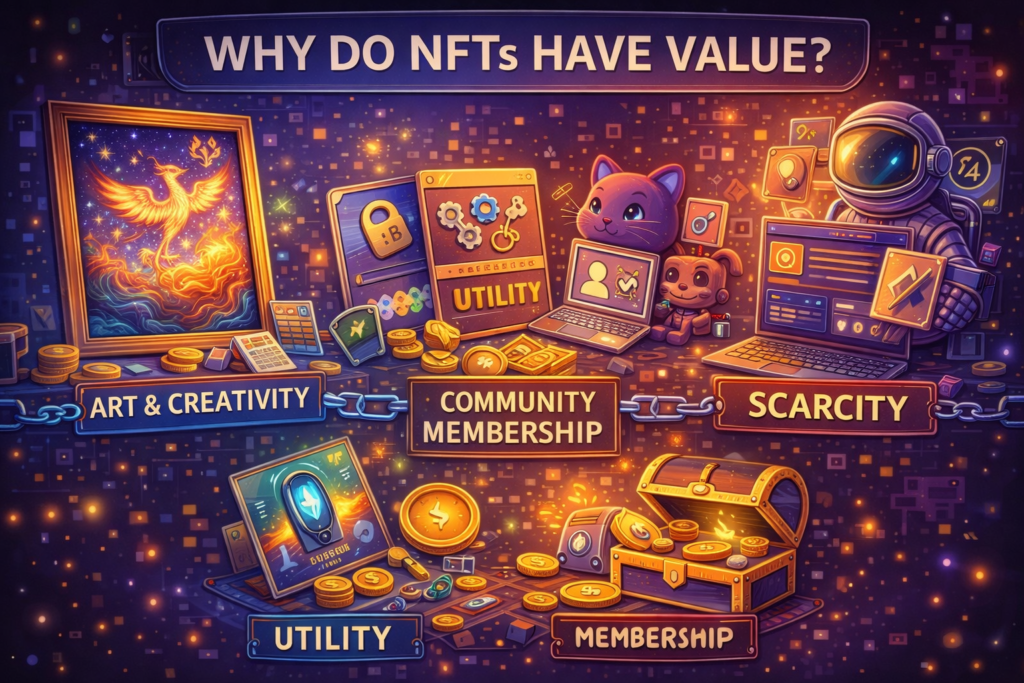
NFT value comes from perceived demand, not guarantees.
NFTs may be valuable because of:
- Art or creativity
- Utility (access, perks, tools)
- Community membership
- Scarcity
- Brand or licensing
However, not all NFTs hold value long-term.
Learning how to judge quality is covered in How to Evaluate NFT Projects (A Beginner Framework That Actually Works).
Are NFTs Safe for Beginners?
NFTs can be safe — if you understand the risks.
Common beginner risks include:
- Fake websites
- Wallet drainers
- Scam projects
- Overpaying due to hype
- Poor wallet security
Before interacting with NFTs, it’s essential to understand safety basics outlined in NFT Scams to Avoid: A Beginner’s Safety Guide.
What Happens After You Buy an NFT?
Buying an NFT is not the end of the process.
After purchase, you’ll need to:
- Store it safely
- Monitor activity
- Track value changes
- Decide when to hold or sell
This is explained step by step in How to Manage NFTs After You Buy Them: Storage, Tracking & Long-Term Control.
Can You Lose Money With NFTs?
Yes — and many beginners do.
People lose money by:
- Buying without research
- Following hype
- Selling too late
- Ignoring fees
- Falling for scams
That’s why using a structured approach like NFT Due Diligence Checklist: What to Check Before You Buy Any NFT is critical.
Final Thoughts: NFTs Are Tools, Not Magic
NFTs aren’t guaranteed profits.
They’re digital ownership tools.
When used thoughtfully, NFTs can:
- Represent creativity
- Enable digital ownership
- Provide access and utility
When approached emotionally or carelessly, they can become expensive lessons.
Start slow.
Learn the basics.
Protect your wallet.
And most importantly — never rush.