Best NFT Analytics Tools for Beginners (Simple & Powerful Options)
As NFTs grow beyond a hobby, many beginners quickly realise that guessing is not a strategy.
Before diving into NFT analytics tools, make sure your assets are stored securely. If you haven’t set up a wallet yet, start with one of the best NFT wallets for beginners (add affiliate link here).
Once your wallet is secure, that’s where NFT analytics tools for beginners come in.
In this guide, we’ll explain what NFT analytics tools do, why beginners should use them, and break down the best NFT analytics tools for beginners — focusing on clarity, safety, and usability rather than hype.
No trading advice. Just data you can understand.
What Are NFT Analytics Tools?
NFT analytics tools help you analyse what’s happening in the NFT market using real blockchain data. Instead of relying on social hype, you can see what collections are actually doing in terms of floor price, volume, sales, and wallet activity.
Most NFT analytics platforms allow you to:
- Track sales volume
- Monitor floor price movement
- Analyse price history
- View wallet activity and trends
- Identify demand changes over time
Unlike portfolio trackers (which focus on your NFTs), analytics tools focus on market behaviour across collections.
If you’re still learning NFT basics, start here: NFTs for Beginners.
Why Beginners Should Use NFT Analytics Tools
Beginners often rely on:
- Social media hype
- Influencer opinions
- Discord sentiment
NFT analytics tools replace emotion with evidence. They help you validate whether volume supports price and whether a collection has real demand — not just loud marketing.

Using NFT analytics for beginners helps you:
- Understand demand vs hype
- See whether trading volume supports floor price
- Avoid entering illiquid projects
- Learn how NFT markets actually move
Analytics doesn’t predict the future — it helps you understand the present.
If you want to learn one of the most important market comparisons, read: NFT floor price vs volume explained (ARTICLE COMING SOON)
Are NFT Analytics Tools Safe to Use?
Most reputable NFT analytics tools are read-only.
That means:
- No transaction signing
- No asset access
- No permissions required
You usually only need to:
- View public data
- Enter a wallet address (optional)
However, beginners should still be cautious: avoid analytics sites that push you to connect your wallet unnecessarily, or that route you to “mint” pages or suspicious marketplaces.
For safe wallet practices, review: NFT Wallet Safety & Management.
Avoid any analytics tool that asks for:
- Private keys
- Seed phrases
- Unlimited approvals
If you want scam prevention before exploring tools, read: How to Avoid NFT Scams.
Best NFT Analytics Tools for Beginners
Below are some of the best NFT analytics tools beginners commonly use, based on clarity, safety, and accessibility. These are useful for checking floor price, volume, sales history, and collection trends.
If you want a broader toolkit beyond analytics, see: Best NFT Tools for Beginners.
1️⃣ DappRadar
Best for: Beginner-friendly NFT market analytics
DappRadar is one of the most popular NFT analytics platforms and is widely used for quick collection comparisons.
Key features:
- NFT collection rankings
- Volume and sales tracking
- Cross-chain analytics
- Market trend insights
Pros:
- Easy to understand
- Good visual charts
- Broad ecosystem coverage
Cons:
- Advanced data can feel overwhelming at first
DappRadar is a strong starting point for learning NFT market analytics and understanding how floor price and volume move together.
2️⃣ Nansen (Lite / Free Tiers)
Best for: Understanding wallet behaviour
Nansen focuses on wallet and on-chain analytics. It’s useful for seeing where activity is coming from and how wallets behave around NFT collections.
Key features:
- Wallet labelling
- Smart money tracking
- NFT activity insights
Pros:
- Deep behavioural data
- Excellent educational value
Cons:
- Full features require paid plans
- Can be complex for absolute beginners
Nansen is best used after learning basic analytics concepts like floor price, volume, and liquidity.
3️⃣ CryptoSlam
Best for: Sales volume and ranking insights
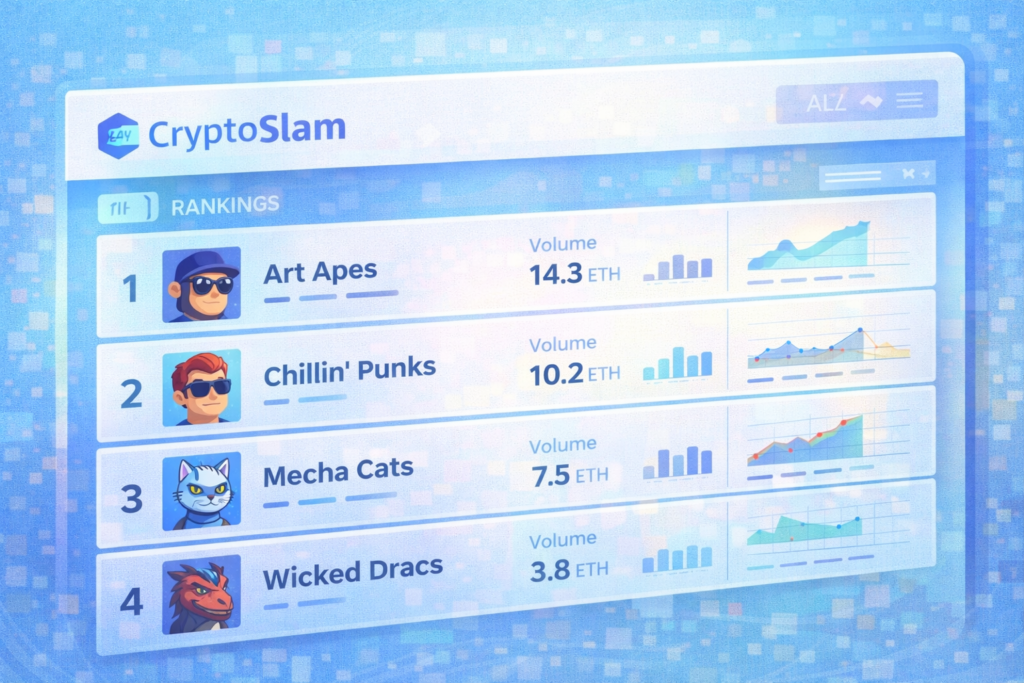
CryptoSlam specialises in NFT sales data, including rankings and simple historical performance tracking.
Key features:
- Sales rankings
- Volume tracking
- Historical performance
Pros:
- Simple, focused data
- Easy comparisons
Cons:
- Limited advanced analytics
Great for beginners wanting clear volume data and collection comparisons without clutter.
4️⃣ OpenSea Analytics (Marketplace-Level)
Best for: Basic insights inside a marketplace
OpenSea provides limited analytics on collections directly inside the marketplace, which can be helpful for a quick snapshot.
Key features:
- Floor price
- Recent sales
- Activity overview
Pros:
- No setup required
- Familiar interface
Cons:
- Very limited analytics
- Not suitable for deep research
This works as a starting reference, not a full NFT analytics solution.
If you’re buying on marketplaces, make sure you also understand safety basics: How to Avoid Fake NFT Marketplaces.
NFT Analytics Tools vs NFT Portfolio Trackers
Beginners often confuse these two categories.
NFT portfolio trackers focus on:
- Your holdings
- Value over time
- Wallet-level tracking
NFT analytics tools focus on:
- Market trends
- Trading volume and liquidity
- Collection performance and rankings
👉 Learn more here:
Best NFT Portfolio Trackers for Beginners
Most beginners eventually use both: analytics for market behaviour, and portfolio tracking for personal holdings.
Free vs Paid NFT Analytics Tools
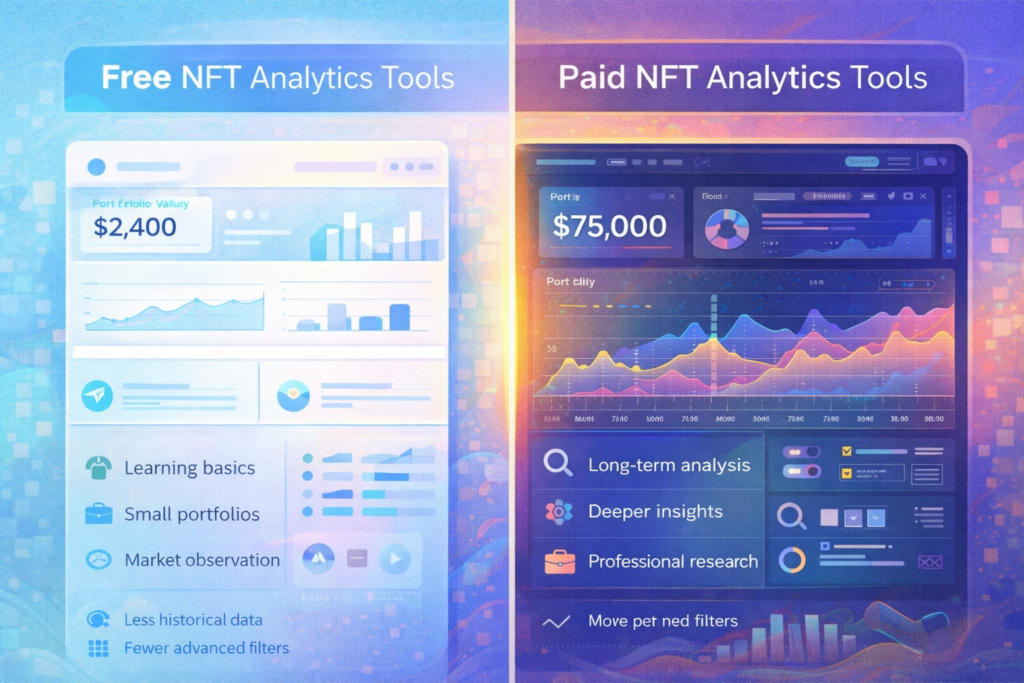
Free NFT Analytics Tools
Good for:
- Learning basic NFT analytics concepts
- Checking floor price and volume
- Market observation and rankings
Limitations:
- Less historical data
- Fewer advanced filters and wallet insights
Paid NFT Analytics Tools
Better for:
- Long-term analysis and deeper historical tracking
- Wallet behaviour insights and advanced dashboards
- More detailed research workflows
👉 Full breakdown here:
Free vs Paid NFT Tools – What’s Worth It? (ARTICLE COMING SOON)
How to Choose the Best NFT Analytics Tool for You
Ask yourself:
- Do I want simple dashboards or advanced analytics?
- Am I analysing trends, or validating market demand?
- Do I need cross-chain analytics?
There is no single best NFT analytics tool — only the one that matches your learning stage and what data you actually need.
If you want an analysis framework before relying on data tools, see: How to Research NFTs Before Buying.
Common Beginner Mistakes With NFT Analytics
Avoid:
- Relying on one metric (like floor price)
- Ignoring volume trends and liquidity
- Overreacting to short-term spikes
- Using analytics to justify hype
Analytics should inform, not convince.
If you want a safety-first view of risks, read: Are NFTs Safe for Beginners?.
Where to Go Next
To build on analytics skills, continue here:
👉 How to Track NFT Performance Over Time
👉 How to Monitor Wallet Activity
👉 Best NFT Portfolio Trackers
These guides connect NFT analytics tools to real-world tracking, wallet safety, and long-term management.
Final Thoughts: Are NFT Analytics Tools Worth Using?
For beginners, yes — when used correctly.
NFT analytics tools for beginners help you:
- See patterns in floor price, volume, and sales
- Avoid emotional decisions
- Learn how NFT markets behave in real time
They don’t guarantee outcomes — they build understanding.
And if you haven’t already, lock in the basics first with a secure wallet: best NFT wallets for beginners (add affiliate link here).