PFP NFTs vs Utility NFTs: What’s the Difference?
Browse any marketplace and two broad kinds of NFT dominate: profile-picture collections — the cartoon avatars that made NFTs famous — and NFTs that do something, like unlocking membership, tickets or game items. The shorthand for the first is PFP. Understanding the difference helps you evaluate what you are actually buying.
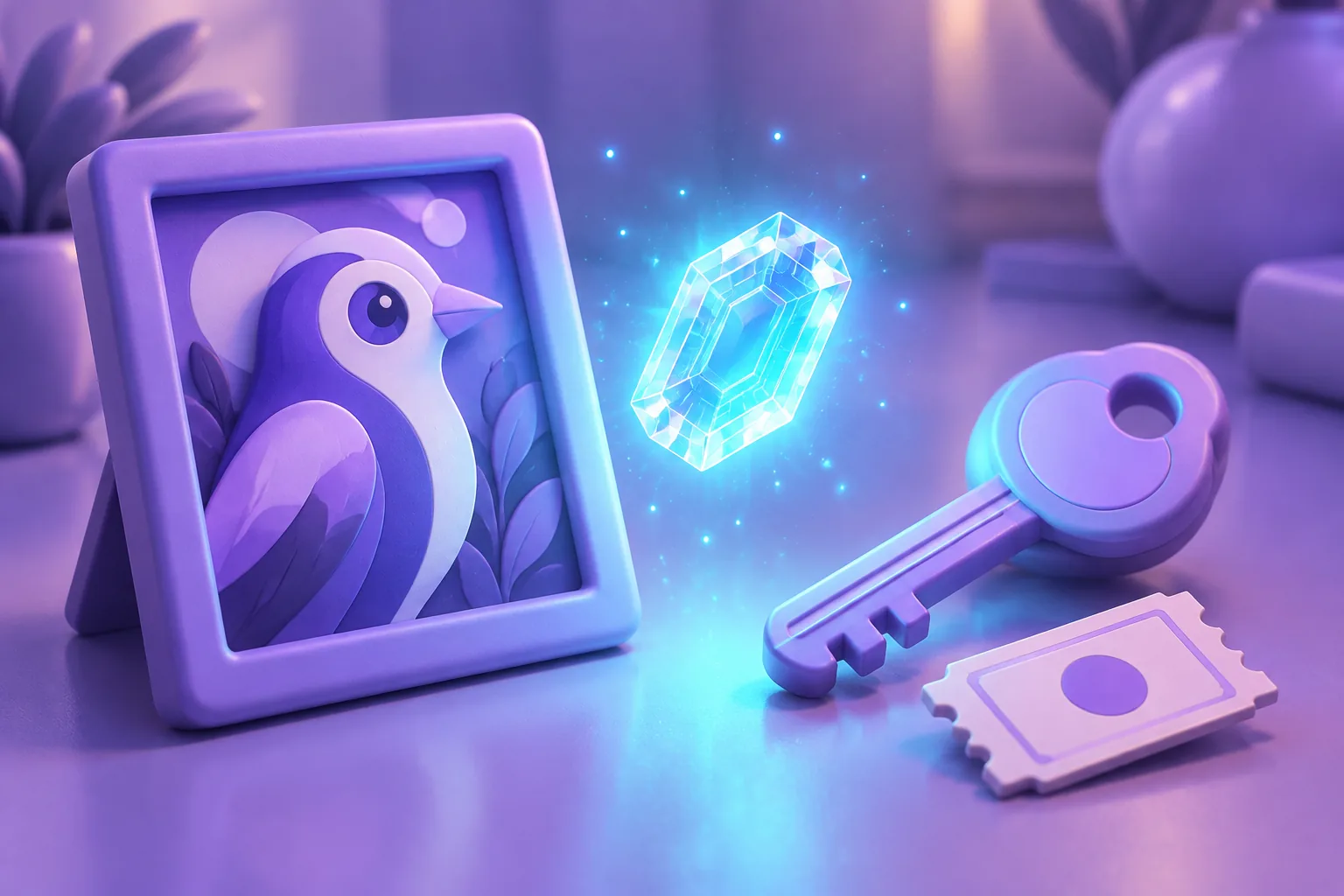
Utility NFTs come in many shapes: tickets, memberships and access passes unlock things, soulbound tokens prove credentials but can’t be sold, and an ENS domain puts a readable name on your wallet instead of an asset in it.
Last reviewed: September 2026
What a PFP NFT is#
PFP stands for “profile picture”. PFP collections are large sets of generated characters — typically 5,000–10,000 tokens built from randomised traits — designed to be used as a public avatar and community identity. Owning one signals membership of that collection’s community.
What you are buying in a PFP project:
- the artwork itself and the identity it signals,
- membership of the holder community, and whatever status that carries,
- whatever commercial or usage rights the project grants (these vary widely — check the licence),
- and, usually, a rarity hierarchy of traits that drives price differences within the set.
A PFP’s “utility” is mostly social: identity, belonging and signalling. That is a real product — but it is worth recognising you are buying culture and community, not a feature list.

What a utility NFT is#
A utility NFT is defined by function rather than picture. The token grants something: access, membership, a licence, an in-game item, a ticket, staking or governance rights, or a claim on future drops. The artwork may be minimal or absent — the contract’s function is the point.
Common utility patterns:
- Access tokens — entry to gated Discords, content, events or software.
- Membership passes — ongoing benefits while you hold the token; sell the token and the benefits transfer to the buyer.
- In-game items and land — usable objects inside a specific game or virtual world.
- Tickets and vouchers — redeemable claims, like event entry or merchandise.
The word “utility” is also marketing’s favourite. A promised utility is a roadmap item until it exists — an NFT “with future utility” is currently an NFT with none. Check what works today, in writing, not what the Discord pins promise.
Where the categories overlap#
The split is a spectrum, not a wall:
- Most major PFP collections added utility over time — holder events, merch, companion drops, games.
- Many utility NFTs adopt avatar art anyway, because a recognisable image helps community identity.
- A membership pass can be both: an identity signal and an access key.
So instead of asking “which category is this?”, ask: what do I get if I buy this, today, in writing? Artwork and community identity? Working features? A promise? Each answer changes what “value” can even mean.
Neither type is inherently more valuable#
It is tempting to assume utility NFTs are “real” and PFPs are hype — the data disagrees. Some of the most liquid, expensive NFTs ever sold are pure PFPs; most utility NFTs are worth little because the utility is trivial or the project folded. What matters is the same trio as always:
- Demand — are real buyers active? See how to spot strong NFT demand.
- Liquidity — could you actually sell? See what is NFT liquidity.
- Delivery — does the team ship what it says? The project-health checks in is an NFT project legit apply to both types.
For evaluation, the framework in how to value an NFT before buying works across both — you just weight “promised features” at zero until they exist.
Bottom line#
PFP NFTs sell identity and community; utility NFTs sell function and access — and most collections sit somewhere on the spectrum between them.
Neither category is a guarantee of anything. Evaluate the demand, the liquidity and the track record — and discount every promised utility to zero until it is live.